

The modern mullet haircut is a contemporary take on a hairstyle built around one simple idea: keeping the hair shorter toward the front and sides while allowing more length to remain at the back. What makes today’s version different is the way those lengths are shaped and connected. Instead of relying on a harsh contrast, barbers can use layers, texture, tapers, and fades to create a more balanced result.
There is no single formula for a modern mullet. The same basic haircut can look completely different on straight, wavy, curly, thick, or fine hair. The length of the back, shape of the sides, amount of texture, and styling method all influence the final appearance. Understanding these details makes it easier to choose a version that works with your natural hair rather than against it.
What Is a Modern Mullet Haircut?
A modern mullet is defined mainly by its distribution of length. The front and sides are generally shorter, while the hair around the back of the head and neckline is allowed to extend farther.
The top acts as the connecting section between these areas. It may be layered, textured, or left with enough weight to create volume. The sides can remain moderately short or be finished with a taper or fade.
The important point is that the modern mullet is not necessarily an extreme haircut. The difference between the sides and back can be subtle or dramatic depending on the desired shape.
What Makes a Modern Mullet Haircut Different?
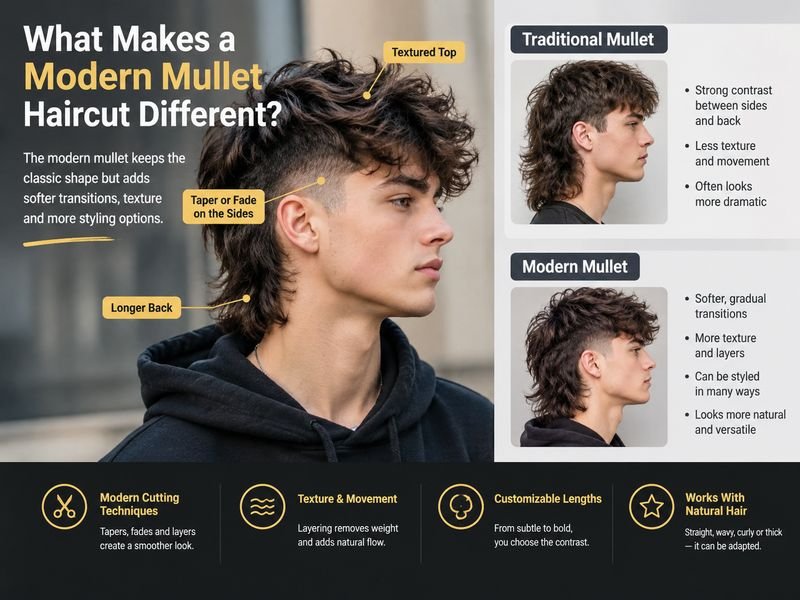
The original mullet concept is recognizable because of its strong difference between shorter sections and a longer back. Modern barbering techniques have made it possible to soften or reshape that contrast.
A contemporary version may include a gradual taper around the temples and neckline, a fade on the sides, or layers that create a smoother connection between the top and back.
Texture is another major difference. Instead of leaving every section at one solid length, barbers can remove selected weight and create movement. This gives the haircut a less rigid appearance and allows it to work with natural waves and curls.
The Main Parts of a Modern Mullet Haircut:
Understanding the individual sections helps explain why two mullets can look very different even though they belong to the same haircut family.
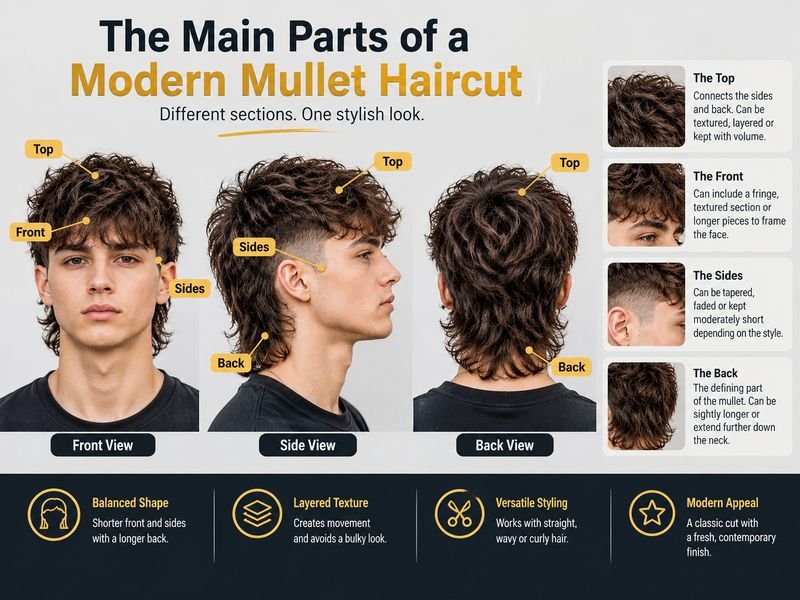
The Front
The front does not have to be extremely short. It can include a fringe, textured section, or longer pieces that frame the forehead.
Its length should work with the rest of the haircut rather than being considered separately.
The Sides
The sides establish much of the haircut’s contrast. They can be clipped short, tapered gradually, or faded.
A lower and softer side treatment creates a different result from a high fade, so this section should be planned together with the length at the back.
The Top
The top provides the transition between the shorter sides and longer back.
Texture can make this area look lighter and more separated, while heavier layering can create a more noticeable shape.
The Back
The back is the defining area of the mullet. It can be kept only slightly longer than the surrounding hair or allowed to grow considerably farther down the neck.
There is no universal correct length. The appropriate amount depends on the person’s hair density, growth pattern, and preferred appearance.
How Is a Modern Mullet Haircut?
The cutting process varies from barber to barber and depends on the desired variation.
The first step is usually deciding how much length should remain at the back. Once that shape is established, the sides can be shortened according to whether the client wants a taper, fade, or a less aggressive finish.
The barber then works on the top and creates a connection between the different sections. Layering may be used to remove unnecessary weight and create movement.
The haircut should be checked from several directions before finishing. A mullet is particularly dependent on its side and rear profile, so looking only at the front does not give a complete picture of the finished shape.
Popular Modern Mullet Haircut Variations:
The modern mullet can be customized in many ways. The following variations mainly differ in how the sides, top, and back are treated.
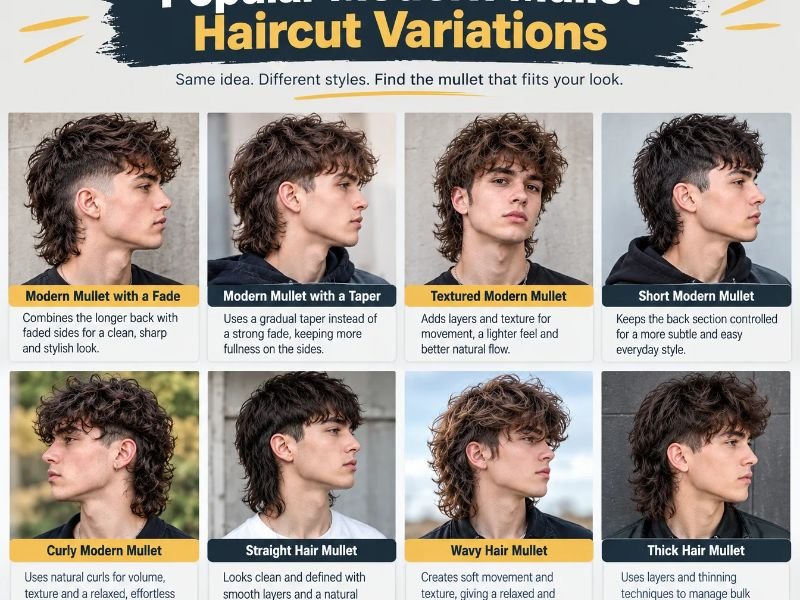
Modern Mullet Haircut With a Fade
This version combines the longer back of a mullet with faded sides.
The fade can be placed lower or higher depending on how much contrast is wanted. A lower fade usually produces a more understated transition, while a higher fade exposes more of the sides and makes the difference in length more obvious.
Modern Mullet Haircut With a Taper
A taper is a softer alternative to a strong fade. Instead of taking a large section of the sides very short, the barber gradually reduces the hair around areas such as the temples, sideburns, and neckline.
This can create a cleaner outline while retaining more fullness around the sides.
Textured Modern Mullet Haircut
Texture changes how the haircut moves and sits.
Rather than allowing the hair to form one solid mass, the barber creates separation between sections. This can be especially useful for thicker hair because it prevents the haircut from becoming excessively heavy.
Short Modern Mullet Haircut
A short version keeps the rear section controlled instead of allowing it to extend far down the neck.
The basic mullet structure remains visible, but the overall haircut appears more restrained. This can also make the transition into everyday styling easier.
Curly Modern Mullet Haircut
Curly hair can give a mullet considerable natural volume and movement.
However, curls can shrink considerably after drying. For that reason, the barber needs to consider the hair’s dry length rather than judging everything while it is wet.
The placement of layers also matters because uneven removal of weight can affect the way curls form.
Wavy Modern Mullet Haircut
Natural waves can create a soft transition between the top and back.
Because wavy hair already provides movement, it may not require aggressive texturing. The goal is usually to preserve the natural pattern while giving the haircut enough structure to maintain its silhouette.
Modern Mullet Haircut for Straight Hair
Straight hair makes the haircut’s shape particularly visible.
Without enough texture, the hair may fall too uniformly and make the style look flat. Carefully placed layers or a small amount of styling product can create separation and direction.
Choosing a Modern Mullet for Your Hair Type:
The best version depends partly on how your hair naturally behaves.
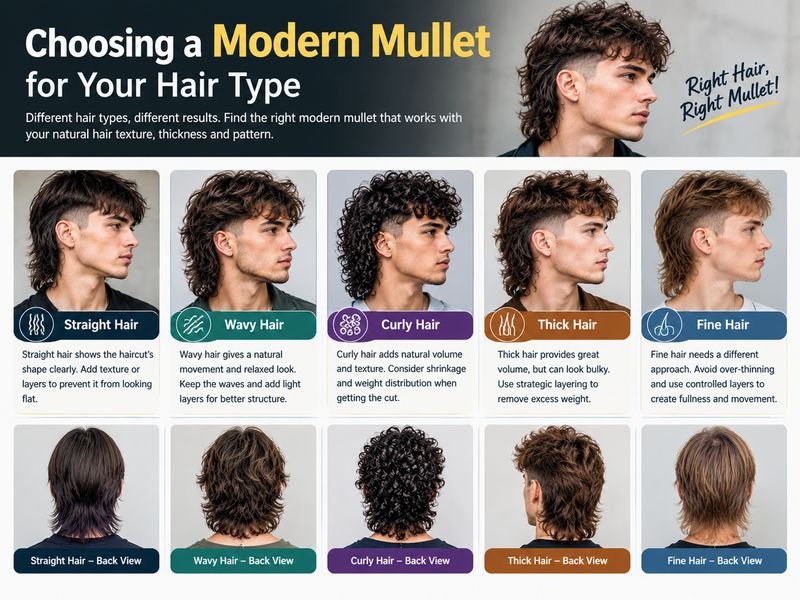
Thick Hair
Dense hair provides plenty of material for building the shape, but excessive weight can make the sides and back look bulky.
Strategic layering can reduce unnecessary heaviness while preserving the overall structure.
Fine Hair
Fine hair needs a different approach. Removing too much hair can make it appear even thinner.
Instead of aggressive thinning, the haircut can rely on controlled layering and styling to create the impression of movement while keeping as much useful density as possible.
Wavy Hair
Wavy hair naturally supports the relaxed appearance of a modern mullet.
The barber should consider the direction and strength of the waves because the final shape may change once the hair dries.
Curly Hair
Curly hair can produce a highly textured result without requiring much daily manipulation.
The main challenge is predicting shrinkage and controlling weight distribution. A shape that looks balanced when wet may become significantly different once the curls contract.
Straight Hair
Straight hair provides a clean outline and makes the haircut’s proportions easy to see.
Adding texture to selected areas can prevent the hair from looking overly flat while keeping the shape controlled.
Modern Mullet Haircut and Face Shape:
Face shape should not be treated as a strict rulebook. Hair length, texture, facial proportions, and personal preference all matter.

Oval Face
An oval face generally allows considerable flexibility. Shorter or longer versions can both work, depending on the overall proportions.
Round Face
Adding some height through the top can create a more elongated visual effect. Excessive width around the sides may make the face appear broader.
Square Face
A square face already has noticeable angles. A structured mullet with controlled sides can complement those features, while texture can prevent the haircut from looking too rigid.
Long Face
With a longer face, excessive height on top may exaggerate the length. Keeping the top and sides proportionate can produce a more balanced result.
Heart-Shaped Face
A balanced amount of hair around the sides and back can complement a narrower lower face. The exact shape should be adjusted according to the individual’s features.
How to Style a Modern Mullet Haircut:
Daily styling depends largely on hair texture.
After washing, allow the hair to become slightly damp before applying a small amount of styling product. Work the product through the areas that need definition rather than coating the entire head heavily.
For straight hair, a blow dryer can help direct the top and add volume.
For wavy hair, using the fingers to separate the natural waves may be enough.
Curly hair can often be left to dry naturally or dried with a diffuser while maintaining the existing curl pattern.
The purpose of styling is to support the haircut’s structure, not completely change the natural behavior of the hair.
How Much Maintenance Does It Need?

Maintenance varies according to the chosen variation.
A very short fade will become noticeable relatively quickly as the hair grows. Someone who wants extremely clean sides may therefore need more regular barber visits.
A taper generally grows out more gradually. A longer back also allows more flexibility because small amounts of growth may not immediately change the overall shape.
Daily maintenance can also vary. Naturally wavy or curly hair may already have enough texture, whereas straight hair may require some styling to achieve separation.
When Should a Modern Mullet Haircut Be Trimmed?
There is no universal trimming schedule.
Instead of relying entirely on a specific number of days, look at the shape of the haircut. If the sides become heavier than intended, the neckline loses its definition, or the back starts growing unevenly, a reshaping appointment may be useful.
People with fades often notice growth sooner because even a small amount of new hair changes the appearance of very short sections.
What to Tell Your Barber:
Simply asking for a “modern mullet” may not be enough because the term covers many different variations.
Before the haircut, explain:
- How much length you want to keep at the back
- Whether you prefer a taper or fade
- How short you want the sides
- Whether you want a subtle or strong contrast
- How much texture you want on top
- How you normally style your hair
- Whether you want your natural waves or curls preserved
A reference photograph can also be useful. Ideally, choose an image that shows the haircut from the front, side, and back.
Common Mistakes With a Modern Mullet Haircut:
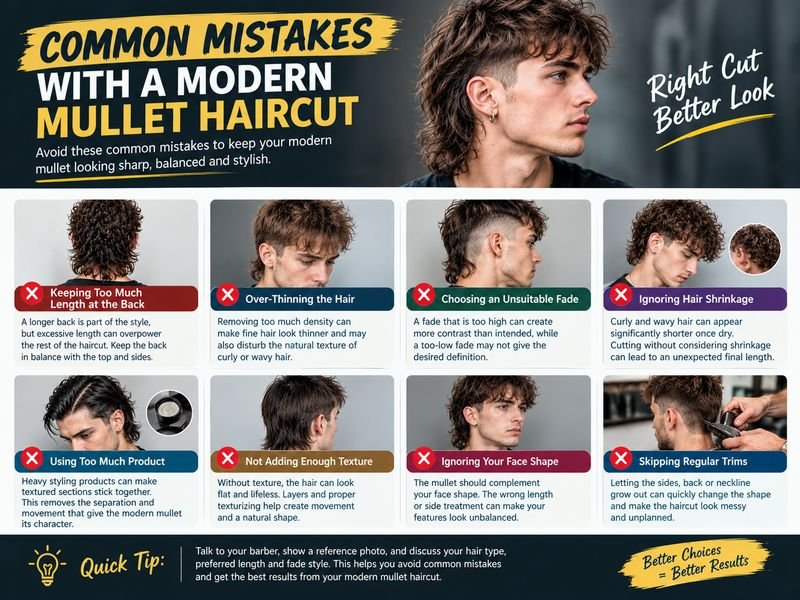
Keeping Too Much Length at the Back
A longer back is part of the haircut, but excessive length can overpower the rest of the shape.
The back should have a relationship with the top and sides rather than existing as a completely separate section.
Over-Thinning the Hair
Removing too much density can weaken the appearance of fine hair and may also disturb the natural behavior of textured hair.
Choosing an Unsuitable Fade
The height of the fade affects the entire silhouette. A fade that is too high can create more contrast than intended, while an overly low treatment may not provide the desired definition.
Ignoring Hair Shrinkage
Curly and strongly wavy hair can appear considerably shorter once dry. Cutting without considering this can result in an unexpected final length.
Using Too Much Product
Heavy styling products can make textured sections stick together. This may remove the separation and movement that give the modern mullet its character.
Who Is a Modern Mullet Suitable For?
There is no single age, hair type, or face shape required for this haircut.
Its main advantage is adaptability. The same basic structure can be made subtle by keeping the back short and the sides soft, or more noticeable by increasing the length difference and using a stronger fade.
The most useful approach is to choose the version according to natural hair behavior, desired maintenance, and the amount of contrast that feels appropriate.
Modern Mullet vs. Other Layered Haircuts:
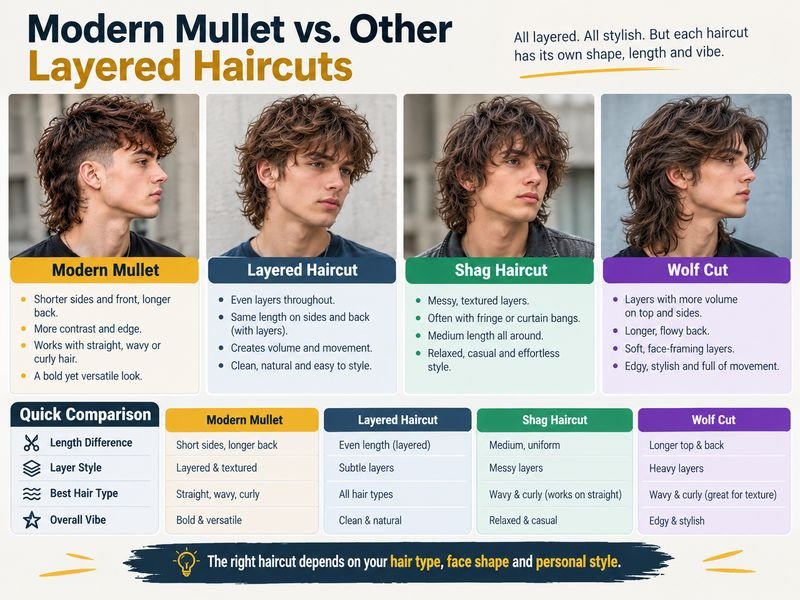
Several modern hairstyles share characteristics with the mullet, which can make them easy to confuse.
A shag haircut generally spreads layers more evenly through the sides and back. A mullet places greater emphasis on keeping the back longer than the surrounding areas.
A wolf cut often combines characteristics of a shag and a mullet. It usually features extensive layers and a softer, more irregular silhouette.
A mullet fade is specifically identified by the combination of a longer back with faded sides.
These styles can overlap, but their proportions, layering, and side treatments can produce noticeably different results.
Frequently Asked Questions:
What defines a modern mullet haircut?
The defining feature is the difference in length between the shorter front and sides and the longer back. Modern versions may use layers, texture, tapers, or fades to create a contemporary shape.
Can a modern mullet work with straight hair?
Yes. Straight hair can show the haircut’s structure clearly. Adding controlled texture or layers can help create more movement.
Is a modern mullet suitable for curly hair?
Yes. Curly hair can give the haircut natural volume and texture. The cutting process should account for shrinkage and the curl pattern.
Does a modern mullet require frequent trims?
It depends on the variation. Short fades usually need more frequent maintenance, while softer tapers and longer sides can grow out more gradually.
How long should the back be?
There is no fixed measurement. The back can be only slightly longer than the sides or significantly longer. The correct length depends on the desired silhouette and natural hair characteristics.
What is the difference between a mullet and a wolf cut?
A mullet places more emphasis on the longer back and shorter sides. A wolf cut generally uses heavier layering throughout the hair and has a more blended, shag-inspired structure.
Can men with fine hair wear a modern mullet?
Yes. The haircut should simply be planned to preserve useful density. Excessive thinning can make fine hair appear less full.
Final Thoughts:
A modern mullet is best understood as a flexible haircut structure rather than one fixed style. Its defining feature is the longer back, but the final appearance can change considerably through the use of fades, tapers, layers, texture, and different lengths.
Hair type should also influence the cutting approach. Straight hair may need additional texture, while waves and curls already provide natural movement. Thick hair may require weight control, whereas fine hair benefits from retaining as much useful density as possible.
The most successful result comes from matching the haircut to the natural behavior of the hair and clearly communicating the desired length and side treatment to the barber. Once those factors are considered, the modern mullet can be adapted into a subtle, textured, or more pronounced haircut without losing its defining shape.