
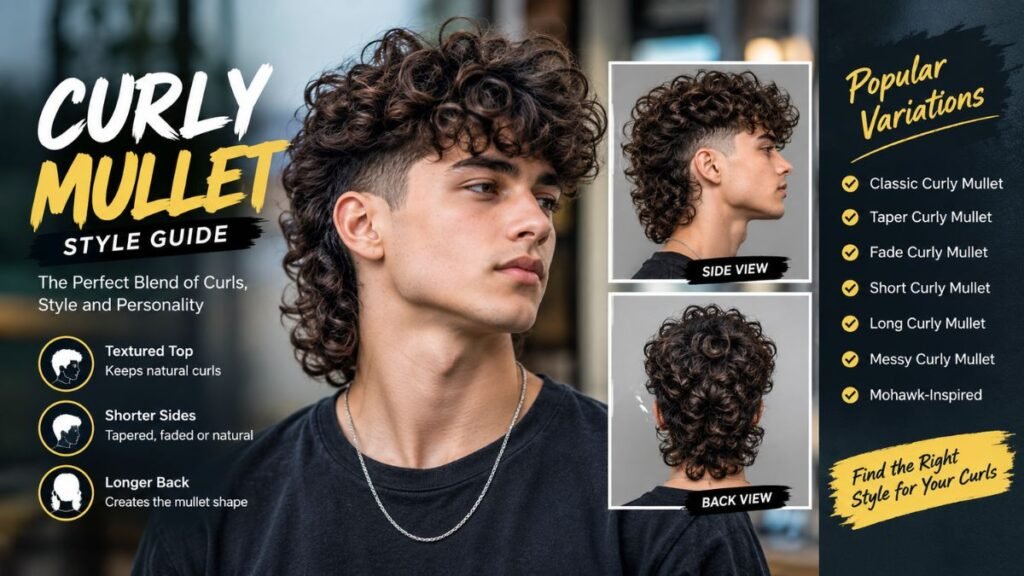
A curly mullet is a men’s haircut that keeps the front and sides shorter while leaving extra length at the back. Natural curls give this style its shape, making the back look fuller and the top more textured.
Unlike straight hair, curls can shrink, become wider as they dry, and form different patterns. That is why getting the right length and shape is important. A well-cut style should work with your natural curls instead of making them difficult to manage.
This guide explains the most important things to know before getting a curly mullet, including the best variations, barber instructions, styling tips, and common mistakes.
What Is a Curly Mullet?
The haircut has three main features:
- Shorter sides: The sides may be trimmed naturally, tapered, or faded.
- Textured top: The top keeps enough length for the curls to form naturally.
- Longer back: The rear section remains longer than the sides, creating the mullet shape.
Curly hair adds volume and movement to each section. Loose curls create a softer appearance, while tighter curls can produce a fuller and more noticeable shape.
The haircut does not need to look perfectly neat. A little natural unevenness can make the curls look more relaxed and authentic.
Who Can Get This Haircut?
This style can work for boys, teenagers, and men with different types of curly hair. However, the best version depends on your hair thickness, curl pattern, and lifestyle.
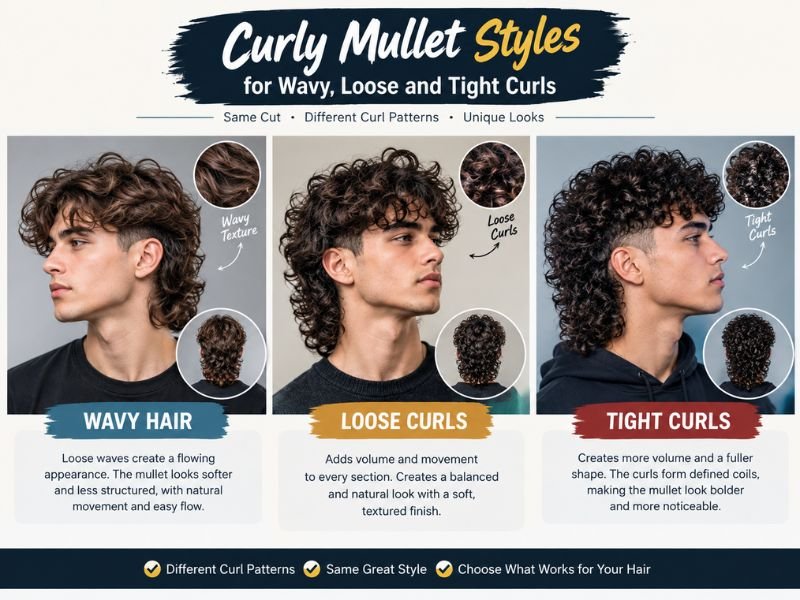
Curly Mullet and Wavy Hair
Loose curls create a flowing appearance, while tighter curls give the back more volume. Wavy hair can also work, although the result will look softer and less rounded.
If your hair shrinks significantly after drying, you may need to keep more length than you initially expect.
Thick Hair
Thick curls can make the top and back look full. They may also create excess bulk around the ears and sides.
A barber can remove some of that weight, but removing too much hair may make the shape look thin or uneven.
Fine or Thin Hair
Fine hair can support a shorter, more controlled version. Keeping enough length at the back is important because excessive trimming may make the style lose its shape.
Age and Lifestyle
A short taper version may be easier for school, college, or a professional workplace. A longer or more dramatic cut may suit someone who enjoys a bold appearance.
Think about your daily routine before choosing the length. If you do not want to spend time styling your curls, a shorter version may be more practical.
Popular Curly Mullet Variations:
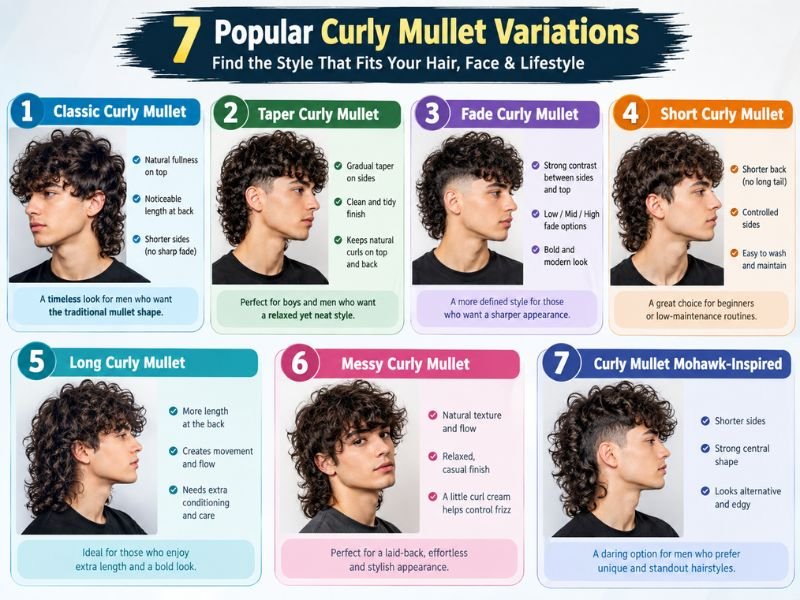
1. Classic Curly Mullet
This version keeps natural fullness on top and noticeable length at the back. The sides are shorter but do not necessarily have a fade.
It is a good choice for men who want the traditional mullet shape without an extremely sharp contrast.
2. Taper Curly Mullet
A taper gradually shortens the hair around the sideburns and neckline, creating a cleaner finish than some other taper hairstyles for men.
This option suits boys and men who want a relaxed haircut that still looks tidy.
3. Fade Curly Mullet
A fade creates a stronger contrast between the short sides and the longer top and back.
- Low fade: Gives a softer transition.
- Mid fade: Creates a more noticeable change in length.
- High fade: Produces a bold, dramatic appearance.
A fade usually needs more frequent trimming to keep its shape.
4. Short Curly Mullet
A short version keeps the back longer than the sides but avoids a long tail. It is useful for beginners who want to try the style without committing to significant length.
It is also easier to wash, dry, and maintain than a longer version.
5. Long Curly Mullet
This haircut leaves more length at the back, allowing the curls to hang farther down the neck.
It creates more movement but may require extra conditioning and careful detangling. The back should retain enough thickness so it does not look thin or stringy.
6. Messy Curly Mullet
This version focuses on natural texture rather than a perfectly arranged finish. The curls are allowed to form their own sections, giving the haircut a casual appearance.
A small amount of curl cream can help control frizz without making the hair look stiff.
7. Curly Mullet Mohawk-Inspired
This is a more daring variation. The sides are cut shorter, while the curls on top and at the back create a stronger central shape.
It suits men who prefer alternative hairstyles and do not mind a more noticeable haircut.
How to Choose the Right Curly Mullet Length:
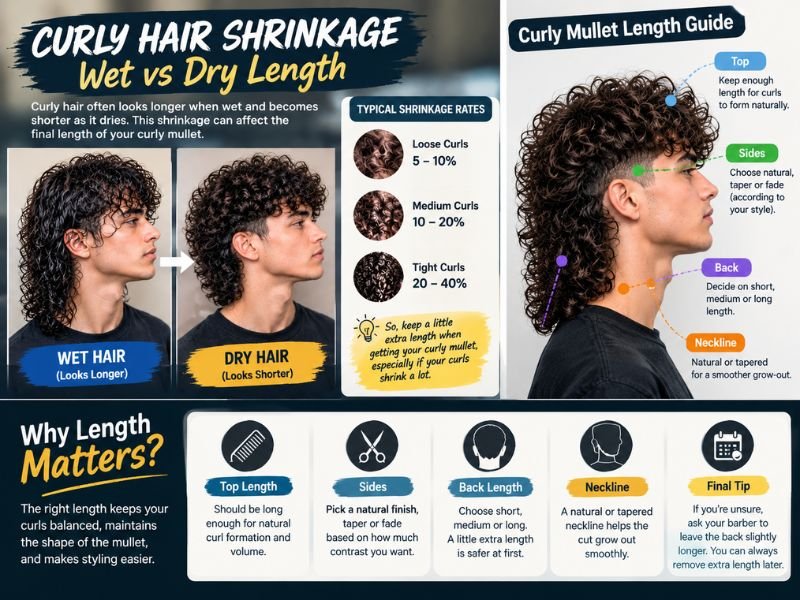
Length is especially important when cutting curly hair because of curl shrinkage.
Hair often looks longer when wet and becomes shorter as it dries. Tight curls may shrink considerably, while loose curls and waves usually show less shrinkage.
Before your haircut, consider these points:
- Top: Keep enough length for the curls to form naturally.
- Sides: Choose a natural finish, taper, or fade according to your preferred level of contrast.
- Back: Decide whether you want a short, medium, or long rear section.
- Neckline: A natural or tapered neckline can make the haircut grow out more smoothly.
If you are unsure about the length, ask your barber to leave the back slightly longer at first. It is easier to remove extra length than to correct a back that has been cut too short.
How to Explain the Haircut to Your Barber:
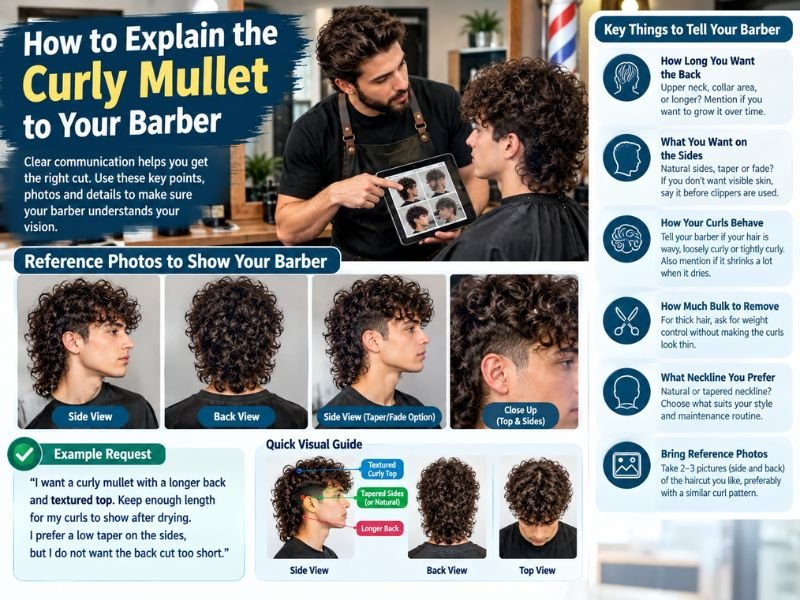
A clear explanation can prevent an unwanted result. Do not rely only on the word “mullet,” because barbers may interpret the shape differently.
Tell your barber:
How Long You Want the Back
Explain where you want the back to finish. You may prefer the upper neck, the collar area, or a longer shape.
Mention whether you want to grow it longer over time.
What You Want on the Sides
Choose between natural sides, a taper, or a fade. If you do not want visible skin, say so before the barber starts using clippers.
How Your Curls Behave
Explain whether your hair is wavy, loosely curly, or tightly curly. Tell the barber if it becomes much shorter after drying.
This helps them judge the length more accurately.
How Much Bulk to Remove
If your hair is thick, ask the barber to reduce unnecessary weight without making the curls look thin.
Too much thinning can affect the shape, especially around the top and back.
What Neckline You Prefer
A natural neckline gives a softer finish. A taper creates a cleaner outline and may be easier to maintain.
Bring Reference Photos
Take two or three pictures showing the haircut from the side and back. Choose photos of people with a similar curl pattern if possible.
A useful request could be:
“I want a curly mullet with a longer back and textured top. Keep enough length for my curls to show after drying. I prefer a low taper on the sides, but I do not want the back cut too short.”
How to Style a Curly Mullet at Home:
You do not need many products to style this haircut. A simple routine can help the curls look defined and reduce frizz.
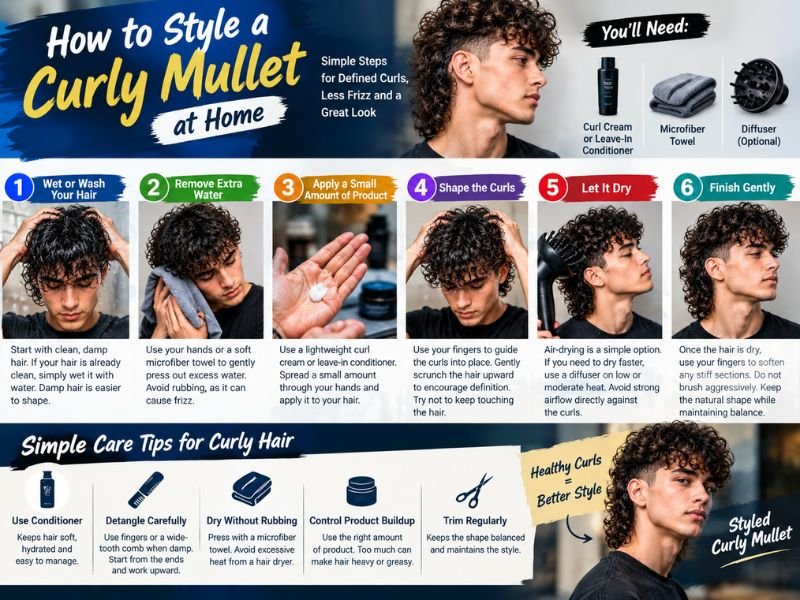
1. Wet or Wash Your Hair
Start with clean, damp hair. If your hair is already clean, you can simply wet it with water.
Damp hair is easier to shape because the curls become more flexible.
2. Remove Extra Water
Use your hands or a soft microfiber towel to gently press out excess water.
Avoid rubbing the hair roughly. Friction can disturb the curl pattern and create frizz.
3. Apply a Small Amount of Product
Use a lightweight curl cream or leave-in conditioner. Spread a small amount through your hands and apply it to the top and back.
The product helps the curls stay together and makes the hair easier to manage. Too much can make the hair heavy or greasy.
4. Shape the Curls
Use your fingers to guide the curls into place. Gently scrunch the hair upward to encourage definition.
Try not to keep touching the hair once the curls have formed.
5. Let It Dry
Air-drying is a simple option. If you need to dry the hair faster, use a diffuser on a low or moderate heat setting.
Avoid strong airflow directly against the curls because it can increase frizz.
6. Finish Gently
Once the hair is dry, use your fingers to soften any stiff sections. Do not brush the curls aggressively.
The aim is to keep the natural shape while making the haircut look balanced.
Simple Care Tips for Curly Hair:
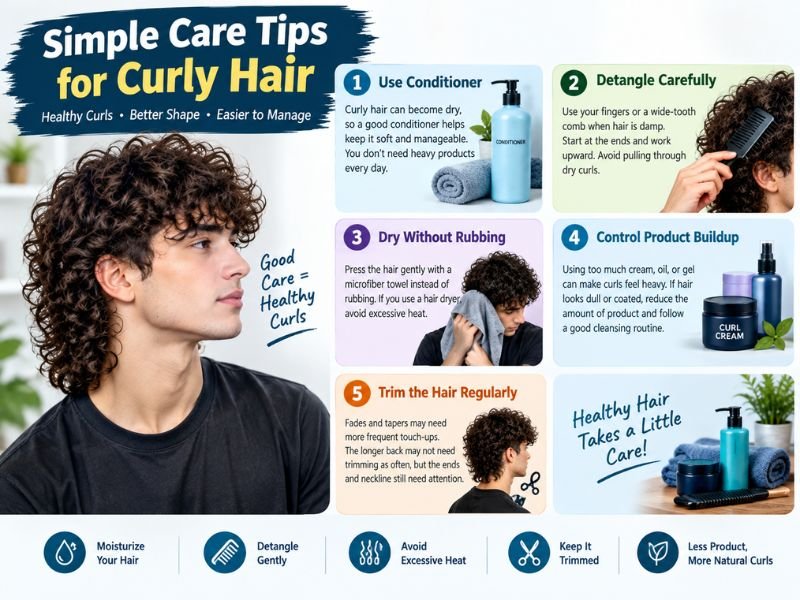
Good maintenance helps the haircut keep its shape between barber visits.
Use Conditioner
Curly hair can become dry, especially when it is thick or tightly curled, so a good hair care routine can help maintain softness and manageability.
You do not necessarily need heavy products every day.
Detangle Carefully
Use your fingers or a wide-tooth comb when the hair is damp. Start at the ends and work upward.
Avoid pulling through dry curls because this can create frizz and breakage.
Dry Without Rubbing
Press the hair gently with a microfiber towel instead of twisting or rubbing it.
If you use a hair dryer, avoid excessive heat.
Control Product Buildup
Using too much cream, oil, or gel can make the curls feel heavy. If the hair starts looking dull or coated, reduce the amount of product you apply and follow a suitable cleansing routine.
Trim the Hair Regularly
Fades and tapers may need more frequent touch-ups than natural sides. The longer back may not need trimming as often, but the ends and neckline still need attention.
A trim helps maintain the balance of the haircut.
Common Mistakes to Avoid:
Cutting the Back Too Short
A short back may remove the main feature of the style.
Solution: Discuss the desired dry length with your barber before cutting.
Ignoring Shrinkage
Wet curls often look longer than dry curls.
Solution: Judge the length according to how your hair looks when dry.
Removing Too Much Weight
Excessive thinning can make the curls look weak or uneven.
Solution: Ask the barber to control bulk carefully.
Using Too Much Product
Heavy hair styling products can flatten the curls and make natural texture harder to maintain.
Solution: Start with a small amount and add more only when needed.
Brushing Dry Curls
Dry brushing often separates the curl groups and increases frizz.
Solution: Detangle damp hair with your fingers or a wide-tooth comb.
Using Too Much Heat
Frequent high heat may leave curly hair dry and rough.
Solution: Use lower heat and allow the hair to air-dry when possible.
Trying to Make Every Curl Perfect
Natural curls do not all have the same size or direction.
Solution: Focus on the overall shape rather than making every curl identical.
Curly Mullet Style Guide:
| Style | Best For | Maintenance | Overall Effect |
| Classic curly version | Men who want natural fullness | Moderate | Relaxed and textured |
| Curly taper mullet | Boys and men who prefer a softer outline | Moderate | Clean but natural |
| Curly fade mullet | Those who want strong contrast | High | Sharp and bold |
| Short curly mullet | Beginners and low-maintenance routines | Low to moderate | Subtle and practical |
| Long curly mullet | Men who enjoy extra length | Moderate to high | Full and flowing |
| Messy curly mullet | People who like an informal finish | Moderate | Casual and textured |
| Mohawk-inspired version | Those who prefer a daring style | High | Dramatic and distinctive |
FAQS:
1. Can boys with short curls get this haircut?
Yes. A short version can work if the back has enough length to create a visible difference from the sides.
2. Is thick Curly Mullet hair suitable for this style?
Yes, but thick hair may need careful weight control. Removing too much can make the curls look thin.
3. Do I need a fade?
No. You can choose natural sides, a taper, or a fade. The choice depends on how much contrast you want.
4. How often should I trim the sides?
A fade may need attention every few weeks. A taper or natural-sided cut can usually grow out for longer.
5. Which product is best for beginners?
A lightweight curl cream or leave-in conditioner is a good starting point. Use a small amount and see how your hair responds.
6. Can wavy hair have a mullet?
Yes. Wavy hair can create a softer version with more flow and less defined curl volume.
Final Thoughts:
The best curly mullet is one that matches your natural texture and daily routine. The right length can make your curls look fuller, while a suitable taper or fade can keep the sides under control.Before getting the haircut, discuss shrinkage, back length, and bulk removal with your barber. Start with a shape that feels manageable, especially if you have never worn a mullet before.
A well-planned cut does not require perfect curls or complicated styling. It should give your natural hair a clear shape while allowing you to feel comfortable wearing it every day.Discover the best curly mullet styles for boys and men. Learn how to choose the right length, style natural curls, avoid common mistakes, and maintain your haircut.