
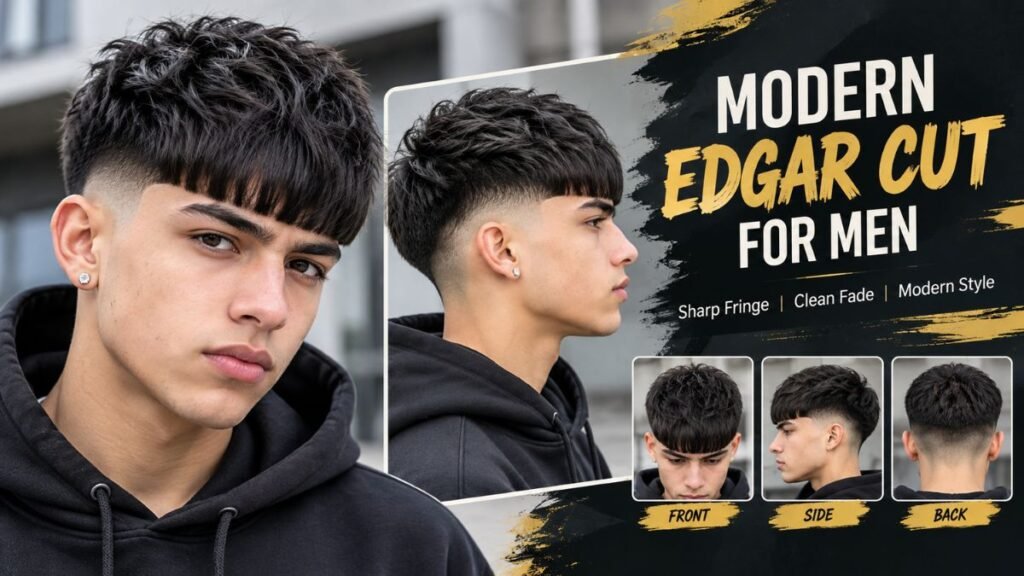
Some haircuts are designed to look neat and professional. Others are meant to attract attention. The Edgar Cut belongs to the second category. With its straight fringe, short sides, and distinctive shape, it is difficult to mistake this hairstyle for anything else.
For some people, the Edgar is simply a haircut. For others, it represents childhood memories, cultural identity, and a way of standing out. Its appearance may seem simple, but the story behind it is much more interesting than a few snips of scissors.
The Edgar Cut has become especially recognizable among young men and boys. Social media has helped introduce it to new audiences, while barbers have continued experimenting with different versions. Whether someone chooses a traditional look or a modern fade, the haircut has developed an identity of its own.
A Haircut With a Personality of Its Own:
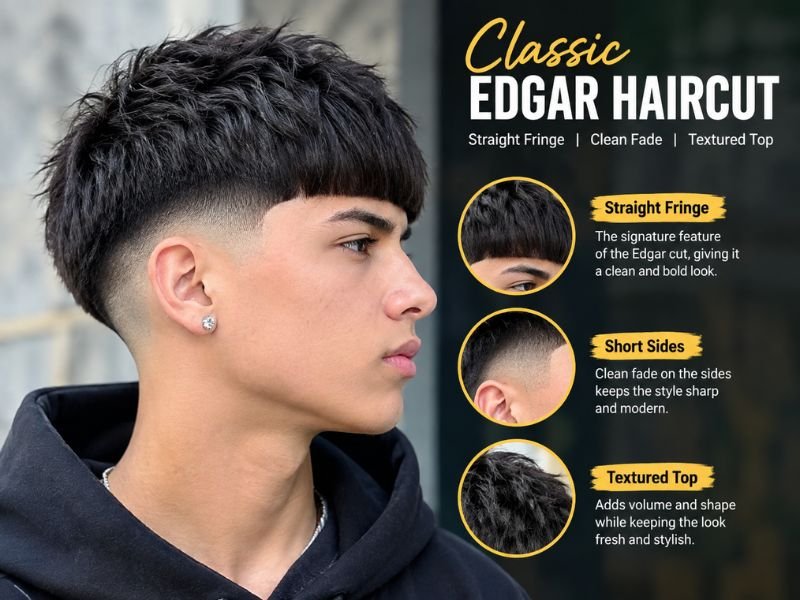
The first thing people usually notice about an Edgar Cut is its fringe. Unlike hairstyles that sweep hair to the side or push it away from the forehead, the Edgar keeps the front short, straight, and clearly defined.
The top is generally left longer than the sides, creating a noticeable contrast. Some versions have a rounded appearance, while others feature sharp lines and a textured finish. A fade or undercut can make the difference between the top and sides even more noticeable.
It is a haircut that does not try to disappear into the background. Its strong outline makes it recognizable from a distance, and its unusual shape can attract both admiration and criticism.
That contrast is part of what makes the Edgar interesting. Not everyone likes it, and not everyone is supposed to. Some hairstyles become popular because they are universally appealing. The Edgar has followed a different path.
From Traditional Haircuts to a Modern Trend:
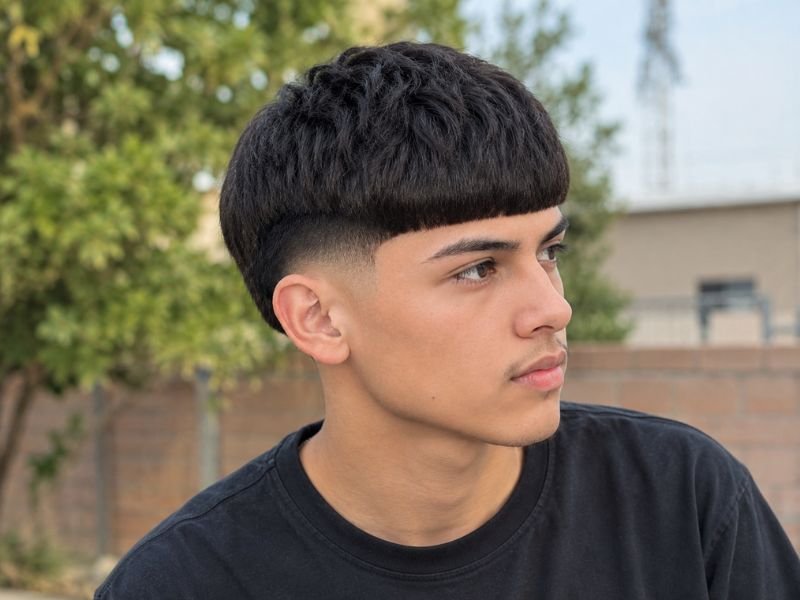
The Edgar Cut did not appear out of nowhere. Similar short, rounded hairstyles have existed for generations. What has changed is the way people wear them and the attention they receive.
The modern Edgar became particularly visible among Mexican American communities and other Latino youth. It is also associated with the Takuache style, a cultural fashion that includes distinctive clothing, boots, trucks, and carefully maintained haircuts.
For many young men, the hairstyle became part of a recognizable appearance. A sharp fringe and closely faded sides could turn an otherwise ordinary haircut into something immediately identifiable.
Social media later helped spread the style beyond its original communities. Photos, videos, memes, and barber transformations introduced the haircut to people who might never have encountered it at their local barbershop.
However, popularity has not meant universal acceptance. The Edgar has often been the subject of jokes and online criticism. Its bold appearance makes it easy to recognize, but also easy for people to misunderstand.
Why the Edgar Cut Attracts So Much Attention:
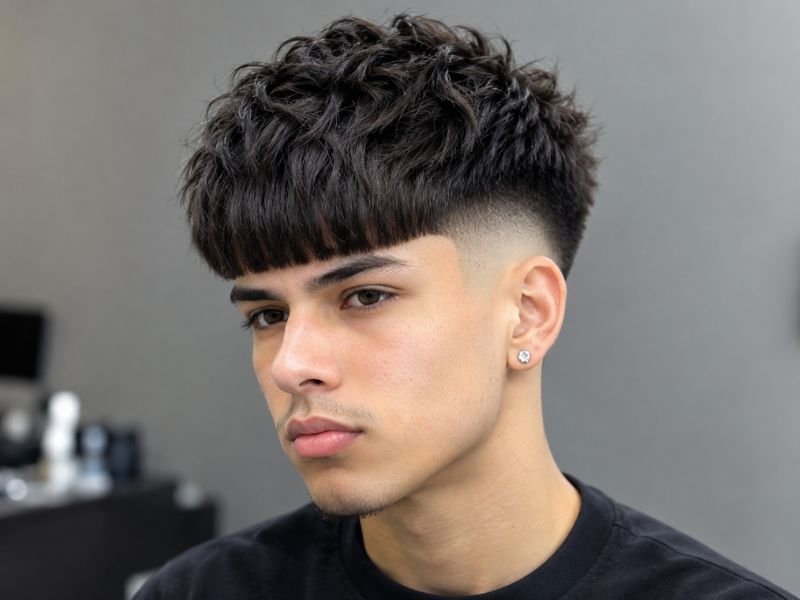
There is something unusual about a haircut that can inspire both strong affection and equally strong criticism.The Edgar is not particularly complicated in its basic form. It usually features short sides, a relatively straight fringe, and a defined top. Yet small changes in length, texture, and fading can dramatically change its appearance.
Part of its appeal comes from that flexibility. A teenager might choose a sharp, high-fade version, while someone else might prefer a softer fringe and a more natural finish.
The haircut also has a connection to childhood. Some people remember having similar hairstyles when they were younger, often because their parents chose their haircuts for them. Wearing the style again as an adult can turn an old childhood look into a deliberate fashion choice.
For others, the Edgar is simply a way to express their personality. It can be playful, unconventional, or deliberately different from the hairstyles commonly seen in schools and workplaces.
The Cultural Side of the edgar cut:
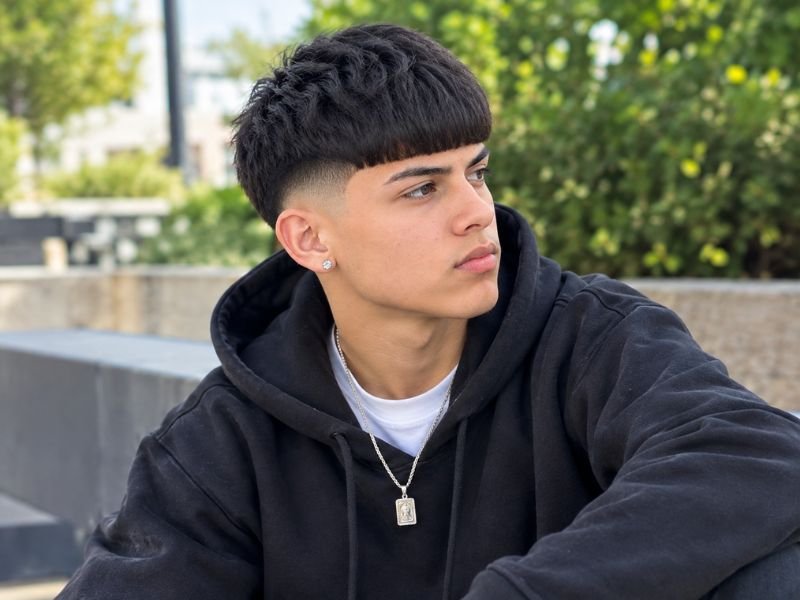
The Edgar Cut has become closely associated with Mexican American youth culture, particularly in parts of the United States.Its connection to the Takuache community has helped give it a recognizable identity. The hairstyle often appears alongside particular clothing styles and other elements of regional youth fashion.But a haircut does not have to mean exactly the same thing to everyone who wears it. One person might choose an Edgar because it connects them with their cultural background. Another might simply like the way it looks.
The hairstyle has also become a subject of online humor. Memes frequently exaggerate its sharp fringe or combine it with stereotypical images of young men. Although some people find these jokes entertaining, they can also reinforce unfair assumptions about the people who wear the haircut.
It is worth remembering that a hairstyle cannot tell you everything about someone’s personality, background, or interests.The Edgar’s cultural associations are part of its story, but they do not define every person who chooses it.
A Style That Has Changed With Time:
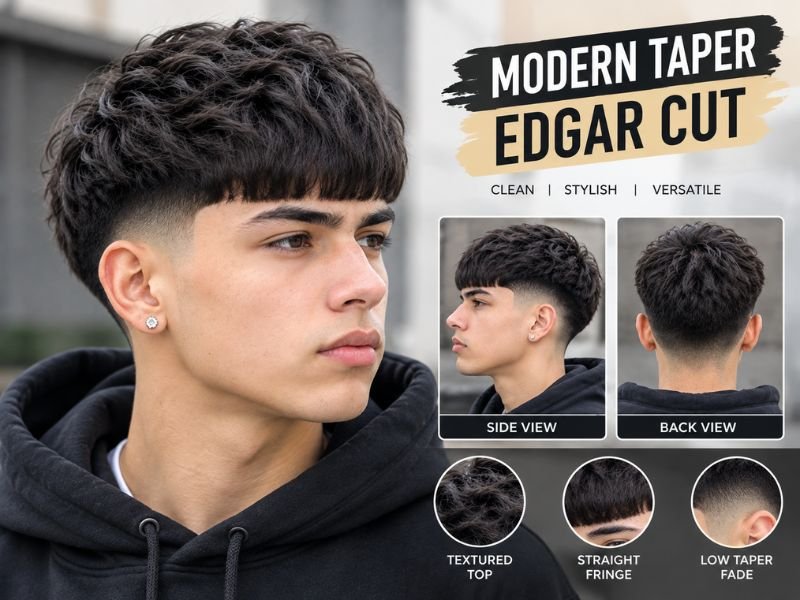
The traditional Edgar is recognizable for its straight fringe and rounded shape. Modern barbers, however, have introduced numerous variations.Some versions feature a low taper that keeps the sides relatively subtle. Others use a high fade to create a much sharper contrast. Textured tops, curly finishes, and different fringe lengths have also expanded the possibilities.
These changes have helped the haircut appeal to people with different hair types and personal preferences.A curly Edgar, for example, can look considerably different from a traditional straight-haired version. The natural texture adds movement to the top, while the fringe maintains the haircut’s distinctive outline.
The modern Edgar is therefore not a single fixed style. It is a family of related haircuts that share a recognizable shape but allow plenty of room for individual choices.
The Barber’s Role in Creating the Edgar Cut:
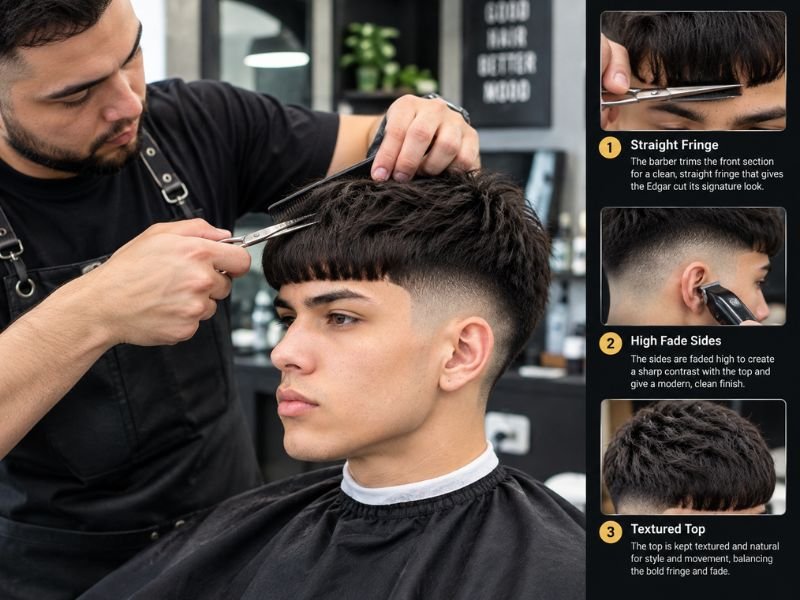
At first glance, the Edgar might look like a simple haircut. However, achieving a clean and balanced result requires attention to detail.The fringe is particularly important. If it is cut unevenly, the entire hairstyle can look unbalanced. The sides also need to complement the shape of the top rather than making the haircut appear disconnected unintentionally.A skilled barber considers the client’s hair texture, hairline, and head shape before deciding how to cut the hair.
Communication is equally important. Someone asking for an Edgar should explain whether they want a low, mid, or high fade and how short they want the fringe.Bringing a reference photograph can help avoid misunderstandings. Two people may use the same name for a haircut but imagine completely different results.The best approach is to discuss the details before the barber starts cutting.
The Edgar Cut and the Internet:
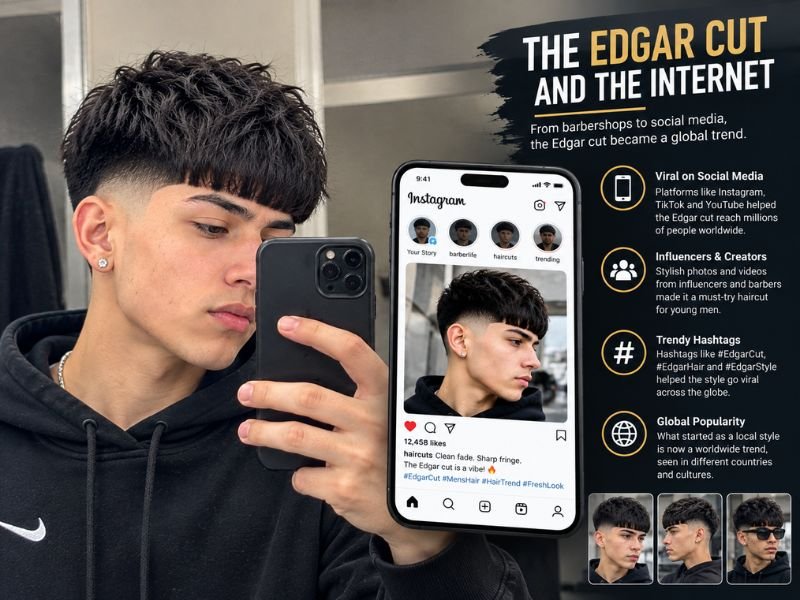
Social media has played a major role in making the Edgar recognizable around the world.Barber transformation videos show how a simple haircut can change someone’s appearance. Short clips often focus on the moment when the fringe is shaped and the fade is completed.The hairstyle has also become popular in memes. Its distinctive outline makes it easy to recognize, even in a small photograph or a short video.
This online attention has created an interesting situation. Some people discover the Edgar through barber videos and decide to try it themselves. Others encounter it through jokes before they ever learn about its cultural background.As a result, the haircut has developed two very different reputations. To some, it is a fashionable and meaningful style. To others, it is simply an internet joke.Both reactions have contributed to its visibility.
Why Some People Love It and Others Don’t:
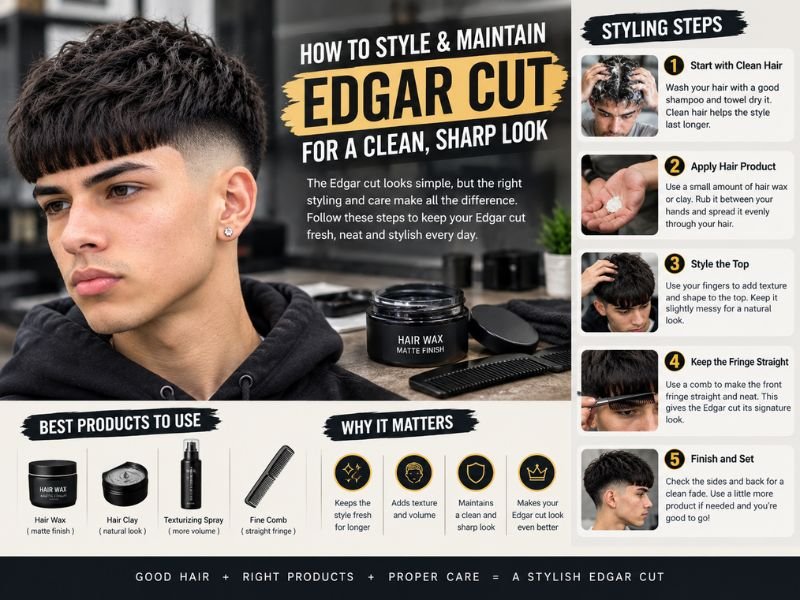
The Edgar is a good example of how personal style can divide opinions.People who enjoy the haircut often appreciate its strong shape and distinctive fringe. It offers a noticeable alternative to more conventional short hairstyles.Its different variations also make it adaptable. Someone who wants a dramatic appearance can choose a high fade, while a person who prefers a more understated look can ask for a low taper.
On the other hand, the straight fringe is not everyone’s preference. Some people find the shape too bold or prefer hairstyles that allow more movement around the forehead.Hair texture and maintenance can also influence someone’s experience. A person with naturally straight hair may find it easier to maintain a precise fringe, while someone with wavy or curly hair may need a different approach.Ultimately, the Edgar is a hairstyle that depends heavily on personal taste. Its popularity does not mean everyone has to like it.
Maintaining the Edgar Cut:
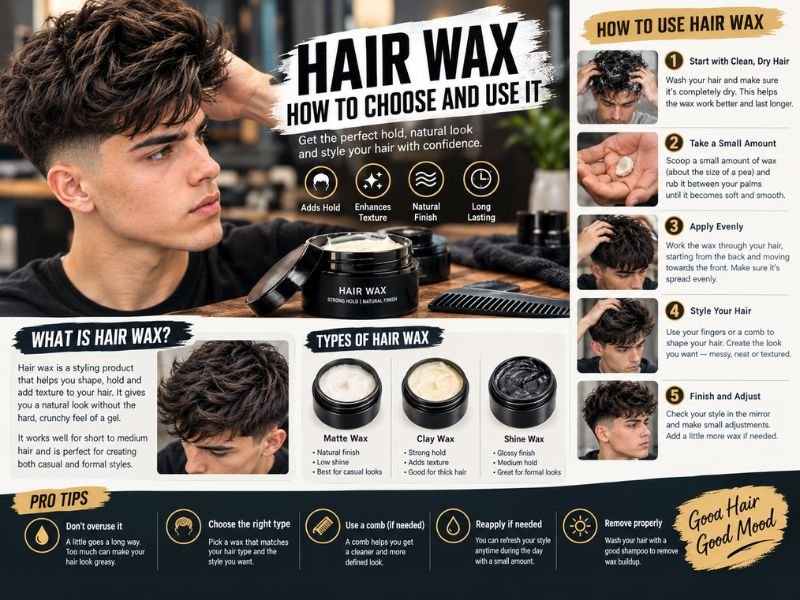
One of the defining features of the Edgar is its clean outline. Unfortunately, that is also what makes maintenance important.As the hair grows, the fringe can lose its original shape, and the fade gradually becomes less noticeable. Regular visits to the barber help preserve the haircut’s structure.The amount of maintenance depends on the version. A very short fade may need more frequent trimming than a softer, longer style.
Styling can be relatively simple. A small amount of lightweight styling product may help control the top without making it look stiff. People with textured hair can use products designed to enhance their natural pattern.Washing and conditioning should also suit the individual’s hair type. There is no single routine that works for everyone.The important thing is to maintain the shape without making daily styling unnecessarily complicated.
More Than Just a Edgar Cut:
The Edgar Cut has developed a life beyond the barbershop. Its distinctive appearance has made it a recognizable part of contemporary youth fashion, while its cultural associations have given it a deeper meaning for some of the people who wear it.
It has been celebrated, criticized, photographed, and turned into countless internet jokes. Yet it continues to appear in different forms, from traditional cuts to modern fades and textured styles.
Perhaps the most interesting thing about the Edgar is that it does not need everyone to approve of it. Its appeal comes partly from its willingness to look different.
For someone choosing a new hairstyle, that may be reason enough to give it a try. Whether it is a connection to childhood, a reflection of personal style, or simply a haircut that looks good, the Edgar leaves room for individual expression.And that is what makes it more than just another short haircut.
Frequently Asked Questions:
1. What is an Edgar Cut?
An Edgar Cut is a men’s hairstyle known for its short, straight fringe, defined top, and closely trimmed or faded sides. It can be customized with different fade and texture options.
2. Is an Edgar Cut good for curly hair?
Yes, an Edgar Cut can work well with curly hair. Keeping the curls textured on top while shortening the sides creates a distinctive and modern finish.
3. What is the difference between an Edgar Cut and a Takuache haircut?
The two terms are often associated with each other, but they do not always mean exactly the same thing. Edgar generally refers to the haircut, while Takuache can describe a broader style and cultural aesthetic.
4. How often should an Edgar Cut be trimmed?
Most people need regular trims to keep the fringe and fade looking sharp. The exact timing depends on how quickly your hair grows and how clean you want the haircut to remain.
5. Can I style an Edgar Cut at home?
Yes. You can maintain the top and fringe at home with a suitable styling product, but keeping the fade and precise shape usually requires a barber.
Conclusion:
The Edgar Cut has become much more than a simple short hairstyle. Its distinctive fringe, defined shape, and variety of modern versions have helped it become one of the most recognizable men’s haircuts today.From the classic Edgar to low taper, mid taper, textured, and curly versions, there are plenty of ways to adapt the style to different hair types and personal preferences. Its cultural background and rise through social media have also played an important role in making the haircut widely known.
If you are thinking about trying an Edgar, start by choosing a version that works with your hair texture and desired level of maintenance. Bringing a reference photo to your barber can also make it easier to get the shape and finish you want.Whether you prefer a sharp fade or a softer taper, the Edgar Cut gives you plenty of room to create a look that feels distinctly your own.