
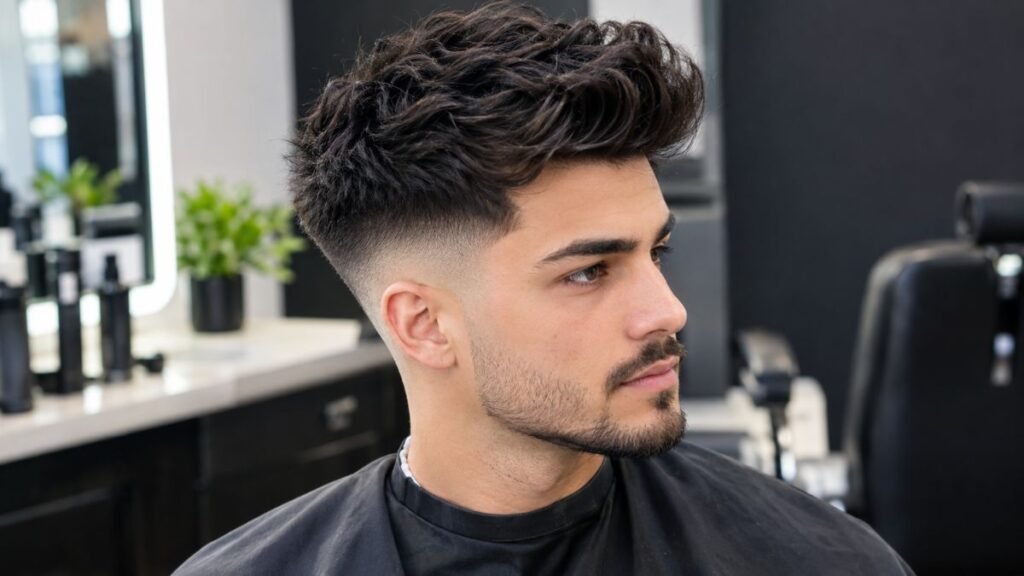
The High Taper Fade is a clean and modern haircut that creates a noticeable contrast between the hair on top and the shorter areas around the temples and neckline. Unlike a low taper, the transition begins higher on the sides, giving the haircut a sharper and more defined appearance.
One reason the high taper fade is so versatile is that it can be combined with many different hairstyles. You can wear it with curls, straight hair, a textured top, fringe, waves, a buzz cut, or longer hair. The right version depends on your hair type, preferred length, face shape, and how much daily styling you want to do.
What Is a High Taper Fade?
A high taper fade gradually shortens the hair around the upper sideburns, temples, and neckline while keeping more length toward the upper sides and top. The transition creates a noticeable contrast without necessarily removing all the hair from the sides.
The top can be kept short, medium, or long depending on the desired hairstyle. This makes the high taper fade suitable for everything from simple low-maintenance cuts to textured and more detailed styles.
25 High Taper Fade Haircuts for Men
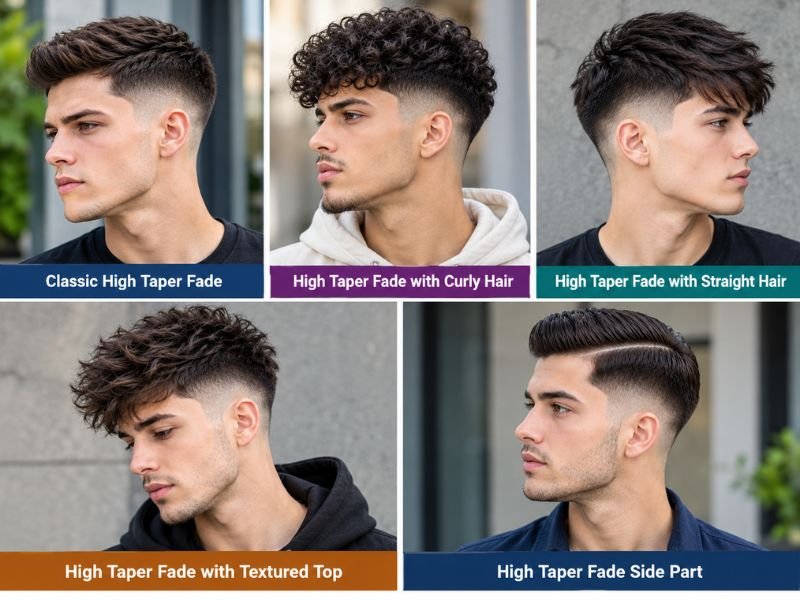
1. Classic High Taper Fade
The classic high taper fade keeps the sides and neckline clean while leaving enough length on top for everyday styling. It is a straightforward option for men who want a defined haircut without an overly complicated design.
The top can be brushed forward, pushed back, or styled naturally depending on your hair texture.
2. High Taper Fade with Curly Hair
Curly hair creates strong natural texture on top, while the high taper cleans up the sides and around the neckline.
Keep enough length on top to allow the curls to maintain their natural shape. A lightweight curl cream can help reduce frizz while keeping the curls flexible.
3. High Taper Fade with Straight Hair
Straight hair works particularly well when you want a structured top. You can leave the hair slightly longer and style it upward, backward, or toward one side.
A lightweight styling product can provide control without making straight hair look excessively heavy.
4. High Taper Fade with Textured Top
A textured top adds movement and separation to the haircut. Instead of keeping every strand perfectly uniform, the top is cut and styled to create different lengths and visible texture.
This option works especially well for men who prefer a relaxed but modern appearance.
5. High Taper Fade Side Part
The side part gives the high taper fade a more traditional appearance. The sides remain sharply tapered while the longer top is directed toward one side.
A comb and medium-hold styling product can help maintain the part throughout the day.
6. High Taper Fade with Fringe
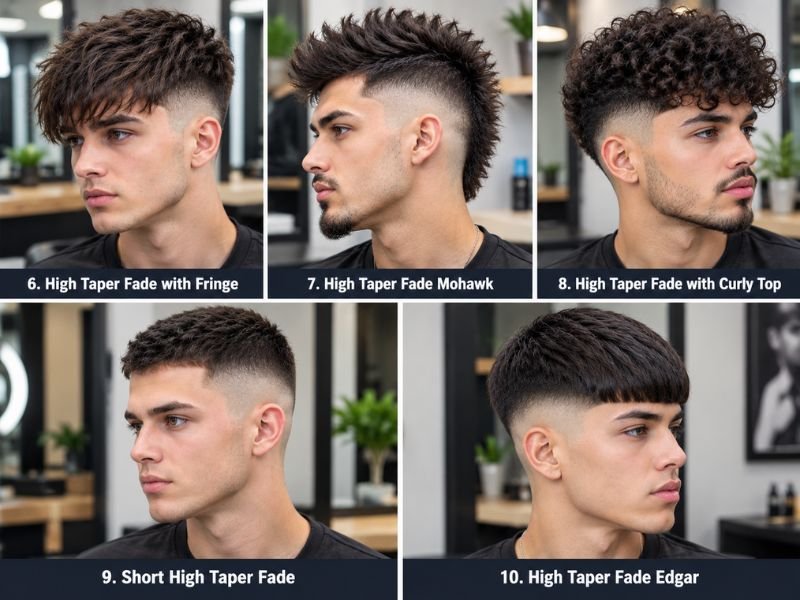
A fringe changes the appearance of the haircut by bringing some of the top hair toward the forehead.
You can choose a short, straight fringe or a more textured and uneven finish. The high taper keeps the sides clean while the fringe provides character at the front.
7. High Taper Fade Mohawk
A mohawk-inspired high taper leaves more noticeable length through the center of the head while the sides are reduced.
The longer section can be styled upward for a stronger appearance or left with natural texture for a less dramatic finish.
8. High Taper Fade with Curly Top
This version leaves plenty of curly volume above the tapered sides. The contrast between the textured top and clean sides makes the curls more noticeable.
Use a curl-friendly product rather than a heavy wax if you want the hair to remain soft and natural.
9. Short High Taper Fade
The short high taper fade is designed for easy everyday maintenance. The top stays relatively short, while the sides and neckline receive the sharper taper.
It is a practical choice if you do not want to spend much time styling your hair each morning.
10. High Taper Fade Edgar
The Edgar combines a defined fringe with short tapered sides. The front is usually kept relatively straight and structured, creating a recognizable silhouette.
The top can be textured slightly to prevent the haircut from looking too flat.
11. High Taper Fade with Dreads
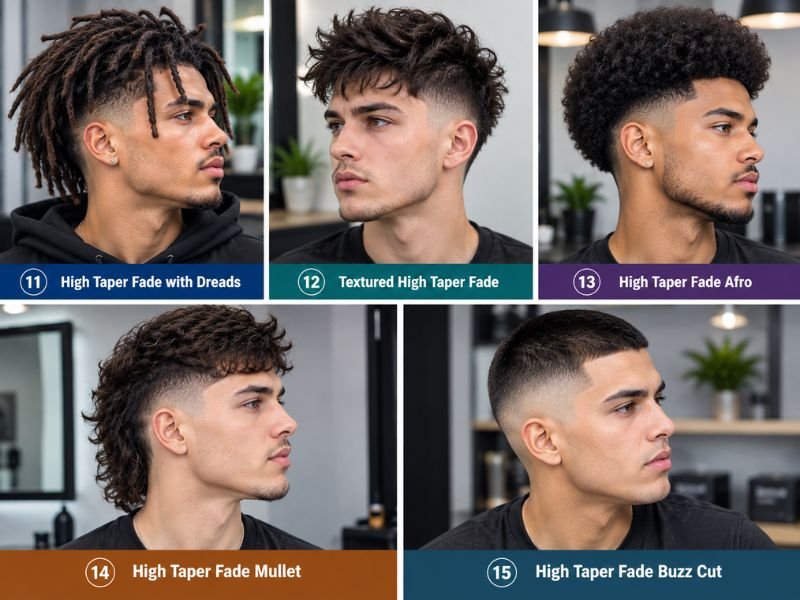
Dreadlocks can be paired with a high taper to create a strong contrast between the longer textured hair and the clean sides.
Keeping the temple and neckline areas neat helps maintain the shape as the hair grows.
12. Textured High Taper Fade
The textured high taper fade is ideal for men who prefer movement rather than a perfectly smooth finish.
The top can be cut into different lengths and styled with a matte product to emphasize separation.
13. High Taper Fade Afro
A high taper can complement a rounded afro by cleaning up the areas around the temples and neckline.
The amount of hair removed should depend on the desired shape. Keeping the top fuller creates a clear contrast with the tapered areas.
14. High Taper Fade Mullet
Combining a high taper with a mullet creates a noticeable front-to-back contrast.
The sides remain cleaner while the back retains additional length. Texture can make the transition between the top and longer back look more natural.
15. High Taper Fade Buzz Cut
A buzz cut with a high taper is one of the simpler combinations. The top remains short and relatively uniform while the sides receive the taper.
It is particularly useful for men who prefer a neat haircut with minimal styling requirements.
16. High Top Taper Fade
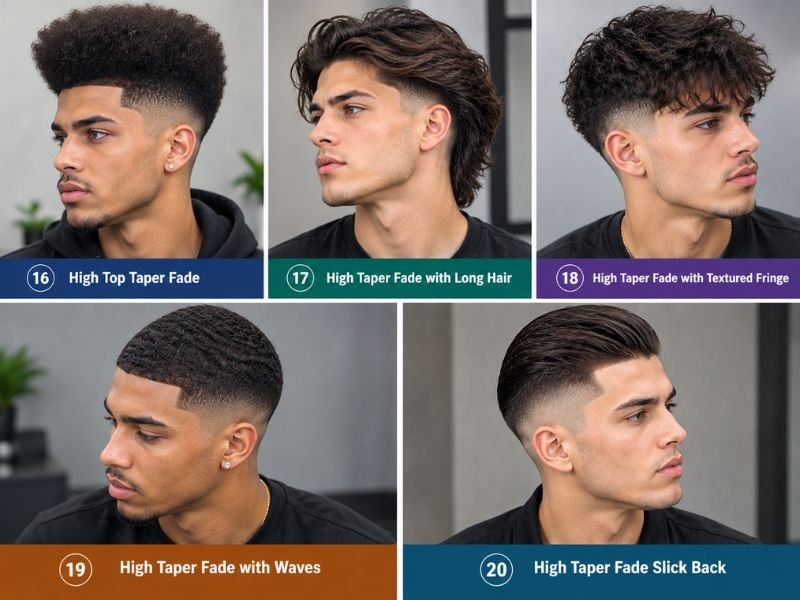
The high top version focuses attention on vertical height. The top remains considerably fuller while the sides are tapered to create contrast.
This style works best when the top has enough density to maintain its shape.
17. High Taper Fade with Long Hair
You do not need extremely short hair on top to wear a high taper. Longer hair can be left flowing, brushed backward, or styled into another haircut.
The taper provides structure around the sides while the longer top creates movement.
18. High Taper Fade with Textured Fringe
A textured fringe combines forward-facing hair with a messy, separated finish.
Rather than making the fringe perfectly straight, the ends can be slightly uneven to create a more relaxed appearance.
19. High Taper Fade with Waves
Waves provide a smooth texture on top while the high taper gives the sides and neckline a cleaner shape.
Regular brushing and an appropriate wave-care routine can help maintain the pattern.
20. High Taper Fade Slick Back
A slick back works particularly well when the top has enough length to move backward.
The tapered sides keep the haircut controlled while the longer top creates a smoother silhouette. Use a suitable styling product according to whether you want a matte or shinier finish.
21. High Taper Fade Comb Over
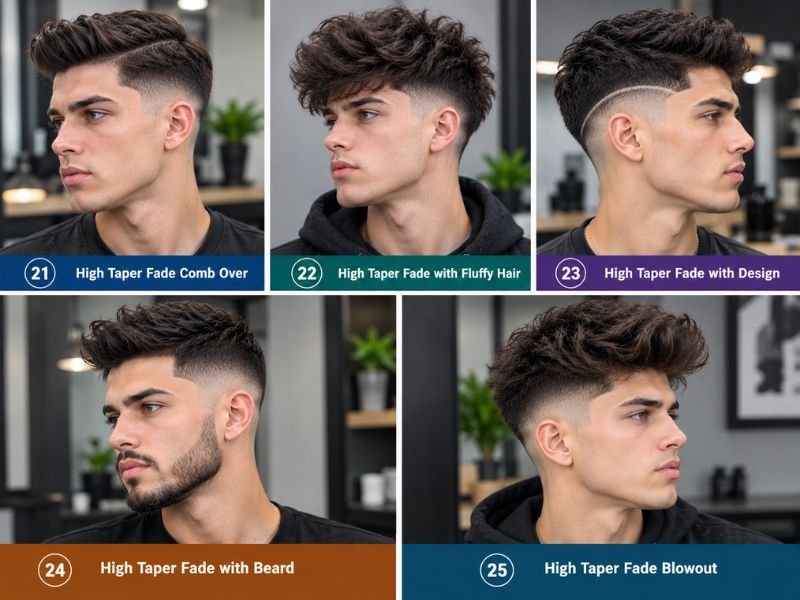
A comb over directs the longer top toward one side. The high taper makes the sides look cleaner and puts more visual attention on the styled top.
This can be adapted for both casual and more polished looks.
22. High Taper Fade with Fluffy Hair
Fluffy hair can be paired with a high taper to create a strong contrast between soft volume and clean sides.
Use lightweight products if you want to preserve the natural fullness instead of weighing the hair down.
23. High Taper Fade with Design
A razor design can be added to the tapered area for a more personalized haircut.
Because designs grow out quickly, they generally require more frequent barber visits if you want the lines to remain sharp.
24. High Taper Fade with Beard
A beard can extend the structured appearance of the haircut down toward the jaw.
The barber can create a cleaner transition between the sideburn area and beard so that the hairstyle and facial hair look connected.
25. High Taper Fade Blowout
A blowout keeps more volume toward the top while the high taper controls the sides.
The top can be dried upward and away from the face to create lift. This works particularly well with hair that naturally has volume or texture.
High Taper Fade vs. Low Taper Fade
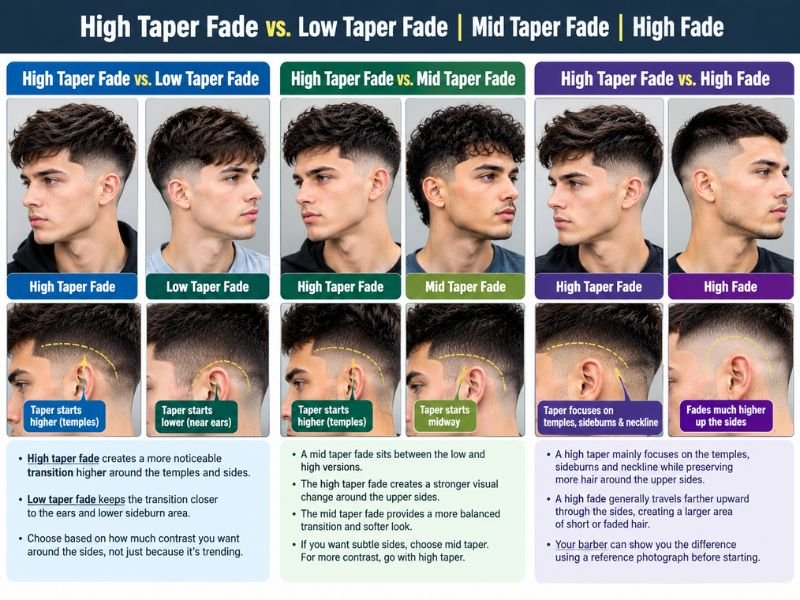
The biggest difference is where the taper begins.
A high taper fade creates a more noticeable transition higher around the temples and sides. A low taper fade keeps the transition closer to the ears and lower sideburn area.
Choose between them based on how much contrast you want around the sides rather than simply choosing one because it is trending.
High Taper Fade vs. Mid Taper Fade
A mid taper sits between the low and high versions.
The high taper fade creates a stronger visual change around the upper sides, while the mid taper fade provides a more balanced transition.
If you want the sides to remain relatively subtle, a mid taper may provide a softer appearance. If you prefer more visible contrast, the high placement creates a stronger effect.
High Taper Fade vs. High Fade
These terms are sometimes confused.
A high taper mainly focuses on areas such as the temples, sideburns, and neckline while preserving more hair around the upper sides.
A high fade generally travels farther upward through the sides, creating a larger area of short or faded hair.
Your barber can show you the difference using a reference photograph before starting the cut.
How to Choose a High Taper Fade
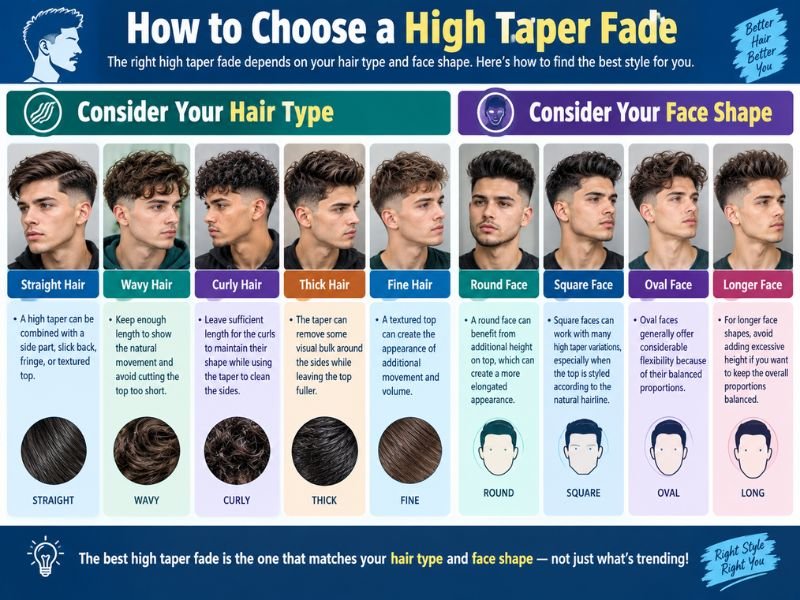
Consider Your Hair Type
Straight hair:
A high taper can be combined with a side part, slick back, fringe, or textured top.
Wavy hair:
Keep enough length to show the natural movement and avoid cutting the top too short.
Curly hair:
Leave sufficient length for the curls to maintain their shape while using the taper to clean the sides.
Thick hair:
The taper can remove some visual bulk around the sides while leaving the top fuller.
Fine hair:
A textured top can create the appearance of additional movement and volume.
Consider Your Face Shape
A round face can benefit from additional height on top, which can create a more elongated appearance.
Square faces can work with many high taper variations, especially when the top is styled according to the natural hairline.
Oval faces generally offer considerable flexibility because of their balanced proportions.
For longer face shapes, avoid adding excessive height if you want to keep the overall proportions balanced.
How to Ask Your Barber for a High Taper Fade
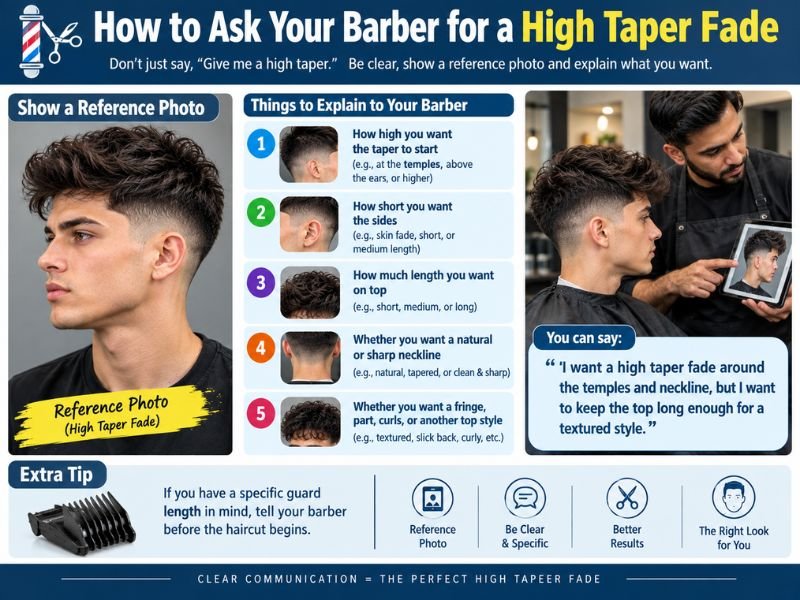
Do not simply say, “Give me a high taper.”
Show your barber a reference photo and explain:
- How high you want the taper to start
- How short you want the sides
- How much length you want on top
- Whether you want a natural or sharp neckline
- Whether you want a fringe, part, curls, or another top style
You can say:
“I want a high taper fade around the temples and neckline, but I want to keep the top long enough for a textured style.”
If you have a specific guard length in mind, tell your barber before the haircut begins.
How to Style a High Taper Fade
Step 1: Start With Clean Hair
Wash your hair when needed and remove excess water with a towel. Avoid aggressively rubbing curly or textured hair because it can increase frizz.
Step 2: Add a Suitable Styling Product
Choose the product according to your hair type and desired finish.
For texture, a matte clay or lightweight styling cream can work well. For a smoother style, another product with more control may be appropriate.
Step 3: Shape the Top
Use your fingers, comb, or brush to direct the hair into the desired shape.
For volume, direct the roots upward while blow-drying. For a slick back, move the hair backward as it dries.
Step 4: Finish Lightly
Apply only enough product to hold the shape. Too much product can make the top look heavy or greasy.
How to Maintain a High Taper Fade
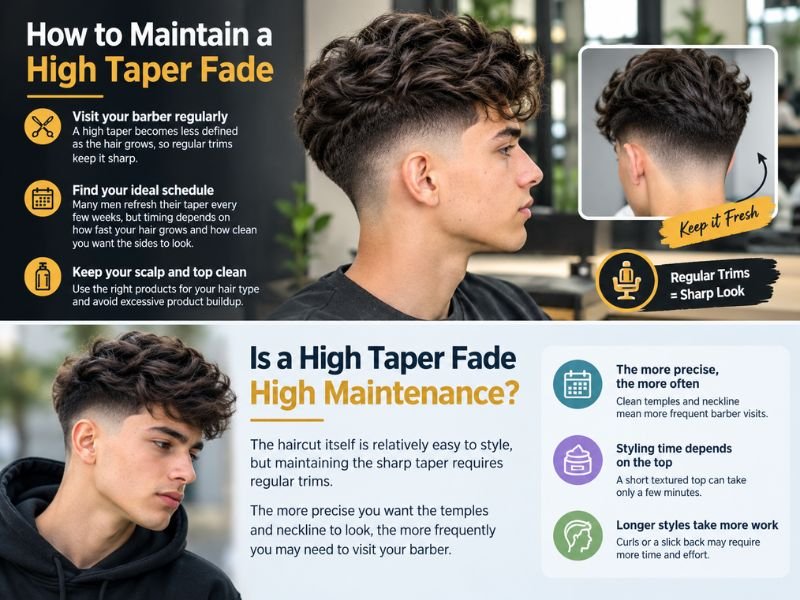
A high taper becomes less defined as the hair grows, so regular barber visits are important if you want the sharp appearance to remain.
Many men refresh their taper every few weeks, but the exact timing depends on how quickly their hair grows and how clean they want the sides to look.
Keep the top and scalp clean, use products appropriate for your hair type, and avoid excessive product buildup.
Is a High Taper Fade High Maintenance?
The haircut itself is relatively easy to style, but maintaining the sharp taper requires regular trims.
The more precise you want the temples and neckline to look, the more frequently you may need to visit your barber.
The styling time depends mostly on the top. A short textured top can take only a few minutes, while longer curls or a slick back may require more work.
Who Should Try a High Taper Fade?
A high taper fade can work with many hair textures and top styles. It is especially useful if you want a haircut that combines:
- Clean sides
- Noticeable contrast
- Flexible top styling
- A modern silhouette
- Easy customization
The key is choosing the right top length and taper placement for your hair rather than copying someone else’s exact haircut.
Frequently Asked Questions:
What is a high taper fade?
A high taper fade is a haircut where the taper begins relatively high around the temples and creates a cleaner transition toward the neckline while leaving more length on top.
Is a high taper fade good for curly hair?
Yes. Curly hair can look especially defined when the sides are cleaned up while the natural curls remain longer on top.
How often should I get a high taper fade?
Many people refresh the haircut every few weeks to maintain a clean outline, but the ideal schedule depends on hair growth and personal preference.
Can I get a high taper fade with long hair?
Yes. A high taper can be combined with a longer top, including slick backs, textured styles, curls, and other longer hairstyles.
Is a high taper fade the same as a high fade?
No. A high taper usually focuses on the temples and neckline while keeping more hair on the upper sides. A high fade generally moves higher across the sides.
Does a high taper fade work with a beard?
Yes. The taper can be blended into the sideburn and beard area to create a connected appearance.
What should I tell my barber?
Show a reference photo and explain the taper height, side length, top length, and the style you want on top.
Is a high taper fade easy to maintain?
The styling can be simple, especially with a short top, but regular trims are useful for keeping the taper defined.
Final Thoughts:
The High Taper Fade gives men plenty of room to personalize their haircut. You can keep the top short and simple, add curls or waves, create a textured fringe, or leave more length for a slick back or other longer style.
The best version is not necessarily the most complicated one. Focus on your natural hair texture, preferred maintenance level, face shape, and the amount of length you want to keep on top. With the right combination, a high taper fade can become a clean everyday haircut that is easy to customize.