
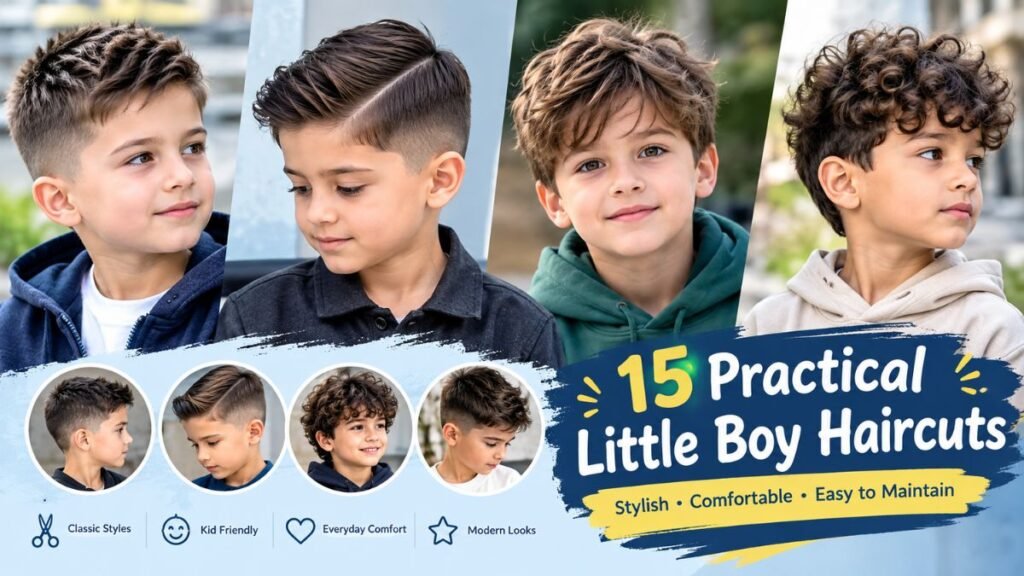
Choosing a haircut for a young boy should not feel difficult. The best style is not always the trendiest one. It is the haircut that feels comfortable, suits his natural hair, and fits your family’s daily routine.
Some children are happy to sit still while their hair is styled. Others want to get dressed and run out of the door. Hair can also be straight, curly, thick, fine, or somewhere in between. That is why the same haircut will not work for every child.
This guide explains the most practical little boy haircuts, which styles suit different hair types, and what to tell the barber. The aim is to help you choose a cut that looks good without creating extra work every morning.
What Makes a Good Little Boy Haircuts?
A good children’s haircut should be comfortable first. Hair should not keep falling into the eyes, rubbing against the neck, or making the child feel hot during play.
It should also work with the hair’s natural texture. Straight hair can hold clean lines and neat parts. Wavy hair usually looks better with movement and soft layers. Curly hair needs enough length to keep its shape. Fighting the natural texture often means more styling, more products, and more frustration.
Finally, think about maintenance. Ask yourself how much time you can honestly spend on hair before school. If the answer is one minute, choose a simple cut that only needs a comb. A style that requires daily blow-drying or strong hair products may look good in the barbershop but become difficult at home.
15 Practical Little Boy Haircuts:
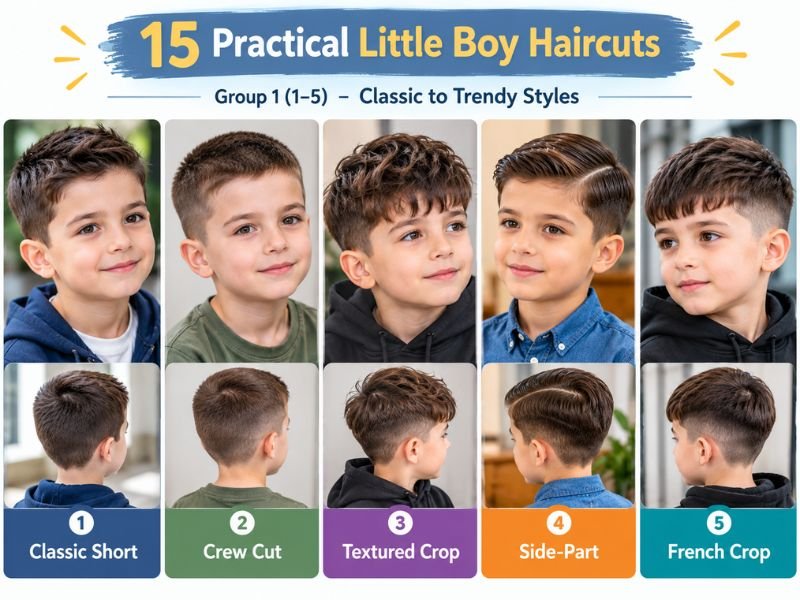
1. Classic Short Little Boy Haircuts
The classic short cut is neat around the ears and neck, with slightly more length on top. It works well with most hair types and is easy to manage. A quick comb is usually enough, making it a useful choice for school, play, and family events.
2. Crew Cut
A crew cut has short sides and a little extra length on top. It has a clean, sporty look and needs almost no styling. It is especially practical for active children who play outside, swim, or dislike hair touching their forehead.
3. Textured Crop
In a textured crop, the top is cut in soft, uneven sections instead of one flat length. This helps thick or slightly wavy hair sit naturally. It can be left alone for a casual look or shaped with a tiny amount of light styling cream.
4. Side-Part Haircut
This style keeps enough hair on top to comb to one side, while the sides remain shorter. It suits straight or lightly wavy hair. It looks smart but still feels age-appropriate. Keep the part soft rather than making it too sharp if you want an easier, more natural finish.
5. French Crop
A French crop has short sides, a textured top, and a short fringe brushed forward. It is a good option for thick, straight hair and can help cover a high forehead. The fringe needs regular trimming, but daily styling is simple.
6. Low Fade
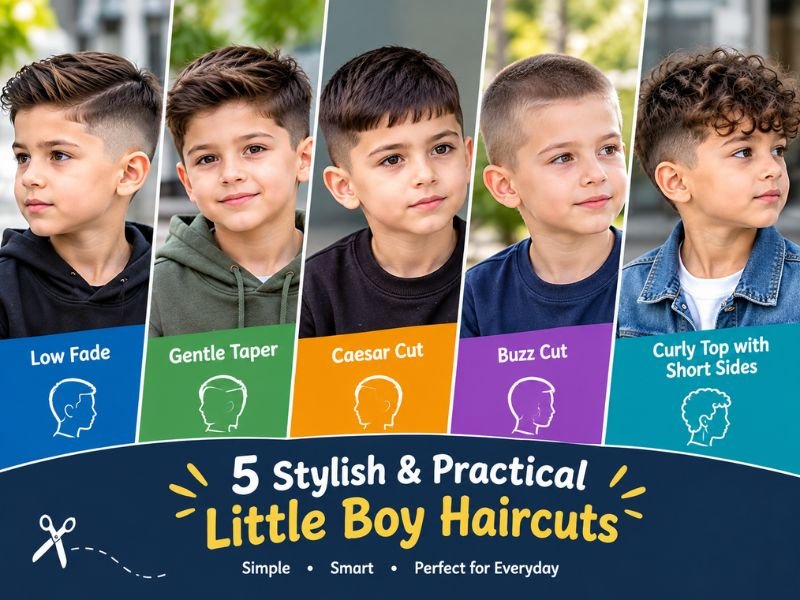
A low fade becomes gradually shorter close to the ears and neckline. Because the fade begins low on the head, it looks clean without feeling too bold. It can be combined with straight, wavy, or curly hair on top. The main drawback is that it needs regular barber visits to keep the blend sharp.
7. Gentle Taper
A taper slowly shortens the hair around the ears and neck while leaving more length on the sides than a fade. It grows out smoothly and does not lose its shape too quickly. This is a good first barbershop style for younger children or those who prefer a softer look.
8. Caesar Cut
The Caesar cut is short all over with a small fringe brushed forward. It suits straight hair and does not need any product. It also keeps hair away from the eyes, although the fringe may need a quick trim between full haircuts.
9. Buzz Cut
A buzz cut is clipped to one short length across the whole head. It is cool, tidy, and very easy to wash. However, it leaves the scalp exposed, so a hat or child-safe sun protection is important outdoors. It also makes the natural shape of the head more visible.
10. Curly Top with Short Sides
For curly hair, keeping some length on top allows the curls to form properly. Shorter sides reduce bulk and make the style easier to manage. Ask the barber to shape the curls rather than thinning them too much. A small amount of conditioner or curl cream can help control dryness.
11. Short Fringe
![short fringe layered bowl and shaggy little boy haircuts]](https://modernboyshair.com/wp-content/uploads/2026/09/short-fringe-layered-bowl-shaggy-little-boy-haircuts.jpg)
A short fringe sits above the eyebrows, with soft, neat sides. It works particularly well for fine or straight hair because it keeps some fullness at the front. It is also useful for children who do not like their hair brushed back.
12. Messy Layered Cut
Soft layers create movement and stop medium-length hair from looking heavy. This cut suits wavy or thick hair and does not need a perfect finish. In fact, it often looks better when it is slightly untidy. It is a practical choice for children who do not enjoy sitting through a styling routine.
13. Longer Layered Hair
A longer cut can look lovely on thick, wavy, or straight hair. Layers remove extra weight and help the hair fall more naturally. This style needs regular brushing and gentle conditioner to prevent knots. Check school rules if the hair will reach the collar or cover the ears.
14. Modern Bowl Cut
The modern bowl cut is softer than the old, heavy version. The fringe and sides are blended with texture, so the shape does not look stiff. It works best on straight, fairly thick hair and gives younger boys a sweet, simple look.
15. Shaggy Cut
A shaggy cut keeps medium or longer hair with loose layers and a relaxed fringe. It suits natural waves and is forgiving as it grows. It does need brushing to prevent tangles, but it does not require careful styling.
How to Choose the Right Little Boy Haircuts:
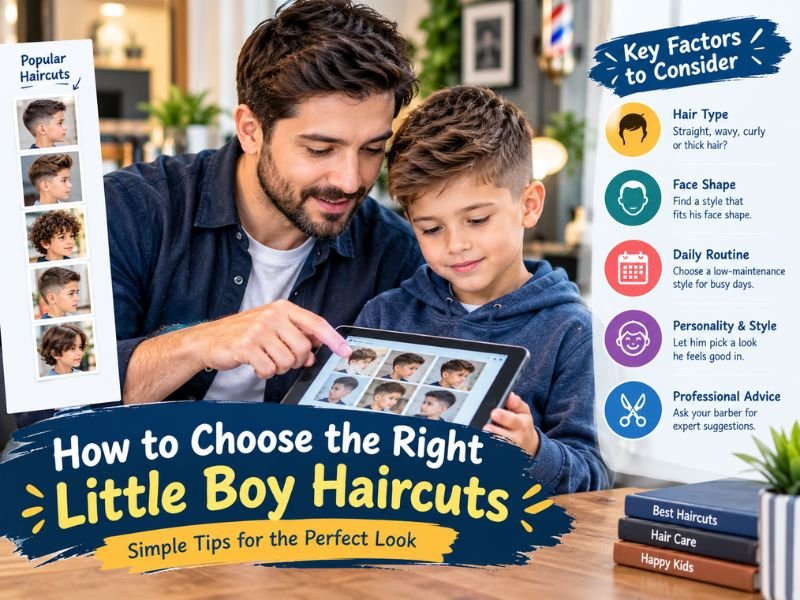
Before selecting a haircut, consider these points:
- Hair texture: Choose a style that follows the way the hair naturally grows. This saves time and helps the cut stay neat for longer.
- Hair thickness: Thick hair may need layers or shorter sides to remove bulk. Fine hair often looks fuller with blunt ends and fewer layers.
- Age and patience: A toddler may struggle to sit through a detailed fade. A quick scissor cut or gentle taper can be easier.
- Daily activity: Shorter hair is useful for children who play sports, swim often, or get hot easily.
- School rules: Some schools do not allow shaved designs, very long hair, or strong contrasts between the sides and top.
- Morning routine: If mornings are busy, avoid a style that needs heat or several products.
- Your child’s choice: Let him help choose between two or three suitable photos. Children are often more comfortable with a haircut when they feel included.
Face shape can be considered, but it should not control the decision. A little height on top may balance a round face, while a fringe can soften a longer face. Comfort and easy care are more important than strict styling rules.
Best Options for Different Little Boy Haircuts Types:
Straight Hair
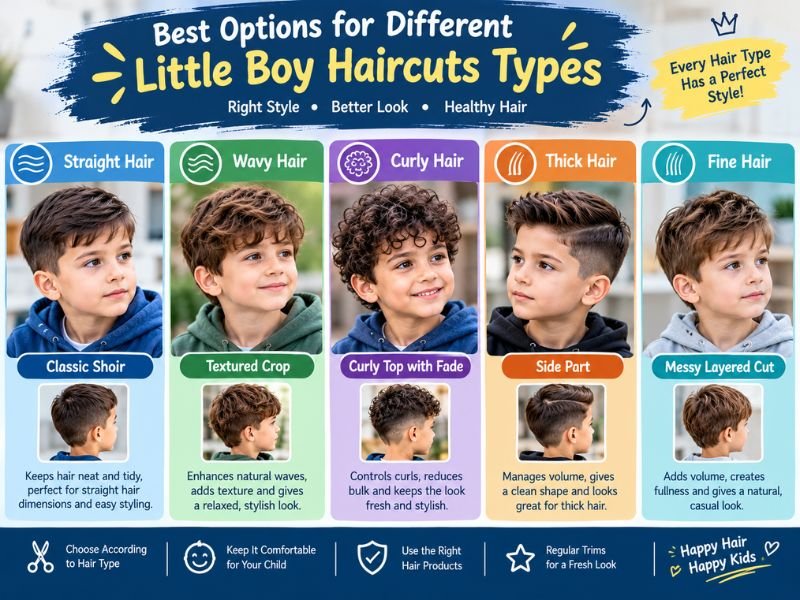
Straight hair shows clean lines clearly. Crew cuts, side parts, French crops, Caesar cuts, and short fringes usually work well. Because uneven growth can be easy to see, neat styles may need trims more often.
Wavy Hair
Wavy hair already has movement, so textured crops, layered cuts, and shaggy styles are natural choices. Avoid cutting the top too short if you want the waves to remain visible.
Curly Hair
Curly hair should be shaped while respecting the curl pattern. A curly top with shorter sides is simple and balanced. Do not brush dry curls, as this can cause frizz. Detangle gently when the hair is damp.
Thick Hair
Thick hair can become bulky near the ears and crown. Layers, tapers, fades, and textured crops remove some weight while keeping a clear shape.
Fine Hair
Fine hair often looks fuller with a classic short cut, crew cut, or short fringe. Too many layers can make it appear thinner. A barber can leave extra weight in the areas where more fullness is needed.
Easiest Little Boy Haircuts to Maintain:
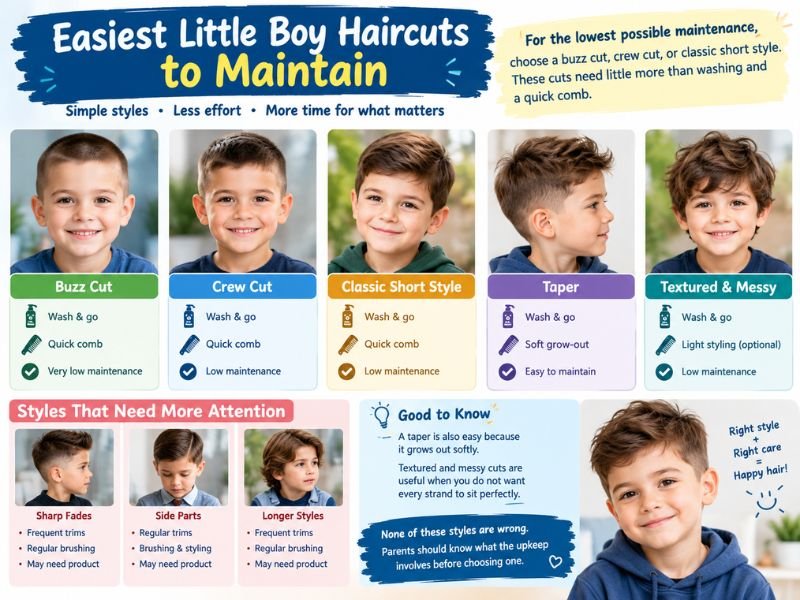
For the lowest possible maintenance, choose a buzz cut, crew cut, or classic short style. These cuts need little more than washing and a quick comb.
A taper is also easy because it grows out softly. Textured and messy cuts are useful when you do not want every strand to sit perfectly.
Sharp fades, side parts, and longer styles need more attention. They may require frequent trims, regular brushing, or a small amount of product. None of these styles are wrong, but parents should know what the upkeep involves before choosing one.
What to Tell the Barber:
A clear conversation can prevent disappointment. Use these simple tips:
- Bring a photo. Choose a child with similar hair texture and thickness if possible.
- Explain your routine. Tell the barber if you want a cut that needs no styling.
- Describe the length. Show how much you want removed from the top, sides, fringe, and neck.
- Mention problem areas. Point out cowlicks, strong curls, sensitive skin, or hair that sticks up.
- Discuss clippers. If your child is frightened by noise or vibration, ask whether more of the cut can be done with scissors.
- Ask about growth. Find out how the style is likely to look after four to six weeks.
Avoid asking for a style based only on its name. Different barbers may understand names differently, while a photo gives a clear visual reference.
How Often Does a Child Need a Little Boy Haircuts?
Most children need a trim every four to six weeks, but there is no fixed rule. A sharp fade or very short cut may lose its shape after three or four weeks. A taper, layered cut, or shaggy style may remain tidy for six to eight weeks.
Watch the hair rather than the calendar. It may be time for a trim when the fringe reaches the eyes, hair begins covering the ears, or the back looks heavy and untidy.
Simple Hair Care Tips for Little Boy Haircuts:
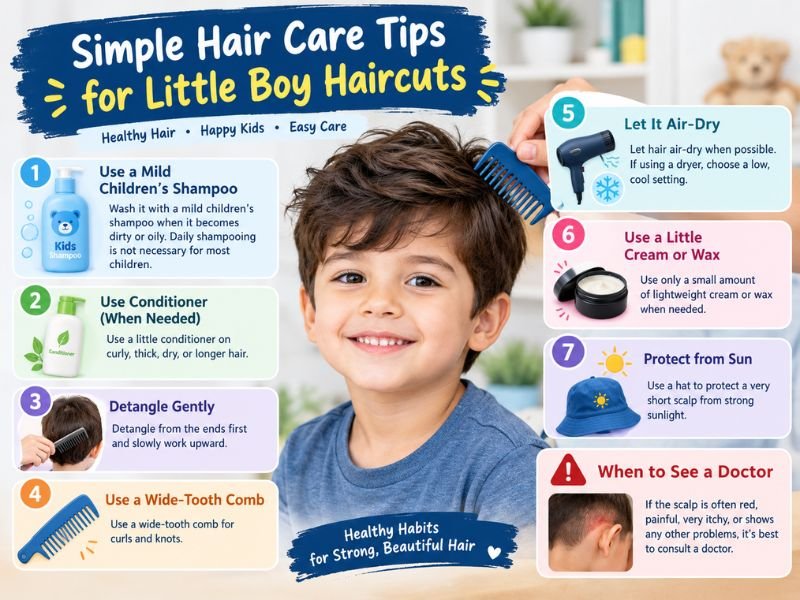
Children’s hair usually needs gentle care rather than many products.
- Wash it with a mild children’s shampoo when it becomes dirty or oily. Daily shampooing is not necessary for most children.
- Use a little conditioner on curly, thick, dry, or longer hair.
- Detangle from the ends first and slowly work upward.
- Use a wide-tooth comb for curls and knots.
- Let hair air-dry when possible. If using a dryer, choose a low, cool setting.
- Use only a small amount of lightweight cream or wax when needed.
- Protect a very short scalp from strong sunlight with a hat.
If the scalp is often red, painful, very itchy, or flaky, speak with a healthcare professional rather than trying more styling products.
Frequently Asked Questions:
What is the easiest haircut for a little boy?
A buzz cut is usually the easiest because it needs no styling. A crew cut and classic short cut are also simple while leaving a little more shape and length.
Which Little Boy Haircuts is best for thick hair?
A textured crop, taper, fade, or layered cut can reduce bulk. The best choice depends on whether you want the overall length to be short or long.
What works well for curly hair?
Keep enough length for the curls to form, and ask for the sides to be shaped or shortened. Gentle conditioner will help keep the curls soft and easier to manage.
Should a child use hair gel?
Hair gel is not usually necessary. If styling is needed, use a very small amount of a mild, lightweight product made for sensitive skin, and wash it out properly.
How can I make a haircut easier for a nervous child?
Choose a quiet appointment time, explain what will happen, bring a favourite small toy, and tell the barber that the child is nervous. A simple, quick cut with scissors may feel less stressful than a detailed clipper style.
Final Thoughts:
The most useful little boy haircuts are comfortable, easy to care for, and suitable for the child’s own hair. A simple crew cut may be perfect for one boy, while another will be happier keeping his curls or wearing longer layers.
Start with hair texture, daily routine, and comfort. Then choose a clear photo and explain your needs to the barber. A haircut does not have to be complicated to look stylish. When it works naturally with the child’s hair and lifestyle, it will be easier for both the child and the parent.