
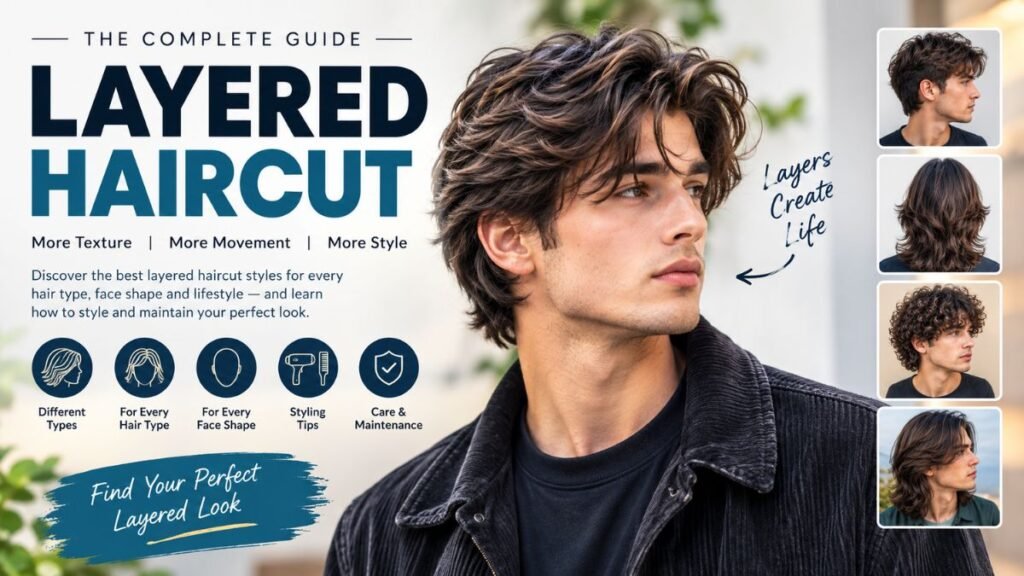
A layered haircut is one of the most reliable and adaptable styles in modern grooming. By trimming hair at varying lengths throughout the head, stylists create a cascading effect that removes excess bulk, boosts natural body, and encourages fluid movement. Unlike single-length cuts that often feel heavy or flat, cutting in distinct tiers allows the hair to fall with intention and natural separation. Its enduring appeal lies in how effortlessly it bridges casual day-to-day wear and refined, professional styling across every hair texture and length.
In this guide, you will learn everything necessary to choose, style, and care for this versatile cut. We will break down the mechanics behind how layers work, explore key variations for different lengths and demographics, and walk through how to match your cut to your specific face shape and hair texture. You will also find realistic daily styling routines, essential maintenance habits, and clear guidance on exactly what to tell your barber or stylist during your next visit.
What Is a Layered Haircut?
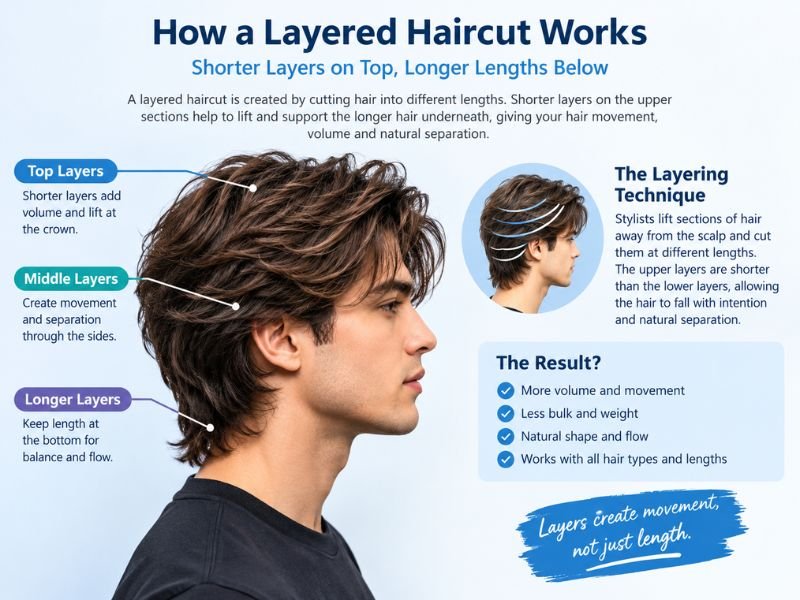
A layered haircut is a technique where hair is cut into different lengths rather than one flat perimeter. Stylists lift sections of hair away from the scalp and cut them so upper sections are shorter than the bottom perimeter, or vice versa depending on your desired look.
These varying lengths allow shorter pieces to support and lift longer sections beneath them. This structural contrast breaks up visual weight, letting strands move freely instead of shifting like a solid, heavy helmet.
Short Example:A person with thick, straight hair in a blunt bob often ends up with a wide triangle shape around the jaw. Adding soft internal layers starting at the cheekbones removes that bottom heaviness and lets the hair curve gently around the face.
Why Is the Layered Haircut Popular?
The popularity of layered styles comes down to everyday functionality. Hair changes weight as it grows, which can leave traditional cuts feeling flat after just a few weeks. Adding distinct lengths solves several styling problems at once.
First, layers offer practical versatility. A good cut adds volume to fine hair that usually sits limp, while thinning out dense, unmanageable weight from thick hair. Second, it shifts easily between formal and casual settings. You can blow-dry it for work or let it air-dry with a touch of lightweight styling cream for a modern layered hairstyle. Finally, it grows out much more gracefully than rigid, geometric lines.
Short Example: An office worker can comb their hair back neatly with light pomade for morning meetings, then run their fingers through it with matte paste after work for an effortless evening look.
Types of Layered Haircuts:
Because layering is a flexible method rather than a strict template, it comes in several distinct variations.
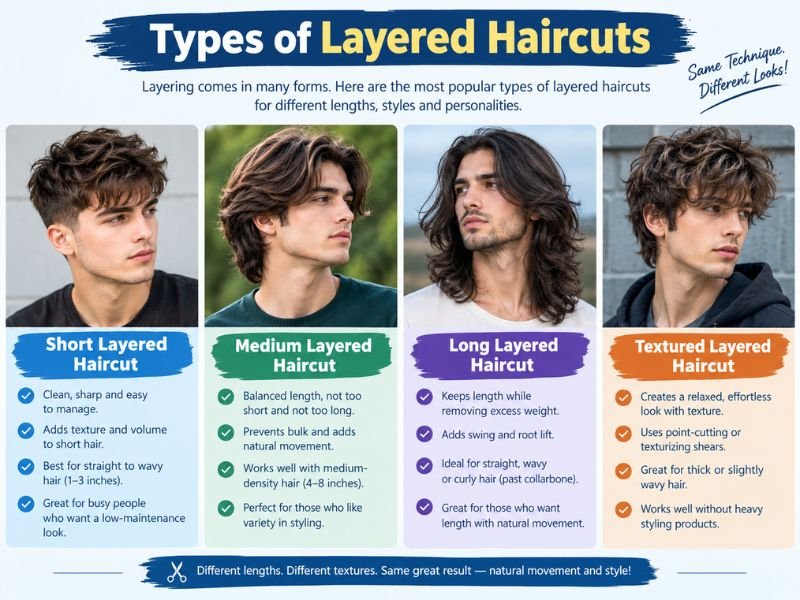
Short Layered Haircut
A short layered haircut features brief, blended lengths that stop above or around the ears and collar. Stylists focus on separation near the crown and sides, keeping short hair from looking round or boxy.
- Who It Suits: Busy people who want a clean, sharp look that dries within minutes.
- Hair Details: Best for straight to wavy hair between one and three inches long.
- Short Example: A clean taper on the back and sides with two inches of textured layers across the top that can be swept forward or sideways.
Medium Layered Haircut
The medium layered haircut sits comfortably between the ears and collarbone. It gives you enough length for ponytails or slicked-back looks, while the layers stop the ends from feeling bulky.
- Who It Suits: People who enjoy changing their look often without committing to high daily maintenance.
- Hair Details: Works best on medium-density hair between four and eight inches long.
- Short Example: Shoulder-grazing hair with soft tiers starting around the chin to create balanced fullness.
Long Layered Haircut
A long layered haircut keeps length past the shoulders while adding tiers through the mid-lengths and ends. This removes excess weight that pulls roots flat and causes tangles.
- Who It Suits: Anyone with long hair who wants extra swing and root lift without sacrificing length.
- Hair Details: Ideal for straight, wavy, or loose-curl hair past collarbone length.
- Short Example: Hair reaching mid-back with soft tiers through the bottom five inches to allow natural waves to move freely.
Layered Haircut for Boys
A layered haircut for boys provides an active, tidy shape that looks good without daily styling. Stylists keep the sides neat while adding soft texture across the crown.
- Who It Suits: School-aged children, young athletes, and parents seeking a low-fuss style.
- Hair Details: Works reliably on straight and wavy hair from short crops to skater cuts.
- Short Example: Tapered neck and sides with soft, scissor-cut tiers on top that stay neat during sports.
Layered Haircut for Men
A layered haircut for men provides a softer, modern alternative to sharp fades. A men’s layered haircut uses scissor work to create smooth transitions between the top and sides, fitting both corporate and casual settings.
- Who It Suits: Men wanting a timeless, textured look rather than a shaved skin fade.
- Hair Details: Suited for lengths between two and five inches on straight or wavy hair.
- Short Example: Scissor-tapered sides with four inches of graduated layering swept back loosely from the forehead.
Textured Layered Haircut
A textured layered haircut uses texturizing shears or point-cutting to carve soft, jagged separation into the ends. Instead of smooth lines, the tips are feathered to create visual depth.
- Who It Suits: Anyone wanting an effortless, lived-in style without using heavy waxes.
- Hair Details: Great for thick or slightly wavy hair where reducing bulk is important.
- Short Example: A modern shaggy cut where crown pieces are razored for instant definition with sea salt spray.
Layered Haircut for Different Hair Types:
Natural texture determines how layers fall. Understanding your hair type ensures you choose the right approach.
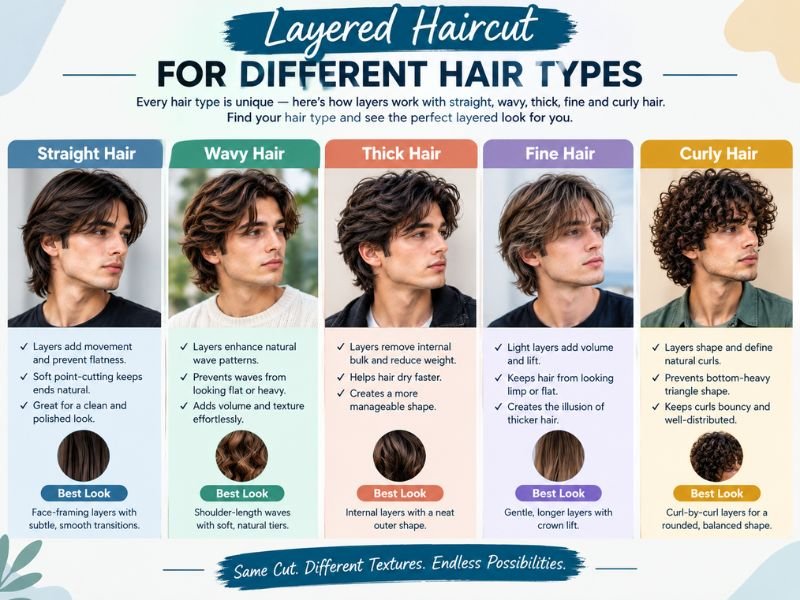
- Straight Hair: Straight strands show every scissor line clearly. Stylists use gentle point-cutting to soften ends so transitions look smooth and subtle.
- Short Example: Long straight hair with face-framing angles below the chin that stop the sides from hanging limp.
- Wavy Hair: Waves pair naturally with layers. When cut bluntly, waves get pressed flat under heavy weight. Layers allow wave patterns to bend and stack neatly.
- Short Example: Shoulder-length waves where layers let natural “S” patterns spring up freely without heat tools.
- Thick Hair: Thick hair traps heat and takes forever to dry. Internal debulking layers thin out interior mass while preserving a neat outer line.
- Short Example: Dense hair that previously took 40 minutes to dry now takes under 15 minutes after removing internal bulk.
- Fine Hair: Fine strands collapse if over-cut. The key is long, gentle tiers that preserve a thick baseline while adding root lift at the crown.
- Short Example: Collarbone-length fine hair with light crown tiers that build the illusion of a fuller baseline.
- Curly Hair: Curls expand outward as they dry. Cutting curls into tiers rounds out the shape, preventing bottom-heavy triangle hair.
- Short Example: Spiral curls cut dry curl-by-curl so upper ringlets sit comfortably around the cheekbones.
Layered Haircut for Different Face Shapes:
Layers allow a stylist to balance facial features and soften strong angles.
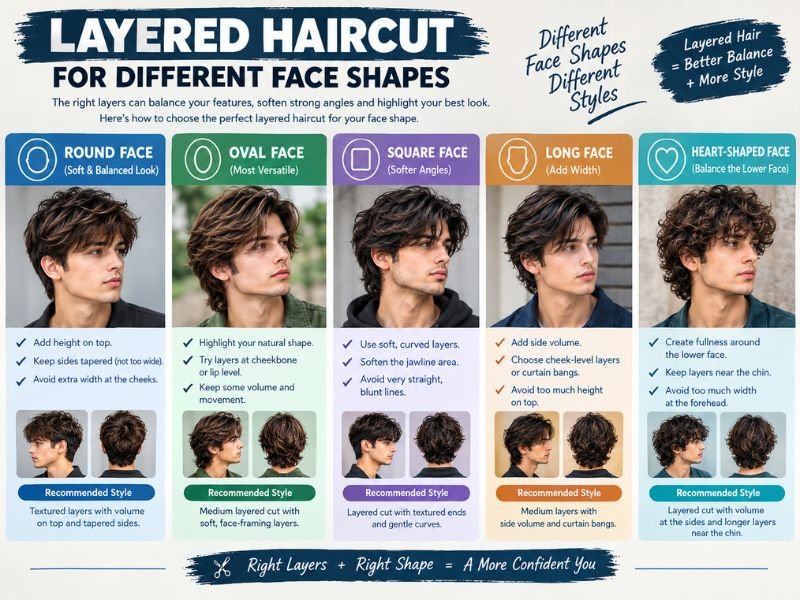
- Round Face: Round faces benefit from vertical lengthening. Long tiers starting below the jawline draw the eye downward. Avoid wide layers that stop at the cheeks.
- Short Example: An off-center part with layers grazing the collarbone makes the cheek area look leaner.
- Oval Face: Oval shapes are balanced and support almost any cut. You can place tiers at cheekbone or lip level to highlight your favorite features.
- Short Example: A mid-length cut with soft tiers falling at the cheekbones to frame the face cleanly.
- Square Face: Square faces have strong jawlines. Soft, curved, or feathered layers falling inward around the jaw help soften rigid angles.
- Short Example: Textured ends brushing against jaw corners break up sharp horizontal planes.
- Long Face: Long faces look best with side volume. Medium cuts with cheek-level tiers and curtain bangs add horizontal width.
- Short Example: A shoulder-grazing cut with soft, flicked sides that balance face length.
- Heart-Shaped Face: Heart faces have wide foreheads and narrow chins. Layers starting near the chin create fullness around the lower face.
- Short Example: A collarbone-length bob with outward-flicking ends that fill out space near a pointed chin.
How to Style a Layered Haircut:
Because the haircut creates shape on its own, daily styling is quick and simple.
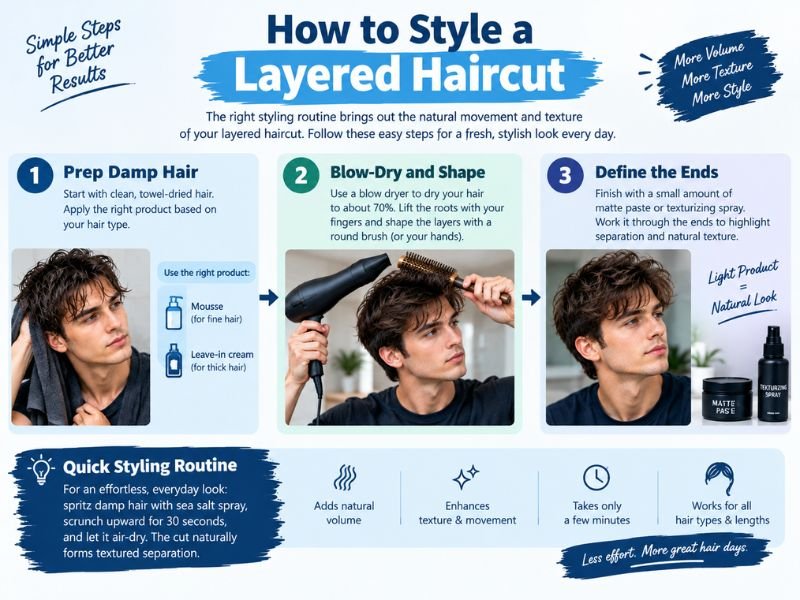
- Prep Damp Hair: Towel-dry gently. Apply a dollop of mousse for fine hair or a drop of leave-in cream for thick hair.
- Rough-Dry Roots: Blow-dry to 70% dryness using your fingers to lift roots for volume.
- Shape the Tiers: Roll ends inward with a round brush for a smooth finish, or flick them out for dynamic texture.
- Define Ends: Rub a pea-sized amount of matte paste or texturizing spray through the ends to highlight separation.
Simple Routine Example:Spritz damp hair with sea salt spray, scrunch upward for 30 seconds, and air-dry. The cut naturally forms textured separation on its own.
How to Maintain a Layered Haircut:
Sensible habits keep each tier smooth and prevent split ends from ruining your silhouette.
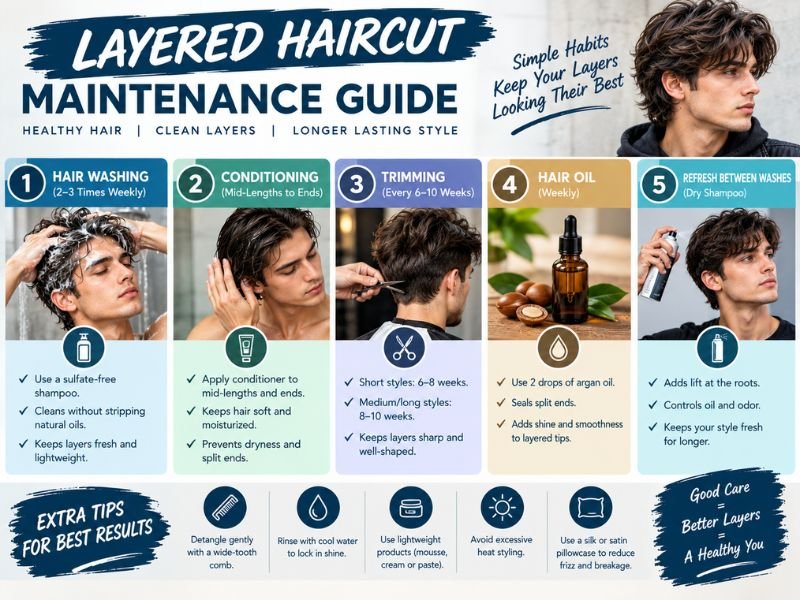
- Hair Washing: Wash two to three times weekly using a sulfate-free shampoo to protect delicate surface ends.
- Conditioning: Work conditioner into mid-lengths and ends where layered tips need moisture most.
- Trimming: Trim short styles every 6 to 8 weeks, and medium to long styles every 8 to 10 weeks to keep tiers sharp.
- Managing Split Ends: Apply two drops of argan oil to the ends each week to keep exposed tips sealed.
- Refreshing Between Washes: Use dry shampoo at the roots on non-wash days to maintain lift and texture.
Practical Example: Detangle hair with a wide-tooth comb while conditioner is in, then rinse with cool water to lock in shine.
Pros and Cons of a Layered Haircut:
| Feature | Benefits | Possible Drawbacks |
| Volume | Adds natural movement and root lift | May need light styling on very fine hair |
| Texture | Creates clear separation and dimension | Can get frizzy in high humidity |
| Versatility | Works with many lengths and textures | Regular trimming helps maintain tier shape |
| Weight | Removes bulk from dense, heavy hair | Over-layering can make ends look thin |
How to Ask Your Barber for a Layered Haircut:
Clear communication ensures you get the exact style you want:
- Baseline Length: Show exactly where you want the bottom edge to rest.
- Layer Depth: State whether you want soft, blended tiers or defined, choppy separation.
- Starting Point: Point to where you want the shortest layer to begin (such as cheek, chin, or collar).
- Styling Habits: Share whether you blow-dry your hair daily or prefer air-drying.
Barber Script Example: “I want to keep my baseline resting at my collarbone with soft internal layers to remove weight. Please keep the shortest tier around my chin so it frames my face and still ties back into a low ponytail.”
Layered Haircut vs Other Popular Hairstyles:
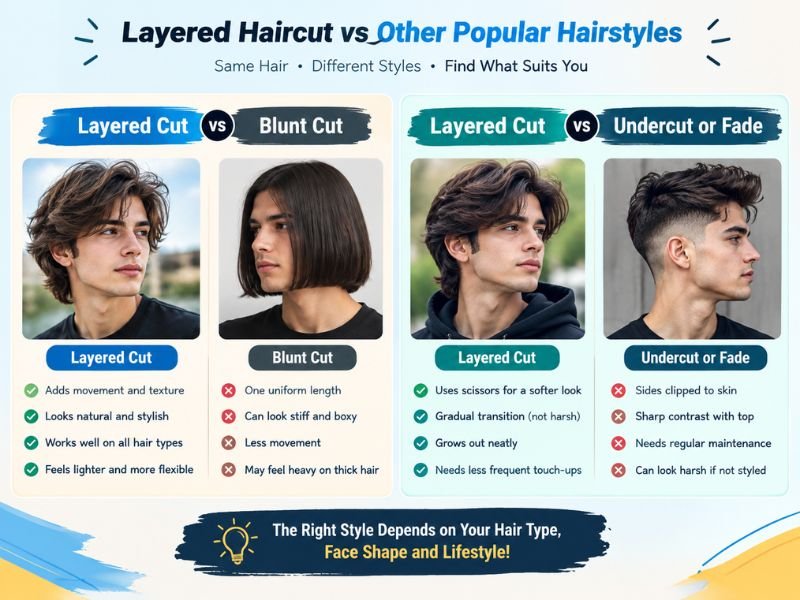
Layered Cut vs Blunt Cut
A blunt cut has one uniform length with no interior tiers. It looks bold and dense on fine, straight hair, but it can feel stiff and boxy on thick hair. A layered cut breaks up that solid weight for fluid movement.
Layered Cut vs Undercut or Fade
Fades clip the sides down to the skin for sharp contrast against the top. A men’s layered haircut uses scissors for a softer, more gradual transition that grows out neatly without needing weekly touch-ups.
Is a Layered Haircut Easy to Maintain?
Yes, as long as the cut works with your natural hair texture. When layers match your wave or curl pattern, hair settles into place with minimal styling. Upkeep only becomes difficult if you pick a cut that fights your natural texture and requires heavy daily heat styling.
Common Mistakes to Avoid:
- Starting Layers Too High: Placing tiers too high on long hair creates an unbalanced, mushroom-like top.
- Over-Cutting Fine Hair: Removing too much interior hair makes the bottom perimeter look thin and see-through.
- Skipping Regular Trims: Waiting too long blurs tier separation and leaves roots flat.
- Using Heavy Pomades: Greasy waxes flatten shorter surface tiers and ruin natural lift.
- Cutting Curls Wet: Wet curls shrink as they dry, causing tiers to sit higher than planned.
Short Example: Over-layering fine hair often leaves the perimeter wispy. A better approach is subtle crown tiers with a blunt, solid bottom
FAQS:
Will a layered haircut make my hair look thinner or thicker?
On thick hair, removing internal weight reduces heavy bulk. On fine hair, light surface tiers create lift that makes hair look fuller.
Can I still tie my hair back with layers?
Yes, provided your shortest tier sits below jaw level. Tell your stylist if ponytails are part of your daily routine.
How often should I get my layers trimmed?
Short cuts need trimming every 6 to 8 weeks. Medium and long styles stay well-shaped for 8 to 10 weeks.
Does a layered haircut suit straight hair?
Yes, straight hair gains body and direction from layers. Stylists use point-cutting so tier lines blend softly.
What is the difference between layering and texturizing?
Layering cuts hair at different lengths to build shape and volume. Texturizing thins ends within an existing cut without changing the overall length.
Is a short layered haircut good for men?
A short layered haircut gives men clean texture and natural volume without the harshness of a skin fade.
Conclusion:
The layered haircut remains a timeless grooming staple because it blends simple practicality with natural movement. Whether you want to lighten thick hair, build fullness in fine strands, or give your waves clean definition, strategic tiers deliver a flattering, personalized shape.
Before your next salon visit, evaluate your hair texture, decide how many minutes you want to spend styling each morning, and bring clear reference photos. With the right tier placement and a simple maintenance routine, a layered cut delivers a versatile, polished look that fits any lifestyle.