
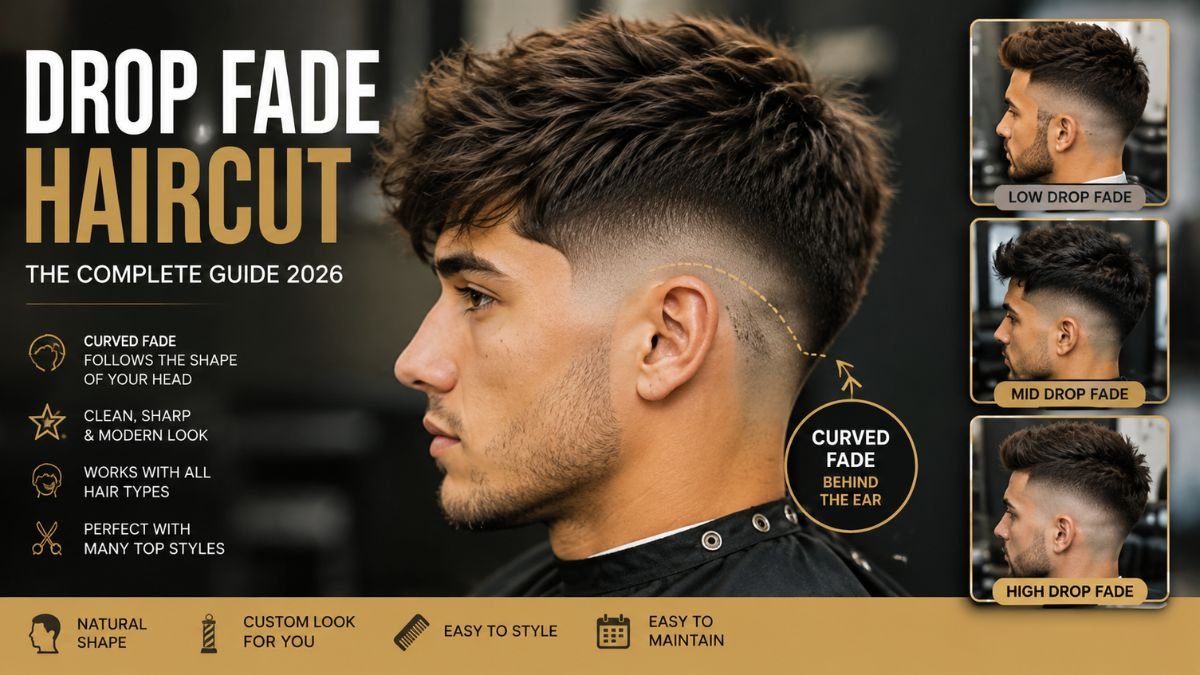
A drop fade haircut is a modern fade that follows the natural curve of the head and drops lower behind the ears. This creates a smooth, rounded transition that can make the sides and back look more defined without removing too much length from the top. Unlike a straight fade, the blend changes shape around the head for a more customized finish.
This guide explains how a drop fade haircut works, the main variations to consider, how to choose one for your hair type, and how to maintain it between barber visits. Whether you prefer a subtle low blend or a sharper high-contrast look, understanding the fade level and top style can help you ask your barber for the right result.
Our Practical Tip:
Get your drop fade cleaned up every 2–3 weeks to keep the fade smooth and the neckline sharp. Use a small amount of lightweight styling product on the longer hair and avoid heavy products that can make the hairstyle look greasy or flat.
What Is a Drop Fade Haircut?
A drop fade haircut is created by gradually reducing the hair around the sides and back while allowing the fade line to curve downward behind the ear. The result is a clean transition that keeps more of the natural shape of the head than some traditional fades.
A drop fade haircut can be low, mid, or high depending on where the blend begins. The top can remain short, medium, curly, textured, slicked back, or paired with a crop or quiff. This flexibility makes the cut easy to personalize. A drop fade haircut can also be tailored to the amount of contrast you prefer.
Example: If you want neat sides but still like some length on top, a drop fade haircut can keep the lower area controlled while preserving length above.
Why Choose This Fade?
The main appeal of a drop fade haircut is its balanced shape. A drop fade haircut also gives barbers room to customize the blend around the head. The curved fade gives the haircut a defined outline while the longer top provides room for different styling choices.
Another advantage of a drop fade haircut is that the fade can be adjusted to suit personal preference. A softer blend creates a more understated appearance, while a close skin finish produces stronger contrast.
Example: Someone who wants a school or office-friendly cut can choose a drop fade haircut with a softer transition.
Main Types to Consider:
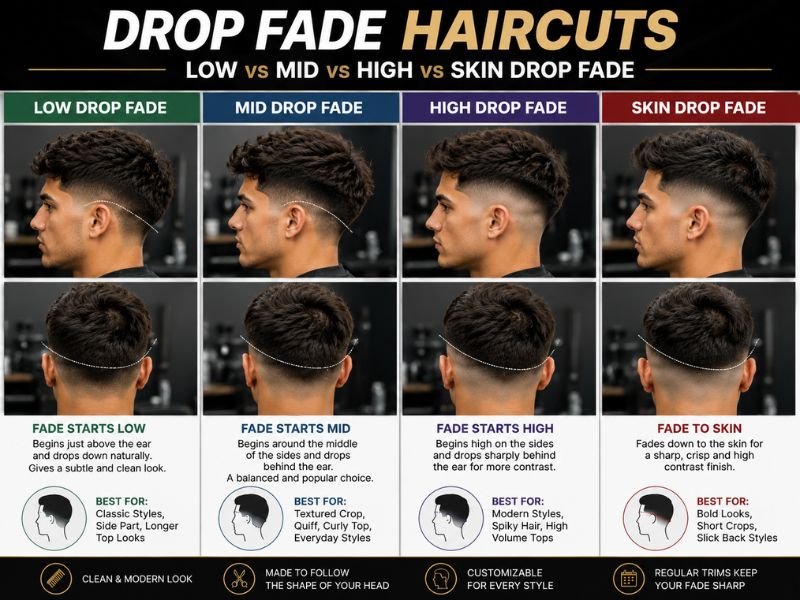
Low Drop Fade
A low drop fade haircut starts closer to the ears and neckline. A drop fade haircut at this level usually creates a softer overall effect. It leaves more hair around the upper sides, making the transition subtle and easy to combine with longer hairstyles.
Example: With straight medium-length hair, a low blend can keep the sides tidy while leaving enough length to brush the top backward.
Mid Drop Fade
A mid drop fade haircut begins around the middle of the sides, giving a drop fade haircut a more noticeable transition than a low fade. It works well when you want the haircut to look noticeably fresh but still balanced.
Example: A mid fade with a short textured top can create a defined everyday style that does not require complicated styling.
High Drop Fade
A high drop fade haircut removes more hair from the sides, making the drop fade haircut look more defined. It creates a stronger difference between the top and the lower sections and is often chosen for sharper, more dramatic looks.
Example: If you have thick hair and want the top to stand out, a high fade can make the longer upper section look more prominent.
Skin Drop Fade
A skin drop fade haircut blends the sides down to very short or bare skin, giving the drop fade haircut a crisp finish. It gives the haircut a clean, high-contrast appearance and usually needs more frequent upkeep.
Example: A short crop combined with a skin fade can create a sharp, low-maintenance shape, although the close sides may need regular touch-ups.
Best Hairstyles to Pair With It:
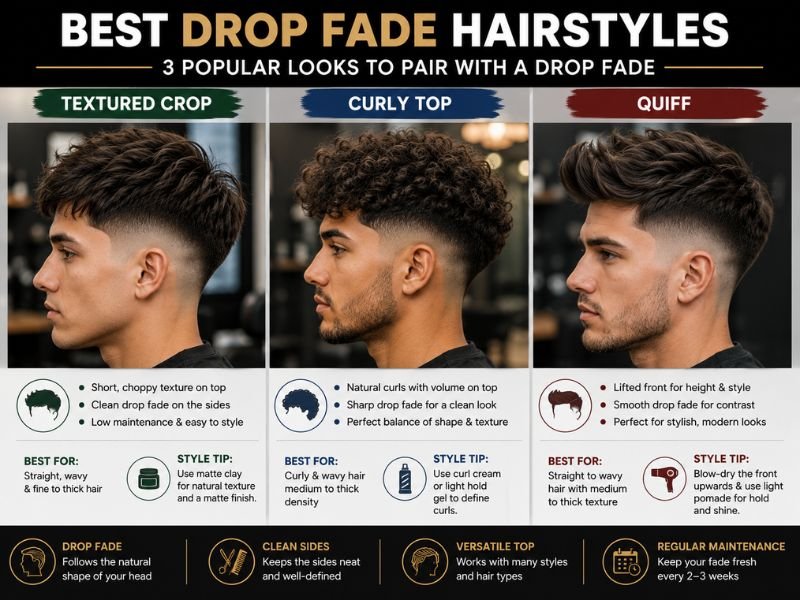
A drop fade haircut works with many top styles because the sides provide a clean foundation. Your choice should depend on hair texture, length, and how much styling you want to do. Choosing a drop fade haircut should depend on hair texture, length, and how much styling you want to do.
Textured Crop
A textured crop keeps the top relatively short and uses texture for movement. It is practical for straight, wavy, or slightly thick hair.
Example: Ask for a short textured top with a gradual fade if you want a simple style that can be shaped with a small amount of matte product.
Curly Top
Curly hair can create a strong contrast against a clean fade. Keeping enough length on top allows the curls to remain visible while the sides stay controlled.
Example: If your curls are dense, your barber can preserve their natural shape on top and taper the sides gradually around the ears.
Quiff
A quiff adds height at the front and gives the haircut a more styled appearance. It works especially well when the top has enough length to lift.
Example: For thick straight hair, blow-dry the front upward and use a light styling product to keep the quiff flexible.
Choosing the Right Fade for Your Hair Type:
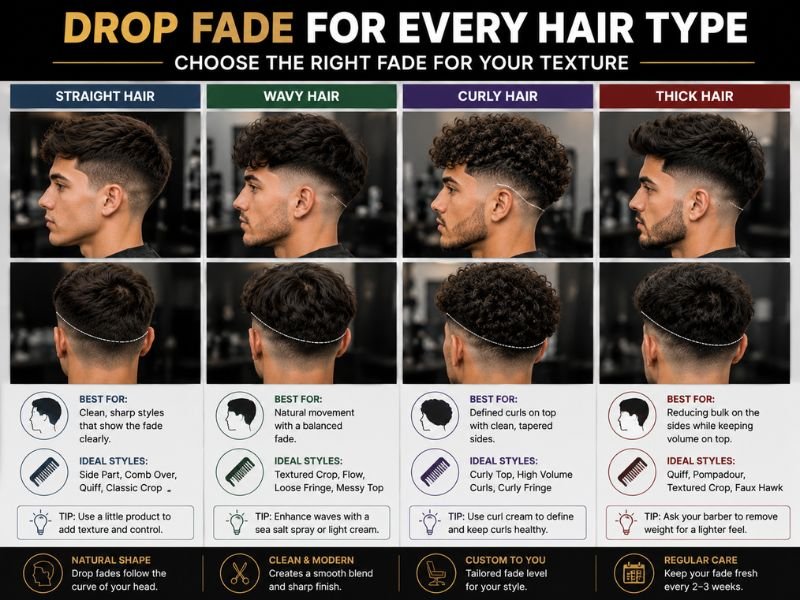
Hair texture affects how a drop fade haircut looks and how much styling it requires. Straight hair often shows the fade transition clearly, while wavy and curly hair can soften the contrast naturally.
Thick hair may benefit from removing extra weight around the sides, while fine hair can look better with a controlled fade that does not make the top appear too thin.
Example: If you have wavy, medium-density hair, keeping moderate length on top can let the natural movement work with the curved fade instead of fighting it.
What Should You Tell Your Barber?
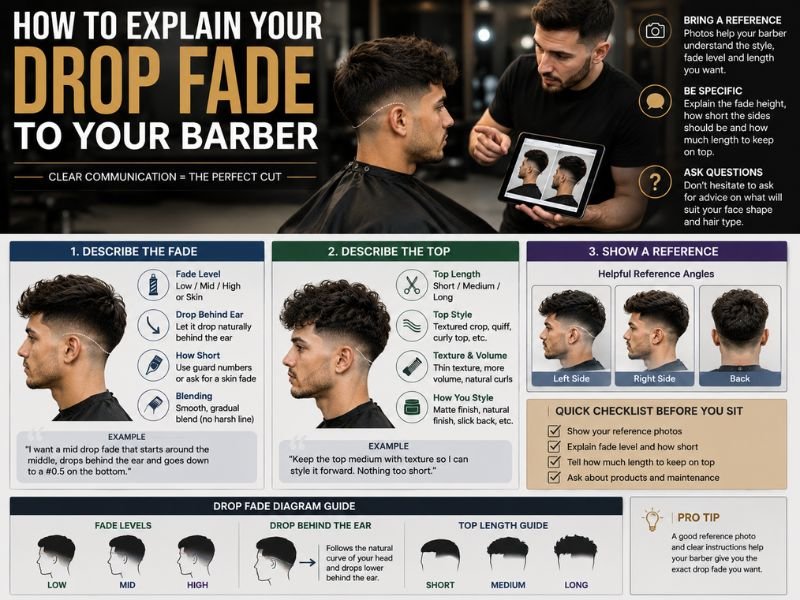
Clear communication is important because fade terminology can mean slightly different things to different people. Instead of saying only that you want a fade, explain how low or high you want it, how short the sides should become, and how much length you want on top.
A reference photo can also help your barber understand the shape, especially if you want a specific transition behind the ear.
Example: You could say, “Keep the top medium, make the sides shorter, and let the fade drop naturally behind my ears.” Then show a photo if you want a particular finish.
Maintenance and Styling Tips:
A fresh drop fade haircut looks best when the transition remains clean. Depending on how quickly your hair grows and how sharp you want the sides to stay, regular barber visits may be necessary. The top often needs less frequent trimming than the faded sections.
At home, wash and condition your hair according to its texture and use a styling product that matches your desired finish. Matte clay can provide texture, while cream can create a softer appearance.
Example: For a textured top, towel-dry the hair, work a small amount of matte product through it, and shape it with your fingers.
| Fade Type | Overall Look | Best Top Styles | Upkeep |
| Low | Subtle and balanced | Crop, side part, medium texture | Moderate |
| Mid | Defined and versatile | Quiff, textured top, curls | Moderate |
| High | Bold and high contrast | Short crop, quiff, longer texture | More frequent |
| Skin | Very crisp and clean | Crop, curls, slick back | Frequent |
Drop Fade vs. Other Fade Styles:
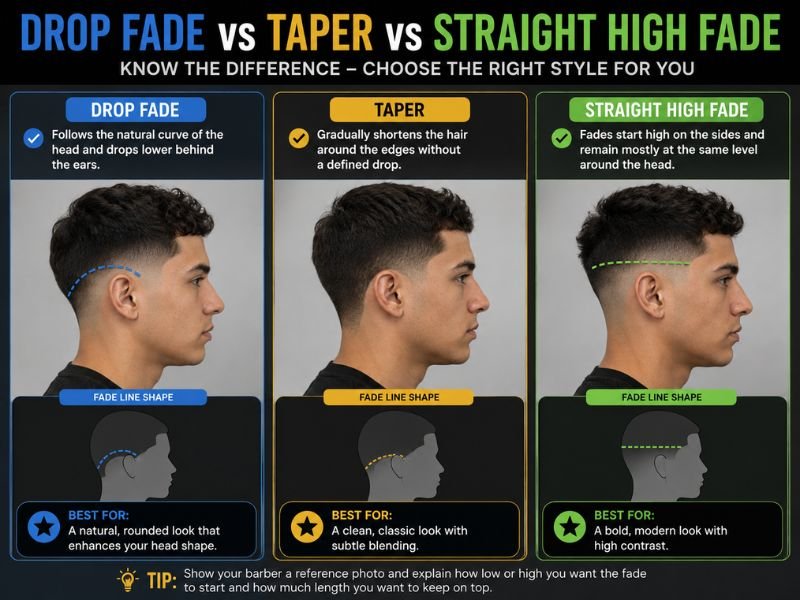
The defining feature of a drop fade haircut is the curved fade line that follows the head and drops behind the ears. A traditional taper usually changes length more gradually around the edges without creating the same broad faded area. A straight high fade may keep its general height around the sides instead of following a pronounced drop.
Understanding these differences helps you choose a drop fade haircut that matches the shape you want rather than relying on the name alone.
Example: If you like the clean appearance of a fade but want the back to follow your head shape naturally, the curved design may be a better match than a straight high fade.
FAQS:
1. What is a drop fade haircut?
It is a fade that curves downward behind the ears, following the natural shape of the head.
2. Is a drop fade suitable for curly hair?
Yes. It can create a clean contrast while allowing curls to remain longer and visible on top.
3. What is the difference between a low and high fade?
A low fade starts closer to the ears and neckline, while a high fade begins higher on the sides and creates stronger contrast.
4. How often should a fade be maintained?
Maintenance depends on hair growth and the desired sharpness. Shorter fades generally show regrowth sooner.
5. Can I combine a fade with a quiff?
Yes. A quiff can add height and texture to the top while the faded sides keep the overall shape clean.
6. Is a drop fade easy to style?
Usually, yes. Styling effort mainly depends on the length and texture of the hair on top.
Conclusion:
A drop fade haircut offers a flexible way to create clean sides while keeping the natural curve of the head. You can choose a low, mid, high, or skin finish and combine it with crops, curls, quiffs, or longer textured styles. The best choice of a drop fade haircut depends on your hair type, preferred level of contrast, and daily styling routine.
A well-planned drop fade haircut should work with your natural hair, and a skilled barber can adjust its shape as your hair grows. Before your appointment, decide how much length you want on top, how strong you want the fade to look, and how much maintenance you are comfortable with. A clear explanation and a useful reference photo can help your barber create a result that suits you.