
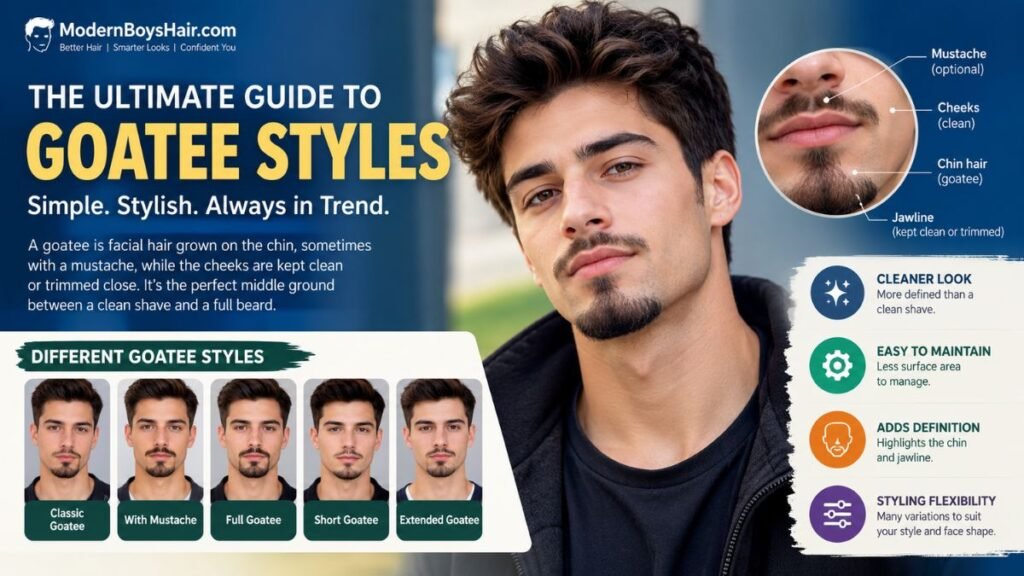
Facial hair means something different to almost everyone who grows it, but for a lot of teenagers and young men, the chin is where things usually start. A goatee is simply a patch of hair grown on the chin, sometimes joined with a mustache, while the cheeks are kept clean or trimmed close. It has stayed popular for decades because it offers a middle ground more defined than a clean shave, but far less demanding than a full beard.
Part of the reason this look sticks around is flexibility. There isn’t one fixed way to wear it. Small changes in length, width, and shape can create noticeably different results, from a barely-there chin patch to a fuller, more structured shape. This guide walks through the main goatee styles worth knowing, how they suit different face shapes, and how boys and young men can keep one looking neat without overcomplicating their grooming routine.
What Is a Goatee Styles?
A goatee is facial hair grown specifically around the chin, often extending slightly along the jawline just below the mouth. The cheeks are usually shaved or trimmed very short, which is what separates it from a full beard, where hair covers the cheeks, jaw, and chin together. Some versions also include a mustache, connected to the chin hair by thin strips along the corners of the mouth, while others keep the mustache and chin hair as two separate sections.
Because facial hair growth depends heavily on genetics, age, and hormone levels, no two people grow hair at the same rate or in the same pattern. Some young men develop thicker chin and jaw hair early, while their cheek hair stays patchy for years, if it fills in at all. This is completely normal, and it’s actually one of the reasons chin-focused styles are so practical for younger guys still figuring out their growth pattern.
Example: A young man with lighter cheek growth may prefer a simple chin-focused style instead of trying to grow a full beard.
Why Goatee Styles Are Popular:

Chin-based facial hair has stayed common for a simple reason: it works with a wide range of growth patterns and lifestyles. A few practical points explain the appeal.
- It gives a cleaner, more intentional look compared to random patchy growth
- It’s generally quicker to maintain than a full beard, since less surface area needs shaping
- It draws attention to the chin and jaw, which can add some structure to the face
- It offers several variations, so it can be adjusted for a more casual or a smarter appearance
- It suits both school or college settings and slightly more relaxed social environments, depending on how it’s trimmed
None of this means the style automatically looks good on everyone. Growth pattern, density, and personal preference all play a part, which is why it helps to understand the different variations before picking one.
Different Goatee Styles to Know:
Not all chin-based facial hair looks the same. Length, width, and how the mustache is handled all change the final result. Below are several recognizable variations, along with who tends to prefer each one.
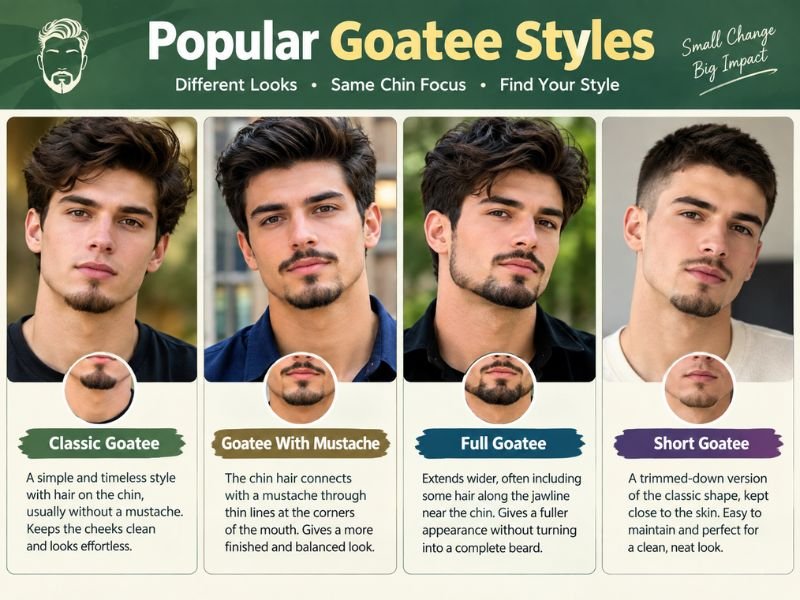
Classic Goatee Styles
This is the version most people picture first: hair kept on the chin in a rounded or slightly pointed shape, with the cheeks shaved clean. It usually doesn’t connect to a mustache, though a thin one is sometimes added. Maintenance is fairly low since the shape is simple and there’s limited hair to manage. It suits guys who want a defined chin without much daily upkeep.
Example: A student with moderate chin growth but thin cheek hair often finds this the easiest starting style.
Goatee Styles With Mustache
Here, the chin hair connects to a mustache through thin lines running from the corners of the mouth down to the chin patch. The two sections are meant to look balanced rather than competing for attention. This version needs a bit more regular trimming, since both the mustache and the connecting strips can grow unevenly. It works well for young men whose upper lip hair grows in reasonably even.
Example: Someone whose mustache fills in faster than their beard may connect it to the chin patch for a more finished look.
Full Goatee Styles
This variation extends slightly wider, often including some hair along the jawline near the chin, giving a fuller appearance without turning into a complete beard. It requires more shaping around the edges to avoid it blending into cheek stubble. Guys with denser chin and jaw growth generally have an easier time keeping this style looking intentional.
Example: A young man with thick chin growth might let it extend slightly along the jaw for more coverage.
Short Goatee Styles
A trimmed-down version of the classic shape, kept close to the skin rather than left to grow out. It reads as neat and low-key, and it’s one of the simplest styles to maintain since there’s less length to manage day to day. It suits anyone who wants a slight edge over a clean shave without much visible facial hair.
Example: Someone new to grooming often starts here, since mistakes are less noticeable at a shorter length.
Extended Goatee Styles
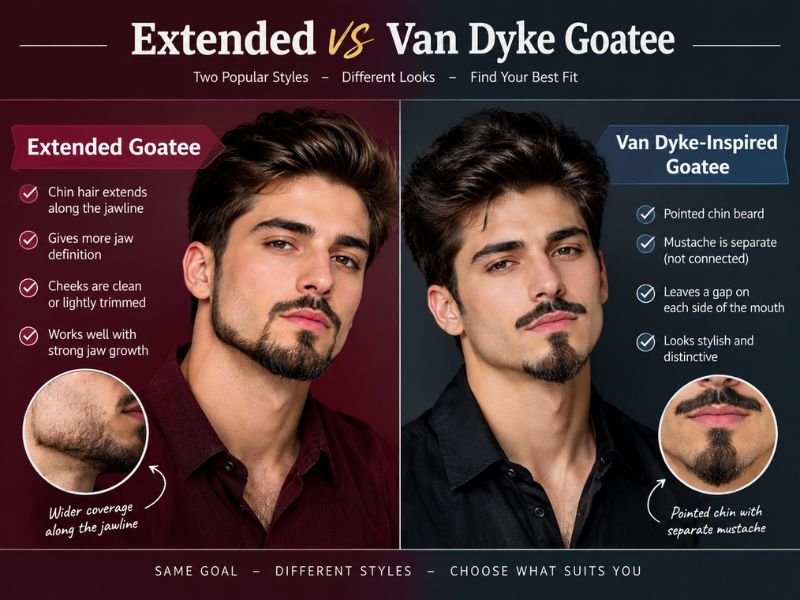
This version stretches further along the jawline than a standard goatee, sometimes reaching closer to the ears, while the cheeks are still kept mostly clean or lightly trimmed. It gives more jaw definition and works better with fuller jaw growth. It does need more regular edging, since the line between beard and clean skin runs longer.
Example: A young man with strong jawline growth but thinner cheeks may prefer stretching the shape outward rather than upward.
Van Dyke-Inspired Goatee Styles
This is a distinct variation with a pointed chin patch and a mustache that stays separate rather than connecting through the mouth corners, leaving a visible gap on each side. It has a more deliberate, styled look and needs more careful shaping to keep the point and gap clean. It suits someone who wants a facial hair style with a bit more character.
Example: Someone with a naturally pointed chin growth pattern may find this shape comes together with less trimming than expected.
Modern Trimmed Goatee Styles
A cleaner, contemporary take that relies on sharp, straight edges rather than natural or rounded lines. It often pairs short chin hair with a slightly longer mustache, or vice versa, for contrast. This style depends on precise trimming, so a good trimmer with guard settings makes a real difference.
Example: A young man who prefers a tidy, structured look might use this style for a smarter appearance at school events or interviews.
Goatee Styles With Light Stubble
Instead of shaving the cheeks completely, this version leaves a light dusting of stubble around the chin patch, softening the contrast between beard and bare skin. It gives a more relaxed, casual look and is fairly forgiving for beginners since sharp lines aren’t required. It suits younger guys who want some facial hair without a heavily defined shape.
Example: Someone who doesn’t want to commit to strict edging might let the surrounding stubble grow slightly instead.
Minimal Chin Goatee Styles
The smallest version of the style, covering just the very center of the chin. It’s a good option for anyone who wants a slight change from a clean shave without much commitment or visible facial hair. Maintenance is minimal, mostly just keeping the small patch tidy.
Example: A teenager just starting to notice chin growth might trim everything else and keep only this small central patch.
Goatee Styles by Face Shape:
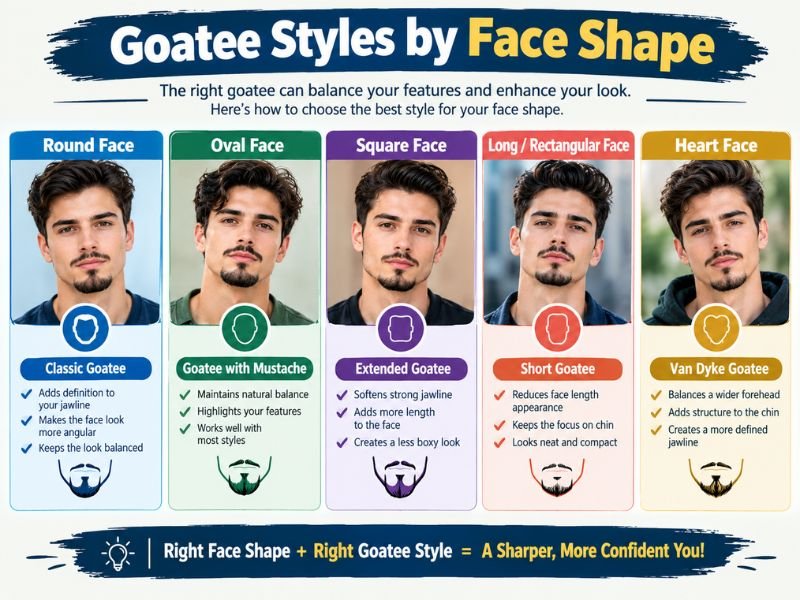
Face shape doesn’t determine which style will work, but it can influence how a particular shape appears once grown in.
Round Face Goatee Styles
A neatly shaped, slightly pointed chin patch can create the appearance of more length and definition, breaking up the natural roundness a little.
Oval Face Goatee Styles
Since this face shape is already fairly balanced, most goatee variations tend to sit well, giving more freedom to choose based on personal preference rather than face shape alone.
Square Face Goatee Styles
Both shorter and slightly extended styles can complement a strong jawline, since the existing structure gives the beard shape something to work with.
Long or Rectangular Face Goatee Styles
Keeping the chin length modest is often preferred here, since extra length on an already long face can make it appear more stretched.
Heart-Shaped Face Goatee Styles
A slightly fuller chin area can help balance a narrower jaw compared to the forehead, though the difference is often subtle rather than dramatic.
Example: Someone with a longer face shape might choose a short goatee rather than an extended one, simply to avoid adding extra vertical length.
How to Choose the Right Goatee Styles:
A few practical factors matter more than trends when picking a style:
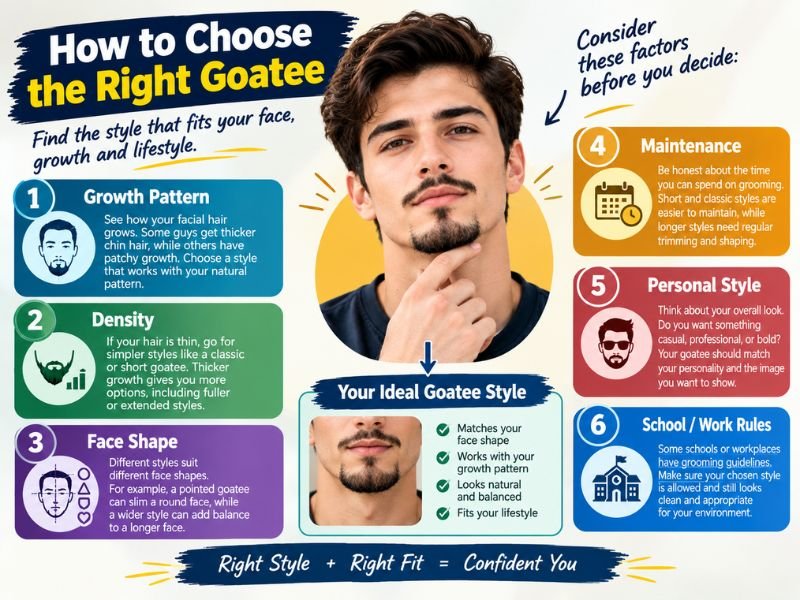
- Growth pattern: Where hair naturally grows in thickest usually shapes what looks best
- Density: Thin growth may suit smaller, tighter shapes better than wide or extended ones
- Face shape: Useful as a general guide, though not a strict rule
- Maintenance level: Some styles need daily edging, others barely any upkeep
- Personal style: Comfort with a style matters as much as how it looks
- School or workplace expectations: Some environments have specific grooming guidelines worth checking first
- Actual ability to grow facial hair: Age and genetics play a bigger role than most people expect, and growth often keeps developing well into someone’s twenties
There’s no product or shortcut that reliably speeds up patchy growth, so patience tends to matter more than any particular routine. For broader inspiration beyond chin-focused looks, it can help to look through a guide on best beard styles for men before settling on one direction.
How to Trim and Maintain a Goatee Styles:
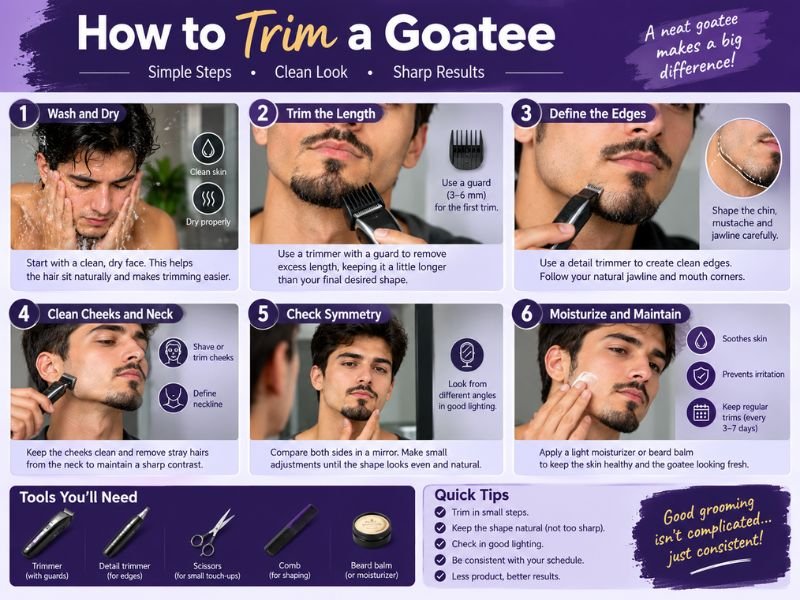
- Wash and dry the face so hair sits naturally and isn’t flattened or damp while trimming.
- Decide the desired shape before turning on any trimmer, rather than figuring it out as you go.
- Trim the overall length first using a guard, keeping it slightly longer than the final target.
- Define the edges carefully, working slowly along the jawline and mouth corners.
- Clean the surrounding areas, shaving or trimming the cheeks and neck to keep contrast clean.
- Check symmetry in good lighting, comparing both sides before making further cuts.
- Moisturize the skin afterward to prevent irritation, especially along freshly shaved edges.
- Maintain the shape regularly, since a few days of regrowth can blur even a sharp line.
Beginners are usually better off trimming a little at a time rather than removing too much length in one go, since hair grows back slowly and mistakes take time to fix.
Example: Someone shaping a goatee for the first time might trim in small stages over several days instead of aiming for the final shape immediately.
Common Goatee Styles Grooming Mistakes:
- Trimming too much at once: Go in small steps and check progress often instead of cutting the full length immediately.
- Uneven sides: Compare both sides in a well-lit mirror before finishing, not just at the end.
- Overly sharp or unnatural edges: Soften harsh lines slightly so the shape blends with natural growth.
- Ignoring the mustache: Trim it alongside the chin hair so the two sections stay proportional.
- A messy neckline: Define where the beard ends and the neck begins to avoid a scruffy, undefined look.
- Choosing a style that doesn’t match natural growth: Work with existing density rather than forcing a shape the hair won’t support.
- Copying someone else’s exact beard: Growth patterns differ, so the same style won’t always look the same on two different people.
- Overusing grooming products: Too much product, particularly styling wax, can weigh hair down and look greasy rather than groomed.
Keeping a small bottle of beard oil or a light beard balm nearby can help with dryness and flyaways, though these are supporting tools rather than shortcuts to a better shape.
Goatee Styles Maintenance Tips for Boys and Young Men:
- Trim on a consistent schedule rather than only when it looks obviously overgrown
- Wash the chin and surrounding skin regularly to prevent buildup and irritation
- Moisturize afterward, especially in colder weather when skin dries out faster
- Clean trimmer blades after use so they cut evenly next time
- Avoid piling on multiple products at once; a small amount usually works better
- Give the skin a short break after shaving if it feels irritated before trimming again
- Keep expectations realistic, since facial hair often fills in more over time as someone gets older
Goatee Styles Comparison Table:
| Goatee Style | Overall Look | Maintenance | Best For |
| Classic Goatee | Clean and traditional | Low–Medium | Simple grooming |
| Goatee With Mustache | Defined and balanced | Medium | Connected facial hair |
| Full Goatee | Fuller appearance | Medium | Denser growth |
| Short Goatee | Neat and minimal | Low | Low-maintenance looks |
| Extended Goatee | Wider chin coverage | Medium | More defined jaw area |
| Van Dyke-Inspired | Pointed and distinctive | Medium–High | Statement looks |
| Modern Trimmed Goatee | Clean and contemporary | Medium | Modern grooming |
| Light Stubble Goatee | Relaxed and casual | Low–Medium | Casual style |
Goatee Styles vs Full Beard:
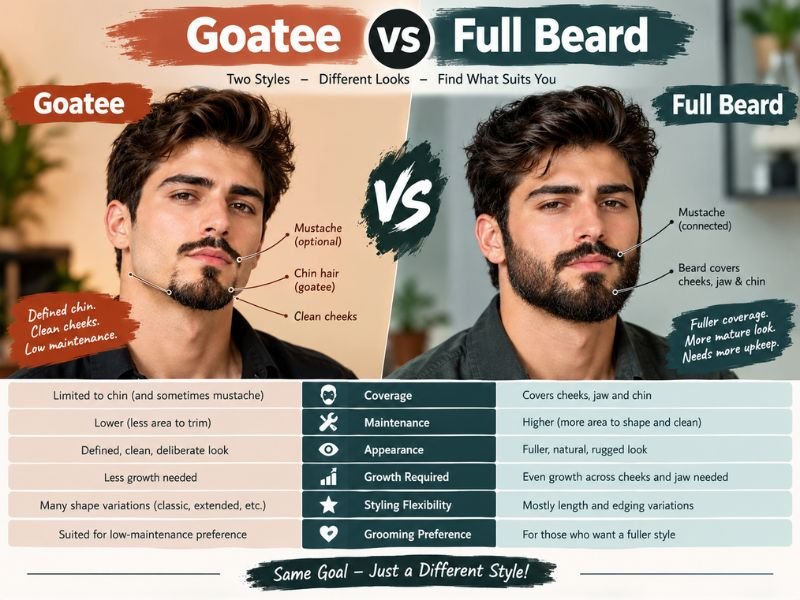
- Coverage: A goatee stays limited to the chin and sometimes the mustache, while a full beard covers the cheeks, jaw, and chin together.
- Maintenance: Chin-focused styles generally need less daily shaping since there’s less surface area to manage.
- Appearance: A goatee gives a more defined, deliberate look; a full beard reads as fuller and more natural.
- Required growth: A full beard needs even growth across the cheeks and jaw, while a goatee works with patchier cheek hair.
- Styling flexibility: Goatees offer more shape variations in a smaller area; full beards vary mainly in length and edging.
- Grooming preference: Those who prefer lower maintenance often lean toward a goatee, while those wanting a fuller look choose a beard.
If a fuller style eventually feels more appealing, transitioning from a goatee into something like a short boxed beard is a common next step as growth fills in.
FAQS:
What is the most common goatee style?
The classic goatee is generally the most common, since it’s simple to maintain and works with a wide range of growth patterns. It keeps the cheeks clean while focusing hair growth on the chin, making it a practical starting point for anyone new to shaping facial hair.
Is a goatee Styles easy to maintain?
Compared to a full beard, most chin-focused styles are easier to maintain, since there’s less area to trim and shape. However, sharper styles like a modern trimmed goatee need more frequent touch-ups to keep the edges clean and even.
Which goatee works well with a round face?
A slightly pointed, narrower chin shape can help create the appearance of added length on a round face. It won’t change the face shape itself, but it can make the jawline look a bit more defined visually.
How often should a goatee be trimmed?
Most people trim every few days to once a week, depending on how fast their hair grows and how defined they want the edges. Sharper, more structured styles usually need more frequent attention than softer, stubble-based looks.
Can boys and young men wear a goatee?
Yes, once natural facial hair growth allows for it. Growth timing varies a lot from person to person, so there’s no fixed age. It’s more about having enough natural chin hair to shape than reaching any specific age.
How can I keep my goatee looking neat?
Regular trimming, checking symmetry in good lighting, and cleaning the surrounding skin all help keep the shape looking intentional. Moisturizing afterward also prevents irritation, which can otherwise make the area look patchy or unkempt.
Final Thoughts:
Chin-focused facial hair comes in more variations than most people realize, from a minimal patch to a fuller, extended shape. The right choice depends less on trends and more on natural growth pattern, face shape, and how much upkeep someone actually wants to commit to. Careful, consistent trimming makes a bigger difference than trying to copy a specific look exactly.
For boys and young men still figuring out their facial hair, patience matters. Growth patterns often change over the following years, and there’s no rush to settle on one style permanently. Trying a few different goatee styles over time, and adjusting based on what actually suits personal growth and comfort, is a reasonable way to figure out what works best.