
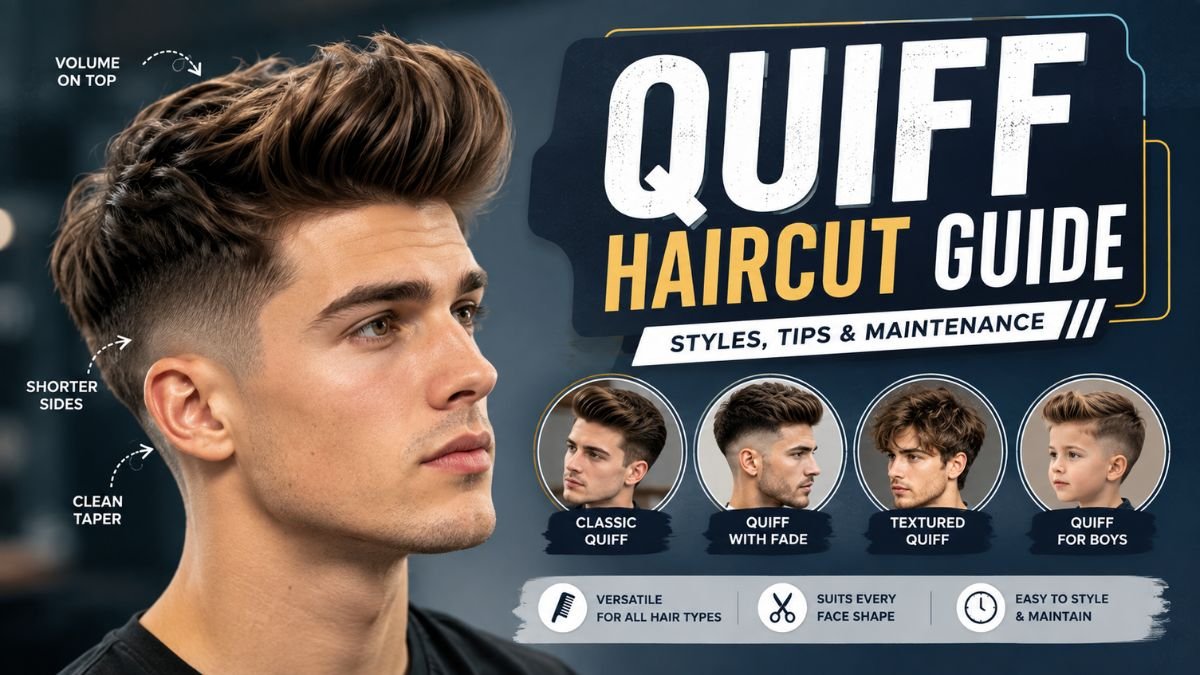
The quiff haircut has stayed popular for decades because it manages to look sharp without demanding hours of effort. It works on straight hair, curly hair, thick hair, and thin hair, which is part of why barbers recommend it so often to clients who want something classic but not boring. If you’re considering this cut, or you already have one and want to style it better, understanding the details makes a real difference in how the final result looks.
This guide walks through what a quiff actually is, the different variations you can choose from, how to pick the right one for your face shape and hair type, and how to maintain it so it looks good every day. We’ll also cover the quiff haircut for boys, since it’s one of the most requested versions for younger clients, along with common mistakes people make when trying to style it themselves.
What Is a Quiff Haircut?
A quiff is a hairstyle where the hair on top of the head is grown longer, then brushed upward and slightly back to create height and volume at the front. The sides and back are usually kept shorter, which creates contrast and makes the top section stand out. Unlike a pompadour, which sweeps the hair fully back, a quiff typically keeps some forward movement, giving it a slightly more relaxed and modern shape.
The style has roots in mid-20th-century fashion but has been reshaped repeatedly by different trends, from rockabilly culture to modern fades. Today, it’s less about following one fixed look and more about a flexible style that adapts to personal taste and hair texture.
What makes the quiff haircut different from many other short-to-medium styles is the amount of control it gives you over the final shape. You can keep it neat and controlled for a workplace, or loosen it up for a more casual, everyday appearance, all without changing the underlying cut. This flexibility is a big part of why barbers describe it as a “low-commitment, high-reward” style — the base haircut stays useful even as you experiment with different ways to style it.
Example: Someone with naturally straight hair might only need a comb and light pomade to get a clean quiff shape, while someone with curly hair may need a blow dryer and a strong-hold cream to control volume and direction.
Why the Quiff Haircut Stays Popular?
It Suits Many Hair Types
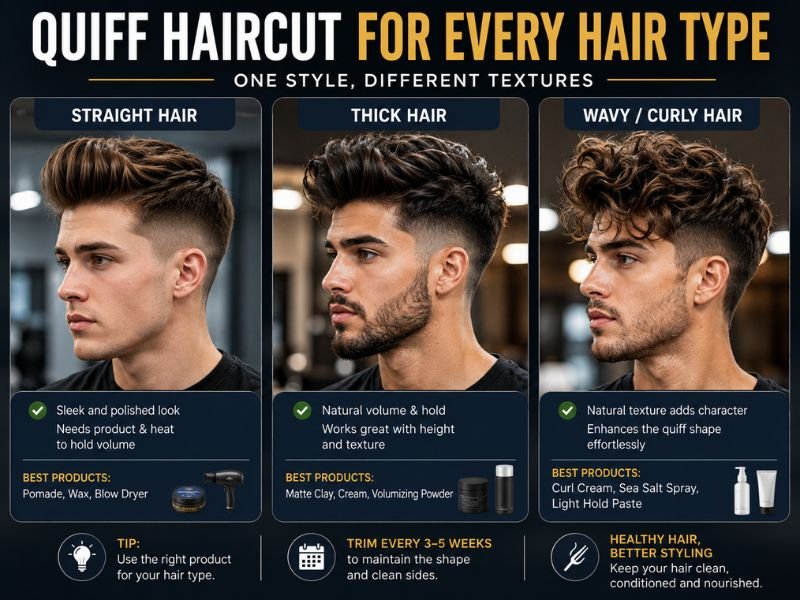
One reason the quiff hasn’t gone out of style is that it genuinely works with different hair textures. Thick hair holds the shape well and adds natural volume. Fine hair can still achieve a quiff with the right product, since less bulk actually makes it easier to direct the hair upward.
It’s Adaptable for Any Setting
A quiff can look formal or casual depending on how it’s styled. A tighter, sleeker quiff paired with a fade suits offices and formal events. A looser, textured quiff feels more relaxed and works for everyday wear.
Example: A person heading to a job interview might smooth their quiff down with a matte pomade for a neater look, while the same haircut styled with a texturizing spray looks more casual for a weekend outing.
It Pairs Well With Other Trends
Because the sides can be cut in different ways tapered, faded, or simply trimmed short a quiff can be combined with other current trends without losing its identity. This means the haircut rarely feels dated, even as broader style trends shift from year to year. It also gives people room to update their look gradually, by changing the side treatment rather than starting over with a completely different haircut.
Different Types of Quiff Haircuts:
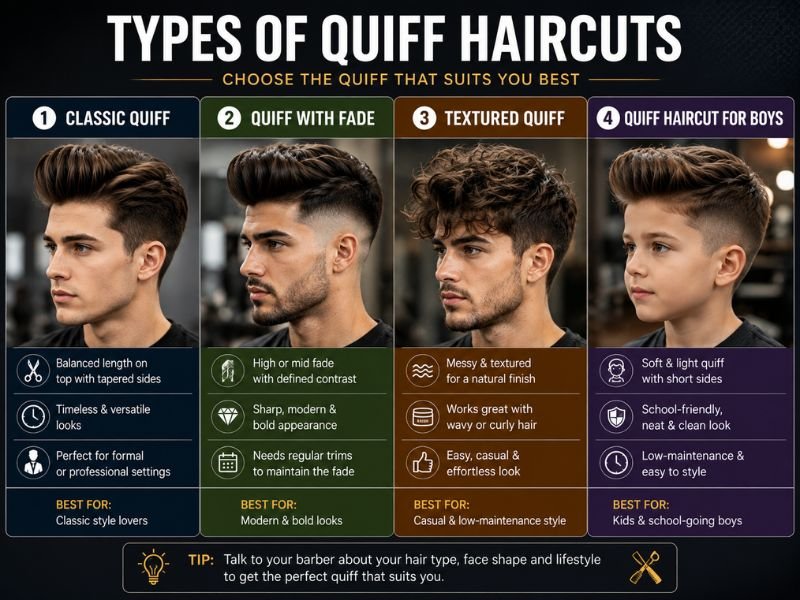
Not all quiffs look the same. The differences usually come from how the sides are cut and how much height is added on top.
Classic Quiff haircut
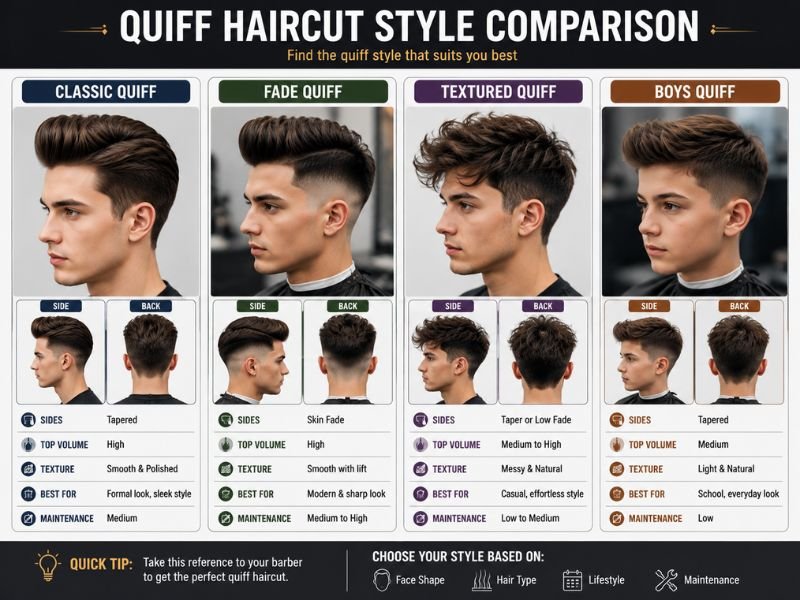
This version keeps the sides trimmed but not too short, with moderate height on top. It’s the most traditional take on the style and works well for people who want something timeless rather than trend-driven.
Quiff haircut with a Fade
Here, the sides are faded down to the skin or close to it, creating a sharp contrast against the longer top section. This version tends to look more modern and is popular among younger men and teenagers.
Textured Quiff haircut
Instead of a smooth, combed finish, the top hair is styled to look slightly messy and separated. This works particularly well for wavy or curly hair and gives a more casual, effortless appearance.
Quiff Haircut for Boys
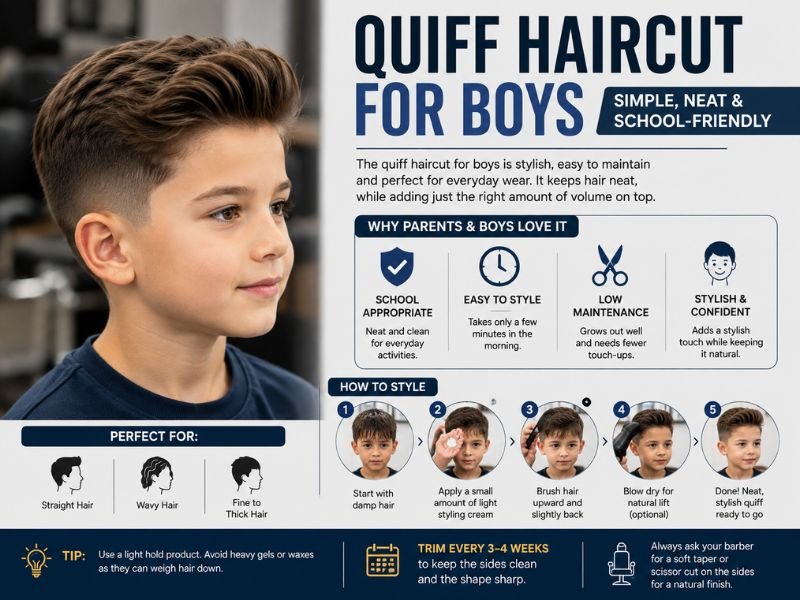
For younger boys, barbers often recommend a softer version of the quiff, with less dramatic height and a simple side trim rather than a sharp fade. It’s easy to maintain, doesn’t require heavy styling products, and still looks neat for school or everyday activities. Many parents choose this style because it grows out cleanly and doesn’t need frequent touch-ups.
Example: A seven-year-old with fine, straight hair might only need a small amount of light gel and a quick brush-up in the morning to keep the quiff haircut for boys looking tidy throughout the school day.
Parents often appreciate this style because it photographs well for school events without requiring a trip to the barber every few weeks. It also gives boys room to grow their hair slightly longer on top as they get older, making it easy to transition into a more dramatic quiff or fade later without needing an entirely new haircut.
How to Choose the Right Quiff Hairstyle:
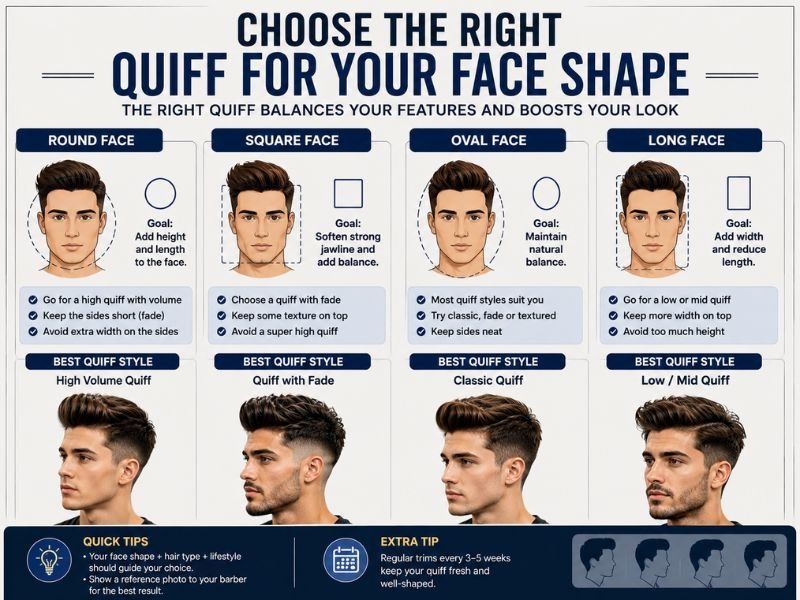
Picking the right version of this haircut depends mostly on two things: your hair type and your face shape.
Hair type matters because:
- Straight hair usually needs styling product to hold the shape.
- Wavy or curly hair often creates natural texture that works well with a textured quiff.
- Thick hair can handle more height without looking flat.
- Fine hair may need a shorter length on top to avoid looking limp.
Face shape matters because:
- Round faces often benefit from added height, which makes the face appear longer.
- Square faces usually suit a quiff with a fade, since it balances a strong jawline.
- Oval faces can wear almost any version of the quiff comfortably.
- Long faces may want to avoid extreme height and instead go for a shorter, wider quiff to balance proportions.
Example: Someone with a round face and thick hair might ask their barber for extra height at the front, while someone with a square jaw might prefer a tighter fade on the sides to keep the overall look balanced.
It also helps to consider your lifestyle before settling on a version of the cut. If you’re often short on time in the morning, a lower-maintenance quiff with less height will be easier to manage daily than a dramatic style that needs a blow dryer and multiple products every time you leave the house.
Quiff Haircut Comparison Table:
| Quiff Style | Best For | Main Benefit | Maintenance Level |
| Classic Quiff | Formal settings, timeless look | Versatile and easy to adjust | Moderate |
| Quiff with Fade | Modern, bold appearance | Sharp contrast, stands out | Moderate to High |
| Textured Quiff | Wavy or curly hair | Casual, low-effort styling | Low to Moderate |
| Quiff Haircut for Boys | Children, school-friendly | Neat, simple, grows out well | Low |
How to Style and Maintain a Quiff Haircut:
Getting the shape right isn’t difficult once you understand the basic steps, but consistency matters if you want it to look good daily.
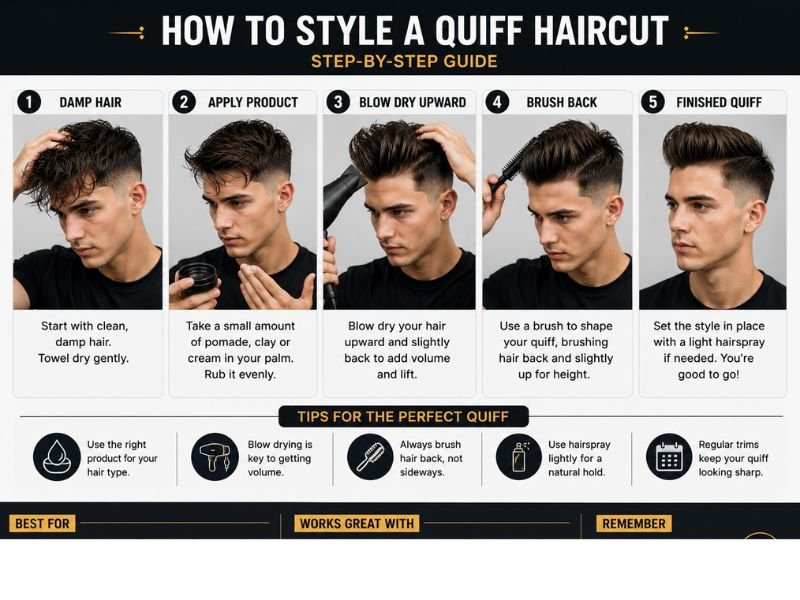
- Start with damp hair. Styling is easier and more controlled when hair isn’t completely dry or soaking wet.
- Apply the right product. Pomade works well for a smoother finish; a matte clay or paste suits a more textured look.
- Use a blow dryer if needed. Directing warm air upward and slightly back while brushing helps create lift, especially for fine or straight hair.
- Comb or brush the top section upward. Build the shape gradually rather than forcing it all at once.
- Set with light hold spray if necessary. This isn’t always needed, but it helps in humid weather or for finer hair types.
Example: On a humid day, someone with straight hair might notice their quiff falling flat by midday, so switching to a stronger-hold product or adding a light setting spray in the morning can help it last longer.
Trims and Upkeep
A quiff needs regular trims to keep its shape, usually every three to five weeks. The sides grow out faster than the top, so even if the top length still looks fine, the sides may need a touch-up sooner to keep the contrast clean.
Washing habits also affect how well a quiff holds up. Washing hair too often can strip away natural oils and make it harder for styling products to hold, while washing too rarely can leave hair greasy and flat. Most people find a good balance by washing every two to three days, using a light conditioner to keep hair manageable without weighing it down.
Common Mistakes to Avoid:
Even a well-cut quiff can look messy if it’s styled incorrectly. Here are mistakes people often make:
- Using too much product. This weighs hair down instead of adding lift, especially with heavier pomades on fine hair.
- Skipping heat styling when it’s needed. Some hair types simply won’t hold a quiff shape without a blow dryer, no matter how much product is used.
- Letting the sides grow out too long. This blurs the contrast that makes a quiff look sharp and intentional.
- Choosing the wrong height for face shape. Too much height on a long face, for example, can make proportions look unbalanced.
- Not communicating clearly with the barber. Bringing a reference photo helps avoid confusion, since “quiff” can mean slightly different things to different people.
Example: A client who asks for “a quiff” without further detail might end up with far more height than expected, simply because the barber pictured a different variation of the style.
FAQS:
1. Is a quiff haircut hard to maintain?
Not usually. Most versions only need a few minutes of daily styling and a trim every three to five weeks to keep the shape sharp.
2. What’s the difference between a quiff and a pompadour?
A pompadour sweeps hair fully backward, while a quiff usually keeps some forward direction, giving it a slightly softer, more casual look.
3. Can a quiff haircut work with curly hair?
Yes. Curly hair often works especially well with a textured quiff, since the natural volume and movement suit this style.
4. Is the quiff haircut for boys suitable for school?
Yes, most schools accept it, especially the softer versions without a dramatic fade, since it looks neat and requires little daily upkeep.
5. How often should I trim a quiff?
Every three to five weeks is typical, though the sides may need attention sooner than the top, depending on how fast they grow.
6. What products work best for a quiff haircut?
Pomade gives a smoother, classic finish, while clay or paste products create a more textured, matte look. The right choice depends on your hair type and the version of the quiff you want.
Conclusion:
A quiff haircut remains one of the most reliable, adaptable styles available, whether you want a classic look, a modern fade, a textured finish, or a simple, low-maintenance version like the quiff haircut for boys. The key to getting it right lies in matching the style to your hair type and face shape, using the correct amount of product, and keeping up with regular trims. Once you understand these basics, styling a quiff becomes a quick, straightforward part of your daily routine rather than a challenge.