
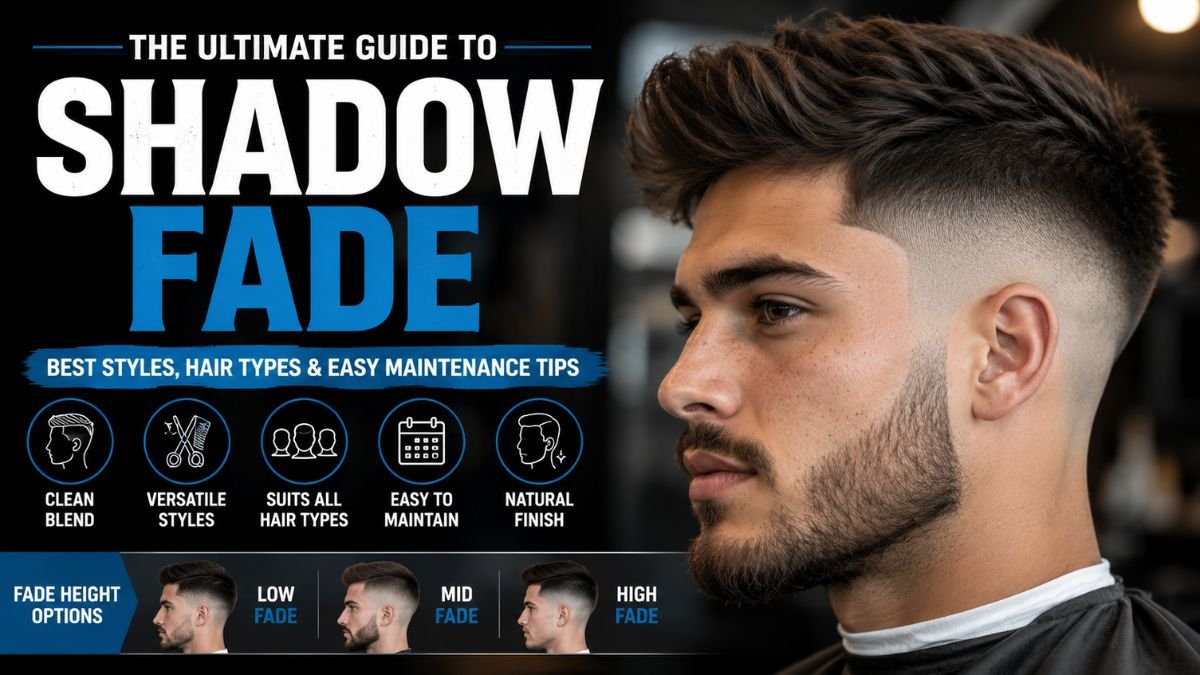
A shadow fade is a versatile men’s haircut that creates a smooth transition from shorter hair near the sides and neckline into longer hair above. Unlike a very close skin fade, it keeps some hair visible in the faded area, giving the haircut a softer and more natural finish. This makes it a useful choice for people who want clean sides without an extremely sharp contrast.
Choosing the right haircut depends on your hair texture, face shape, preferred length, and daily routine. In this guide, you will learn how the shadow fade works, the main styles you can try, which hair types suit it, how it compares with other fades, and how to maintain the look between barber visits. You will also find practical tips for asking your barber for the result you want.
Our Practical Tip:
Keep the sides and neckline cleaned up regularly to maintain the smooth shadow fade. Use a small amount of lightweight styling product on the top and add more only when needed. Avoid heavy products because they can make the hair look greasy and reduce the natural texture of the haircut.
What Is a Shadow Fade?
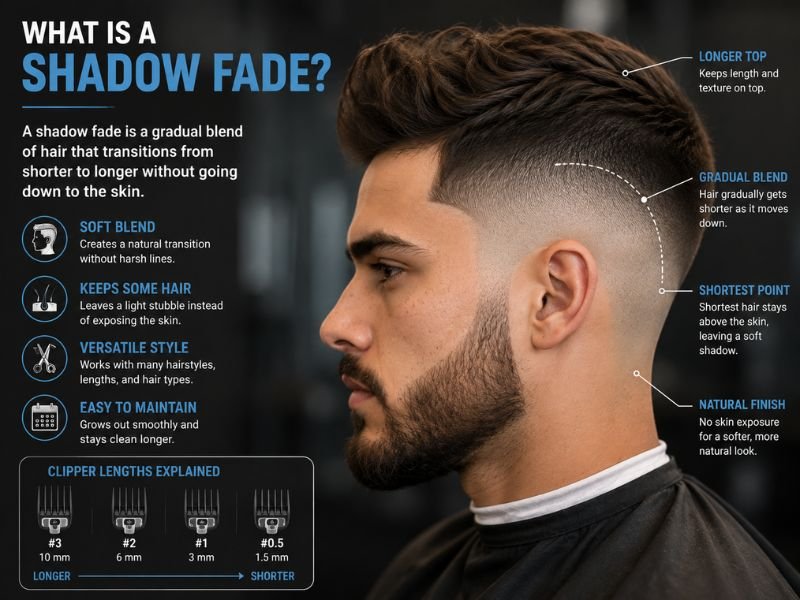
A shadow fade gradually blends short hair into longer hair without taking the sides completely down to the skin. The barber uses different clipper lengths to create a soft transition, usually keeping a small amount of stubble or short hair at the lowest part of the fade.
The key feature is the blend. Instead of creating a strong line between very short and longer hair, the barber works through several lengths so the transition looks smooth. The fade can be placed low, around the temples and ears, or higher on the sides depending on the desired shape.
Example: If you want neat sides but do not like the exposed-skin appearance of a skin fade, a softer blend can give you a cleaner finish while keeping more natural coverage.
Low Shadow Fade
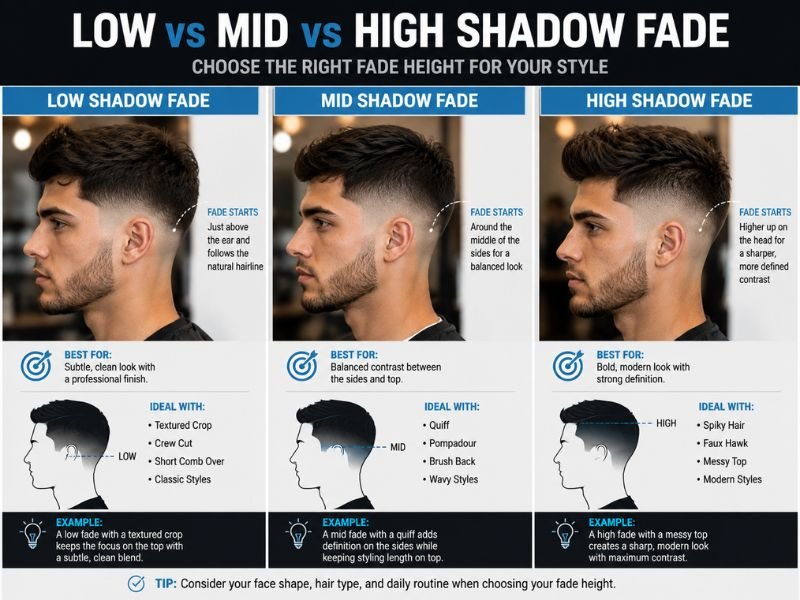
A low version keeps most of the fade close to the ears and lower sides of the head. It gives the haircut a subtle appearance and works well when you want the top to remain the main focus.
Example: Pairing a low fade with a textured crop can create a tidy everyday haircut without making the sides look too aggressive.
Mid Shadow Fade
A mid fade starts around the middle of the sides, creating more visible contrast between the faded section and the hair on top. It offers a balanced option between a subtle and more noticeable haircut.
Example: A medium-length quiff with a mid fade can add definition around the sides while leaving enough length for styling.
High Shadow Fade
A high version moves the blend farther up the sides, creating a stronger separation between the top and the shorter sections. It can make the hairstyle look more structured and modern.
Example: A high fade combined with a longer textured top can give thick hair a sharper shape while keeping the transition softer than a skin fade.
Popular Shadow Fade Styles:
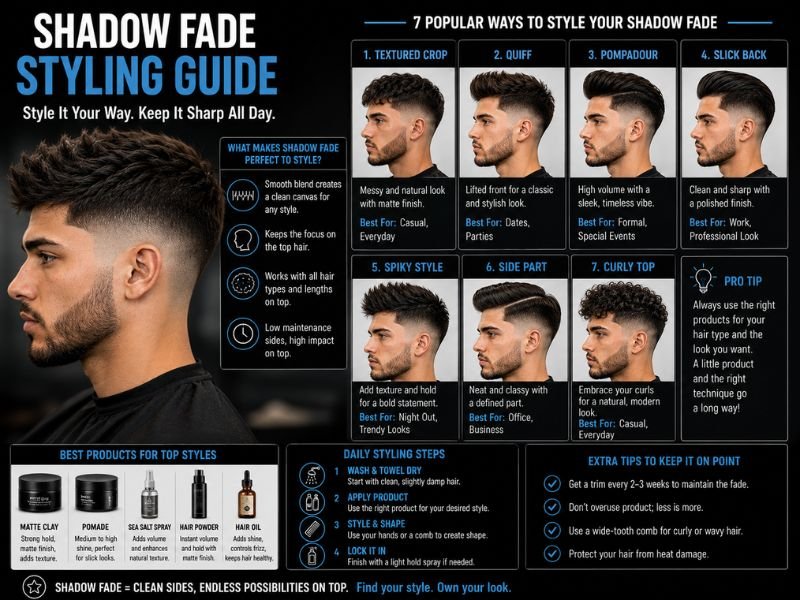
One reason this haircut remains flexible is that the fade can be combined with many hairstyles. The top can be short, medium, curly, wavy, textured, or brushed back.
Shadow Fade With Curly Hair
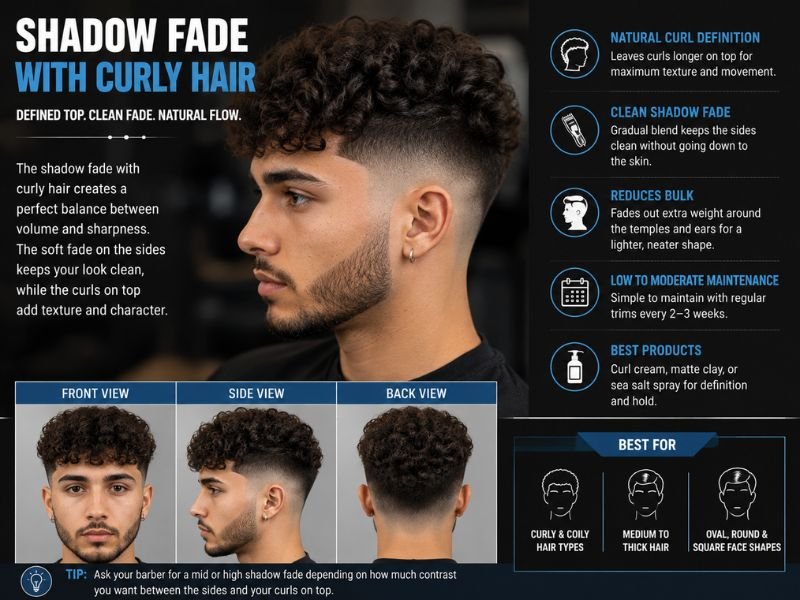
Curly hair can create an attractive contrast between a defined top and closely blended sides. The fade also helps reduce bulk around the temples and ears.
Example: If you have tight curls, keeping more length on top can preserve their natural pattern while the shorter sides make the shape easier to manage.
Shadow Fade for Boys:
A shadow fade for boys can be a practical choice when a child wants a modern haircut that still looks neat and age-appropriate. The top can be kept short for easy styling or left slightly longer for texture and movement.
Parents should consider school rules, the child’s comfort, and how much daily styling is realistic. A simple cut with a low or mid fade may be easier to maintain than a highly detailed design.
Example: For a boy with thick straight hair, a short textured top with a low fade can keep the haircut tidy while requiring little morning styling.
Which Hair Types Suit This Haircut?
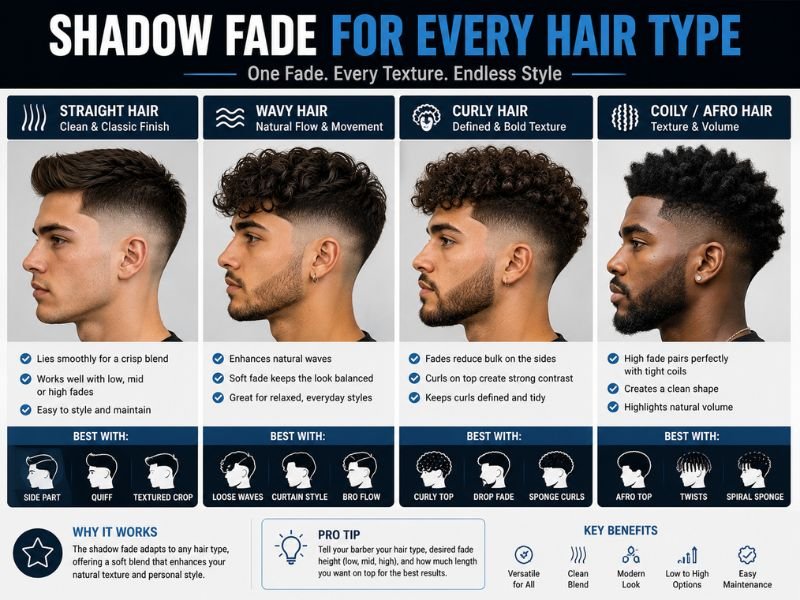
The haircut can be adapted to straight, wavy, curly, and coily hair. However, the barber may use different techniques depending on the texture and density.
| Style | Hair Type | Best For | Maintenance |
| Low fade | Straight or wavy | Subtle, clean look | Moderate |
| Mid fade | Most hair types | Balanced contrast | Moderate |
| High fade | Thick, straight, or curly | Stronger shape | Higher |
| Curly top fade | Curly or coily | Defined texture | Moderate |
| Textured top fade | Straight or wavy | Casual styling | Moderate |
A shadow fade can look especially clean on straight hair because the hair lies close to the head. Wavy hair can give the transition a softer appearance, while curls and coils create stronger texture above the fade.
Example: If your hair is naturally wavy, leaving some length on top can make the haircut look fuller while the sides remain controlled.
Shadow Fade vs Skin Fade:
The main difference is how short the lowest part of the fade becomes. A skin fade removes the hair down to the skin, while a shadow fade leaves a small amount of hair visible. Because of this, the latter often gives a softer visual transition.
Neither option is automatically better. The choice depends on how much contrast you want and how frequently you are willing to maintain the haircut.
Example: If you prefer a bold, high-contrast finish for special occasions, a skin fade may suit you, while a shadow blend can be better for someone who wants a softer everyday appearance.
Shadow Fade vs Taper Fade:
A taper usually focuses on gradually shortening the hair around the sideburns, ears, and neckline without creating a full fade across the sides. A shadow fade generally covers a larger section and creates a more visible blended area.
A taper can be a good option if you want to keep more hair around the sides. A shadow blend is useful when you want the sides to look noticeably cleaner while still avoiding a skin-close finish.
Example: Someone with a classic side-part hairstyle may prefer a taper for a conservative shape, while a textured crop can work well with a broader fade.
How to Ask Your Barber for a Shadow Fade:
Clear communication is important. Tell your barber whether you want a low, mid, or high fade and explain how much length you want to keep on top. Also mention whether you want a natural finish or a sharper outline.
A reference photo can make a shadow fade easier to communicate and remove confusion, but you should still explain what you like about it. Your barber can then adapt the idea to your hair rather than copying the image exactly.
Example: You could say, “I want a mid fade with a soft blend, keep the top medium length, and leave enough texture for a natural style.”
Maintenance Tips:
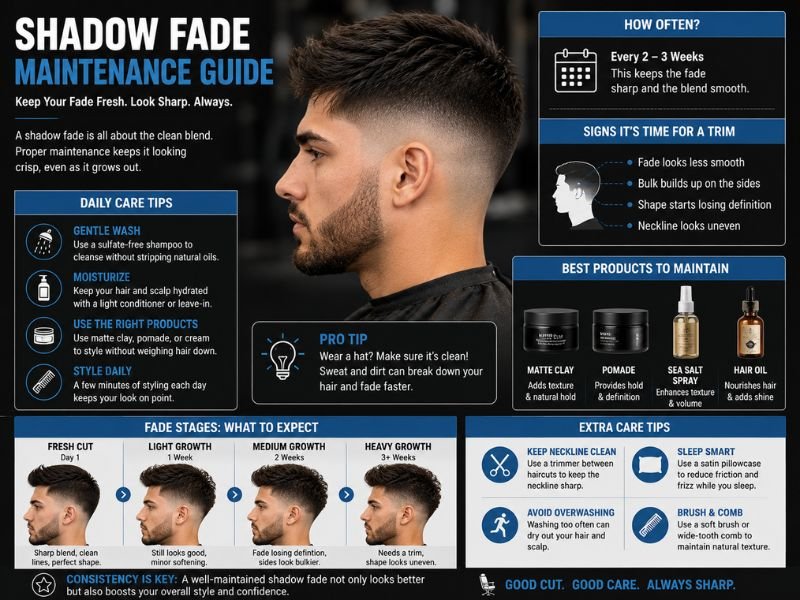
A shadow fade gradually loses its sharp appearance as the hair grows, so regular upkeep helps preserve the blend. The exact timing between cuts depends on how quickly your hair grows and how precise you want the sides to remain.
Keep the top clean and use products that match your hair texture. Avoid applying too much product because buildup can make the hair appear heavy or greasy.
Example: If your hair is fine, a lightweight matte cream may provide control without flattening the top.
FAQS:
1. Is a shadow fade the same as a skin fade?
No. A skin fade reaches the skin at its shortest point, while a shadow fade leaves some short hair visible.
2. Is a shadow fade good for boys?
Yes. A shadow fade for boys can be adapted to different hair types and kept simple for easy daily styling.
3. How often should I maintain a fade?
Maintenance depends on hair growth and how sharp you want the haircut to look. Regular trims help preserve the blend.
4. Can curly hair have this fade?
Yes. Curly hair can work well with a fade because the shorter sides create contrast with the textured top.
5. Which fade height should I choose?
Choose low, mid, or high based on your preferred contrast, top hairstyle, face shape, and daily routine.
6. What should I tell my barber?
Explain the fade height, desired top length, and preferred finish. A reference photo can also help communicate your preferred result.
Final Thoughts:
A shadow fade offers a clean blend while keeping more visible hair than a skin fade. Its low, mid, and high variations make it easy to adapt to different hairstyles, hair textures, and personal preferences. The best result comes from choosing a fade height that works with your top length and natural hair growth.
Whether you want a simple everyday cut, a textured crop, a curly top, or a more structured style, the haircut can be adjusted to match your needs. Talk clearly with your barber, use a suitable styling routine, and keep the sides maintained for the cleanest finish.