
Black hair dye is one of the easiest ways to refresh your appearance and give your hair a rich, healthy-looking color. Many people use it to cover gray hair, darken their natural shade, or simply enjoy a fresh new style. Today, there are many kinds of black hair dye, so you can choose one that matches your hair type, lifestyle, and personal preferences.
Some hair dyes last for several weeks, while others wash out after a few shampoos. Knowing the difference between these products can help you choose the one that fits your needs. It’s also important to prepare your hair properly and follow the instructions to get smooth, even color.
This guide explains everything in simple language. You’ll learn about the different types of black hair dye, how they work, who should use them, and how to choose the best shade for your hair
Our Practical Tip:
Our Practical Tip: Before dyeing your hair black, consider your natural hair color, hair condition, and the level of maintenance you are comfortable with. If your hair is already dry or damaged, focus on improving its condition before coloring it. Always follow the product instructions and consider doing a small patch or strand test first to reduce the risk of an unwanted reaction or result.
What Is Black Hair Dye?
Black hair dye is a product that changes your hair to a black shade. It contains color pigments that either stay on the outside of the hair or go deeper into the hair strand, depending on the formula you choose.
Some products are designed to last for a long time, while others fade after several washes. Modern formulas are also available for different needs, such as covering gray hair, adding shine, or giving hair a softer, healthier look.
Before choosing a black hair dye, decide how long you want the color to last and how much care you’re willing to give it
Example:
If your hair is starting to turn gray around the front or sides, a long-lasting black hair dye can help create a more even and youthful appearance.
Types of Black Hair Dye:
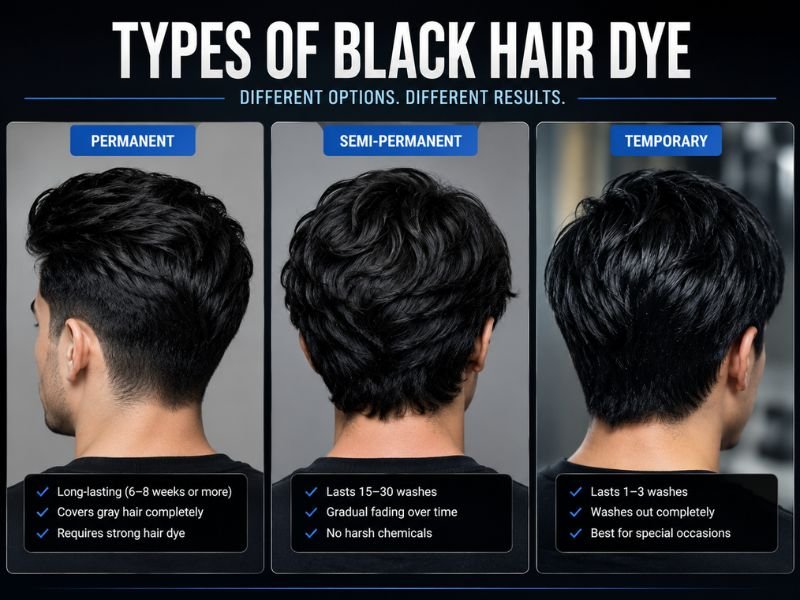
Black hair dye comes in different types, and each one offers unique results and care needs.
Permanent Black Hair Dye
Permanent black hair dye is made for people who want long-lasting results. The color stays in the hair until it grows out, making it a popular choice for covering gray hair.
Best for:
- Full gray coverage
- Long-lasting color
- Fewer touch-ups
Example:
Someone with a large amount of gray hair may choose permanent dye because it provides strong and reliable coverage.
Semi-Permanent Black Hair Dye
Semi-permanent hair dye fades faster than permanent hair dye. Instead, it gradually fades with regular washing.
This option is great if you want to try black hair without making a long-term commitment.
Best for:
- Trying a new look
- Refreshing faded color
- Less frequent chemical processing
Example:
If you’re unsure whether black hair suits you, a semi-permanent dye lets you test the color without a lasting change.
Temporary Black Hair Dye
Temporary black hair dye sits on the surface of the hair and usually washes out after one or a few shampoos.
It is commonly used for short-term events.
Best for:
- Parties
- Weddings
- Photoshoots
- Special occasions
Example:
If you’re attending a themed event, temporary black hair dye can change your look for the day without affecting your natural hair color.
Permanent vs. Semi-Permanent vs. Temporary:
| Feature | Permanent | Semi-Permanent | Temporary |
| How Long It Lasts | Several weeks or months | Around 15–30 washes | 1–3 washes |
| Gray Hair Coverage | Excellent | Moderate | Low |
| Maintenance | Low | Medium | Very Low |
| Best Choice For | Long-term color | Trying a new color | Short-term use |
Key Difference
Permanent dye changes the hair more deeply and lasts much longer. Semi-permanent dye fades over time, while temporary dye washes away quickly.
Natural vs. Chemical Black Hair Dye:
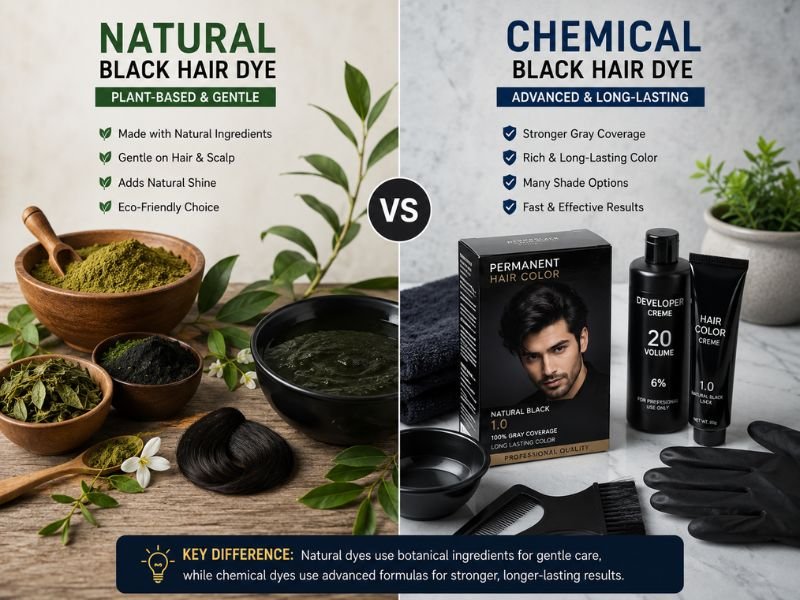
Many people also wonder whether they should choose a natural product or a chemical-based formula.
Both options have their own advantages.
Natural Black Hair Dye
Natural products often contain plant-based ingredients such as henna or indigo.
Many people choose these formulas because they contain natural ingredients.
Benefits
- Plant-based ingredients
- Adds natural shine
- Often feels gentle on the hair
Things to Remember
- Fewer shade options
- Results may vary from person to person
- Usually takes longer to apply
Example:
Someone who prefers herbal products may feel more comfortable using a natural black hair dye instead of a stronger chemical formula.
Chemical Black Hair Dye
Chemical hair dyes are specially formulated to provide rich, even color with dependable results.
Many permanent products fall into this category.
Benefits
- Strong gray coverage
- Deep, rich black color
- More shade choices
- Long-lasting results
Things to Remember
- Some formulas contain ammonia.
- Good aftercare helps keep hair healthy.
Example:
A person who wants complete gray coverage before an important meeting may choose a permanent chemical dye because it provides more consistent results.
Comparison Table: Natural vs. Chemical Hair Dye:
| Natural Hair Dye | Chemical Hair Dye |
| Plant-based ingredients | Professionally formulated ingredients |
| Softer color results | Richer and darker color |
| Fewer shade options | Many black shades available |
| Longer application time | Faster coloring process |
| Color may vary | More predictable results |
Key Difference
Natural hair dye focuses on botanical ingredients, while chemical formulas are designed to provide stronger color and longer-lasting coverage.
Who Should Use Black Hair Dye?
Black hair dye can be a great choice for many people.
It may suit you if you:
- Want to hide gray hair
- Have naturally dark hair
- Prefer a classic appearance
- Like shiny-looking hair
- Want a color that stays attractive for weeks
However, if you enjoy changing your hair color often, remember that black dye can be more difficult to remove than lighter shades.
Example:
Many professionals choose black hair dye to maintain a clean and polished look.
How to Choose the Right Shade of Black:
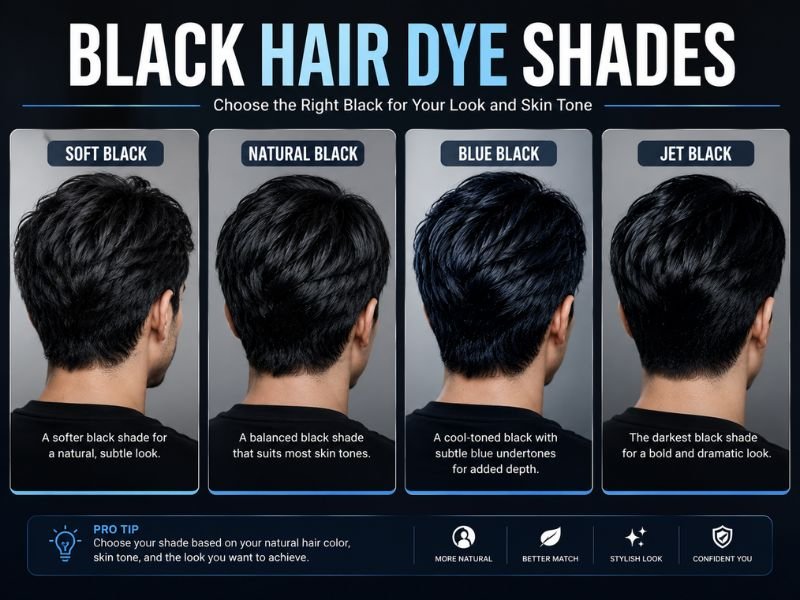
Black hair dye comes in several shades, and choosing the right one can make your hair look more natural.
Soft Black
A softer black shade that creates a natural finish.
Natural Black
A balanced shade that suits many skin tones.
Blue Black
A cool-toned shade with blue highlights visible under bright light.
Jet Black
The darkest black shade, offering a bold and dramatic look.
Shade Guide
| Skin Tone | Recommended Shade |
| Fair | Soft Black |
| Medium | Natural Black |
| Olive | Blue Black |
| Deep | Jet Black or Natural Black |
Example:
Someone with a medium skin tone who wants a natural everyday style may find Natural Black to be a better choice than Jet Black.
Pro Tip
Choose your black hair dye based on your natural hair color, skin tone, and how much maintenance you’re willing to do. The right formula and the right shade together will give you the best results.
How to Apply Black Hair Dye at Home:
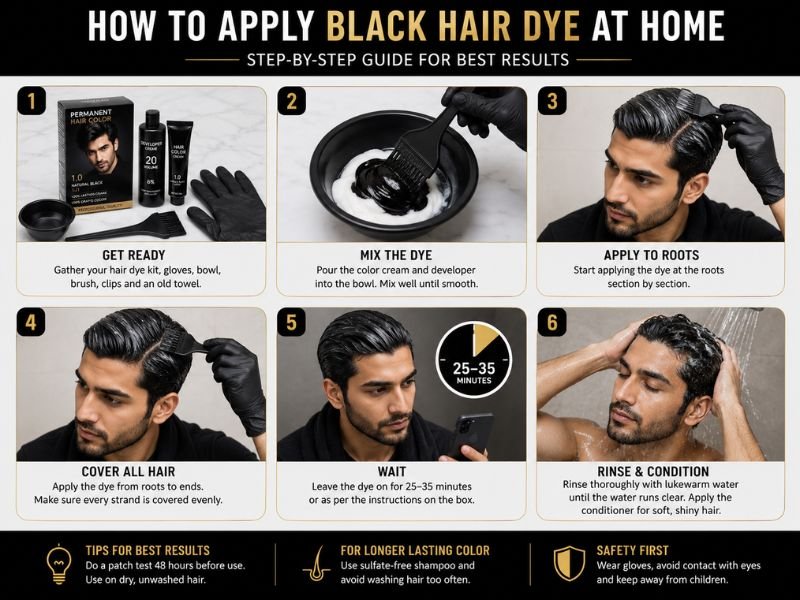
Coloring your hair at home can save time and money. The key is to prepare everything before you start and follow the instructions that come with your hair dye.
Step 1: Get Everything Ready
Before opening the hair dye, collect all the items you need:
- Black hair dye kit
- Gloves
- Old towel
- Hair clips
- Wide-tooth comb
- Petroleum jelly
- Timer
Apply a small amount of petroleum jelly around your hairline and ears. This helps prevent the dye from staining your skin.
Example:
If you have thick or long hair, buying two boxes of hair dye can help you cover every section evenly.
Step 2: Do a Patch Test
Never skip the patch test. Apply a small amount of dye behind your ear or on your inner arm at least 48 hours before coloring.
If you notice itching, redness, swelling, or irritation, do not use the product.
Example:
Even if you’ve used hair dye before, your skin can become sensitive over time. A quick patch test can help you avoid an allergic reaction.
Step 3: Prepare Your Hair
Brush your hair well to remove tangles. Divide it into four sections using clips so the dye is easier to apply.
Hair that is free from heavy styling products usually gives better results.
Example:
Sectioning your hair makes it easier to color the roots and back of your head without missing any spots.
Step 4: Apply the Hair Dye
Put on your gloves and begin at the roots. Work slowly toward the ends, making sure every strand is coated evenly.
If your roots are gray and the rest of your hair is already black, follow the product instructions for root touch-ups.
Example:
Starting at the roots first helps gray hair absorb the color more evenly.
Step 5: Wait for the Recommended Time
Leave the dye on for the amount of time recommended by the manufacturer.
Leaving it on longer will not always make your hair darker and may leave it feeling dry.
Step 6: Rinse and Condition
Rinse your hair with lukewarm water until the water runs clear.
Then apply the conditioner included in the kit to help lock in moisture and leave your hair feeling soft.
Example:
After conditioning, many people notice that their hair feels smoother and looks shinier.
Common Mistakes to Avoid:
Small mistakes can affect your final results, even if you use a high-quality product.
Avoid these common errors:
- Skipping the patch test
- Choosing the wrong shade
- Leaving the dye on too long
- Applying color unevenly
- Washing your hair too often after coloring
- Forgetting to wear gloves
- Ignoring the product instructions
Example
Someone who applies dye too quickly without sectioning their hair may end up with darker areas in some places and lighter areas in others.
How Long Does Black Hair Dye Last?
The lifespan of your color depends on the type of dye you choose and how well you care for your hair.
| Hair Dye Type | Average Lasting Time |
| Permanent | About 6–8 weeks or longer |
| Semi-Permanent | Around 15–30 washes |
| Temporary | 1–3 washes |
Other factors that affect color include:
- Shampoo frequency
- Heat styling
- Sun exposure
- Hair texture
- Overall hair health
Example:
A person who washes their hair every day will usually notice fading sooner than someone who shampoos only a few times each week.
How to Keep Black Hair Looking Fresh:
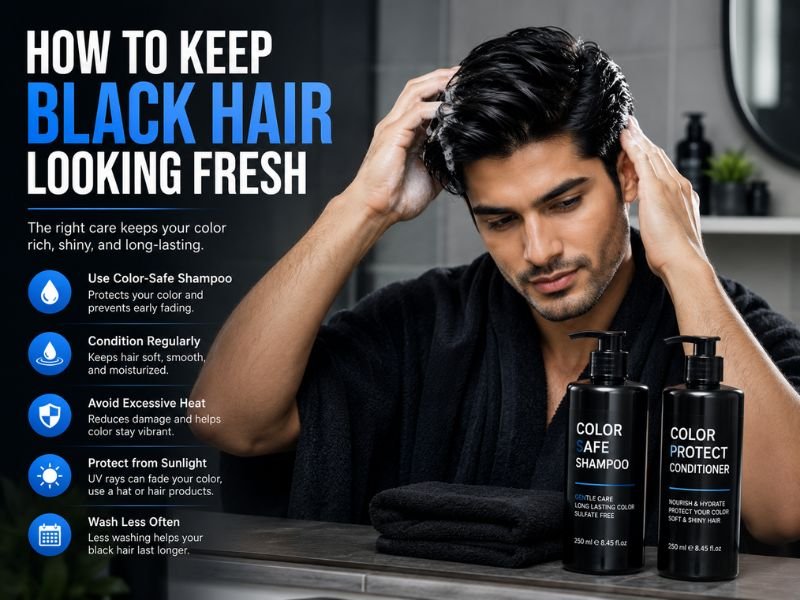
Good aftercare helps your color stay darker for longer.
Wash Less Often
Frequent washing can make the color fade faster.
Use Shampoo for Colored Hair
A color-safe shampoo helps protect your hair while gently cleaning it.
Deep Condition Every Week
Moisturized hair often looks smoother, softer, and shinier.
Reduce Heat Styling
Try not to overuse flat irons, curling irons, or very hot blow dryers.
Protect Hair from Sunlight
Long hours in direct sunlight may slowly reduce the richness of your hair color.
Example:
Using a deep conditioner once a week can help keep your black hair soft and healthy-looking.
Safety Tips Before Coloring:
Hair dye is generally safe when used correctly, but following basic precautions is always important.
Remember to:
- Complete a patch test first.
- Wear protective gloves.
- Avoid getting dye in your eyes.
- Do not apply dye to a damaged or irritated scalp.
- Read and follow the instructions carefully.
Pro Tip
A patch test only takes a few minutes but can help prevent unexpected skin reactions.
Example:
Taking time for a patch test is much easier than dealing with skin irritation after coloring.
Possible Side Effects:
Most people use black hair dye without serious problems, but mild side effects can sometimes happen.
These may include:
- Dry hair
- Mild scalp irritation
- Temporary itching
- Redness
- Hair becoming slightly rough after coloring
If you experience severe swelling, difficulty breathing, or a serious allergic reaction, seek medical care immediately.
Example:
If your hair feels dry after coloring, using a moisturizing hair mask once a week may improve softness.
Can Black Hair Dye Damage Hair?
Black hair dye does not automatically damage healthy hair. However, frequent coloring or poor hair care may lead to dryness or breakage.
Your risk depends on:
- Hair condition
- Coloring frequency
- Hair care routine
- Product quality
Key Difference
Coloring healthy hair once in a while is usually less stressful than repeatedly coloring damaged hair without giving it time to recover.
Example:
Someone who colors their hair every few months may notice less dryness than someone who dyes it every few weeks.
How to Remove Black Hair Dye:
If you decide to change your hair color later, avoid using harsh DIY methods.
Safer options include:
- Hair color removers
- Gradual fading through regular washing
- Visiting a professional hairstylist for major color changes
Avoid using strong bleach without experience, as it may damage your hair.
Example:
If you want to change from black to light brown, a professional stylist can usually achieve better results with less risk of damage.
Best Ingredients to Look For:
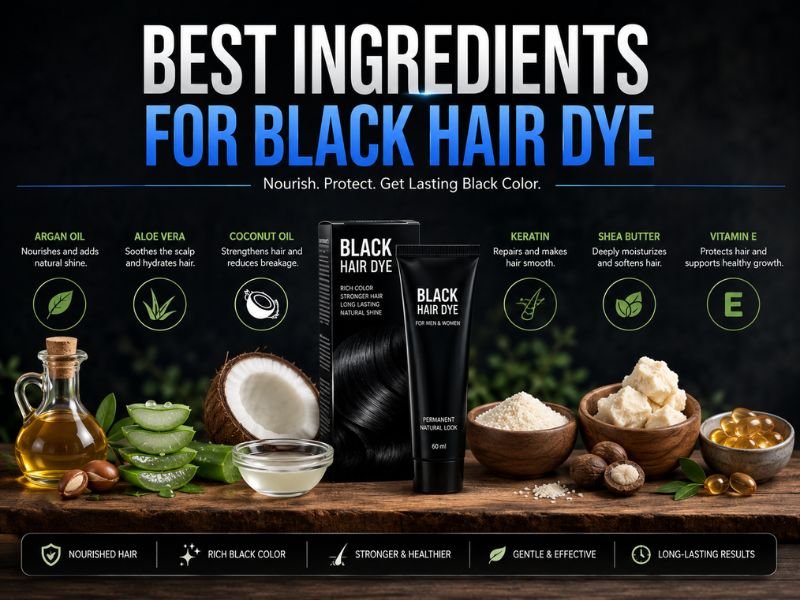
Many modern hair dyes include ingredients that help protect and nourish the hair.
Look for products containing:
- Argan oil
- Coconut oil
- Aloe vera
- Keratin
- Shea butter
- Vitamin E
People with sensitive scalps may also prefer formulas labeled as ammonia-free.
Example:
A formula enriched with argan oil may leave your hair feeling softer while adding extra shine.
Expert Tips for Long-Lasting Color:
Follow these simple habits to keep your hair color looking fresh.
- Wash with cool or lukewarm water.
- Avoid shampooing every day.
- Use products made for color-treated hair.
- Condition your hair regularly.
- Trim split ends every few weeks.
- Touch up only the roots instead of recoloring your entire head each time.
Example:
Touching up new hair growth instead of coloring all your hair every time can help reduce unnecessary damage.
FAQs:
1. What is black hair dye?
Black hair dye is a hair coloring product used to change hair to a black shade or cover gray hair.
2. How long does black hair dye last?
Permanent black hair dye usually lasts 6–8 weeks, while other types fade after several washes.
3. Can black hair dye cover gray hair?
Yes, permanent black hair dye is designed to provide full and even gray hair coverage.
4. Is black hair dye safe to use?
Yes, it is generally safe when used correctly and after performing a patch test.
5. How can I keep black hair dye from fading?
Use color-safe hair products, wash less often, and avoid excessive heat styling.
Conclusion:
Choosing the right black hair dye is about finding a product that matches your hair type, lifestyle, and coloring goals. Whether you prefer a permanent formula for long-lasting gray coverage, a semi-permanent option for more flexibility, or a temporary color for a short-term change, understanding the differences can help you make a better decision.
For the best results, always perform a patch test, carefully follow the application instructions, and maintain your hair with products designed for color-treated hair. With the right care, your hair can stay healthy, soft, and full of rich black color for weeks.