
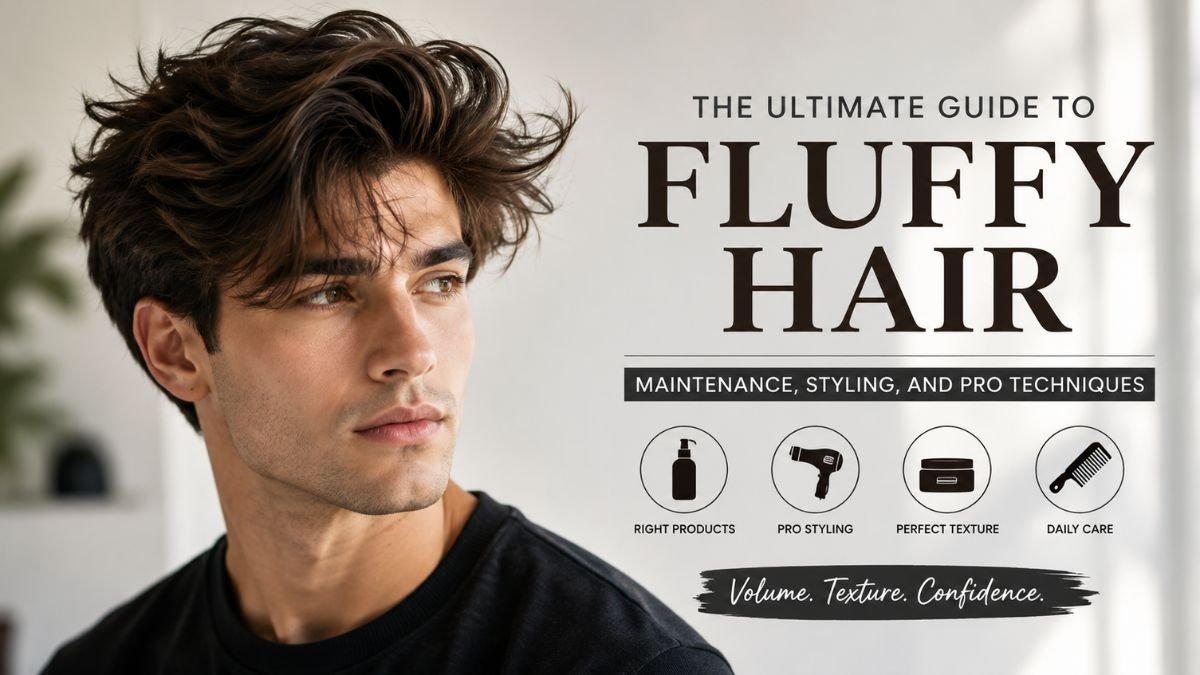
Flat, limp, or lifeless hair is a common frustration for anyone trying to achieve fluffy hair with a modern, textured look. for anyone trying to achieve a modern, textured look. The desire for maximum volume, movement, and a soft, touchable texture has made fluffy hair one of the most sought-after aesthetics in contemporary grooming.This look pairs especially well with modern boys hairstyles. However, achieving this style isn’t just about waking up and shaking out your strands; it requires an understanding of your specific hair type, the proper application of pre-styling products, and the right mechanical techniques to lift the hair from the root without causing unruly frizz.
This comprehensive guide breaks down the science and art behind creating and maintaining voluminous hair. We will explore the critical differences between a clean, intentionally fluffy look and untamed frizz, map out a step-by-step styling routine, and review the essential tools required to keep your style intact throughout the day. Whether you have naturally straight, wavy, or fine hair, this definitive fluffy hair tutorial will provide actionable methods, professional product insights, and real-world examples to help you elevate your daily hair game.
Our Practical Tip:
Our Practical Tip: To get fluffy hair, focus on creating natural volume instead of using too much styling product. Choose lightweight products that match your hair type, and use a blow dryer on a low or medium setting to lift the roots gently. Regular trims and proper conditioning can also help keep the hair soft, healthy, and easier to style.
Understanding Fluffy Hair vs. Frizzy Hair:
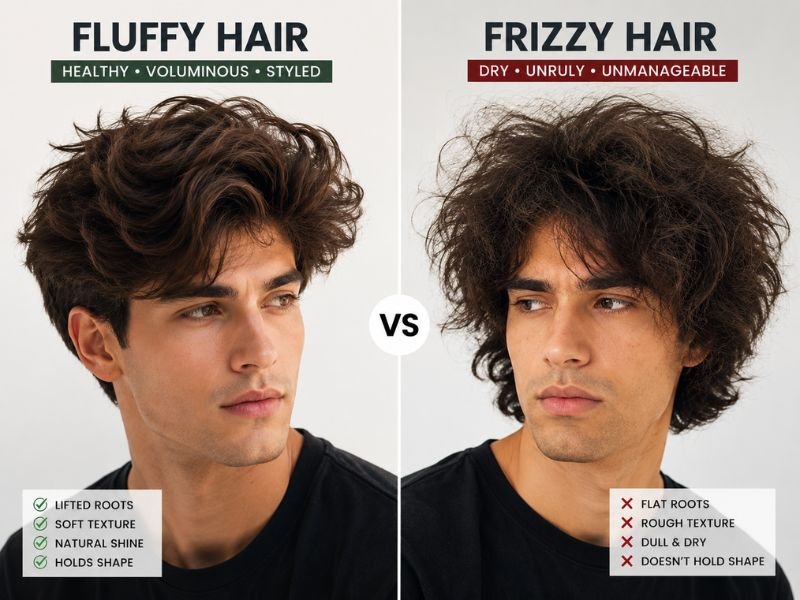
Before picking up a blow dryer, it is vital to distinguish between healthy, intentional volume and structural hair damage. Many people confuse the two, leading to styling errors that leave hair looking dry and parched rather than full and vibrant. Fluffy hair is characterized by airy volume, and achieving fluffy hair requires the right products and styling routine.
What Exactly is Fluffy Hair?
Fluffy hair is characterized by airy volume, zero weight, a soft texture, and a lifted root structure. It looks healthy, holds a deliberate shape, and retains a subtle, natural sheen. It relies on clean hair and strategic styling to separate individual strands, creating the illusion of density and movement.
Short Example: Think of a professional runway model or a modern digital creator whose hair looks incredibly thick, bouncy, and soft to the touch, moving naturally whenever they walk or turn their head.
The Problem with Frizzy Hair
Frizzy hair, on the other hand, is a symptom of moisture deprivation and raised hair cuticles. When the outer layer of the hair shaft lifts up, atmospheric moisture enters, causing the strands to swell unevenly. Frizz lacks a defined shape, feels rough or brittle, and completely blocks natural light reflection, making the hair look dull.
Short Example: Imagine stepping outside on a highly humid summer afternoon and watching your hair immediately puff out into an unmanageable, rough, and tangled cloud that resists any attempt at combed styling.
The Ultimate Step-by-Step Fluffy Hair Tutorial:
Achieving this style requires a deliberate sequence of washing, prepping, drying, and setting. Skipping a single step can cause the style to deflate within an hour. Follow this professional workflow for maximum longevity.
Step 1: The Foundation (Washing and Conditioning)
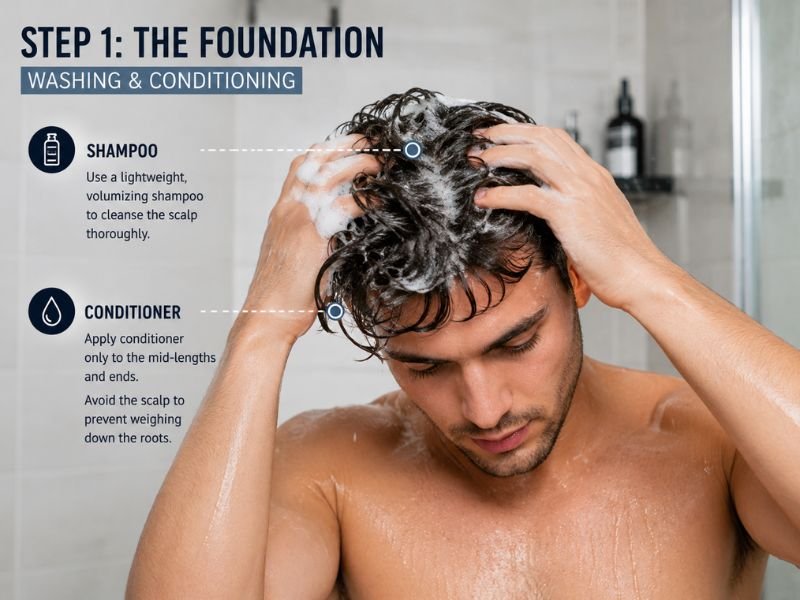
Great volume starts in the shower. Heavy, oil-laden moisture shampoos will weigh down fine strands, making it impossible to get a proper lift at the root. You must use a lightweight, volumizing shampoo that thoroughly cleanses the scalp of sebum without stripping it entirely. When conditioning, apply the product strictly to the mid-lengths and ends of your hair never to the scalp.A proper washing routine creates the perfect foundation for fluffy hair.
Short Example: If you apply a heavy, oil-based conditioning mask directly to your scalp before styling, your roots will become slicked down and greasy by midday, completely killing your hair’s potential lift.
Step 2: The Pre-Styling Application Fluffy Hair
Once you exit the shower, gently towel-dry your hair until it is damp, not dripping wet. This is the golden window to apply a pre-styler, such as a sea salt spray or a lightweight volumizing mousse. These products coat the hair shaft, adding grit, texture, and a microscopic layer of thickness that gives the hair “grip” during the drying process. Sea salt spray is one of the most effective products for creating fluffy hair.
Short Example: Spraying 4 to 5 mists of a premium sea salt spray evenly throughout your damp hair provides the essential texturizing foundation needed to hold a voluminous shape later on.
Step 3: Mechanical Drying (The Blow Dry Technique)Fluffy Hair
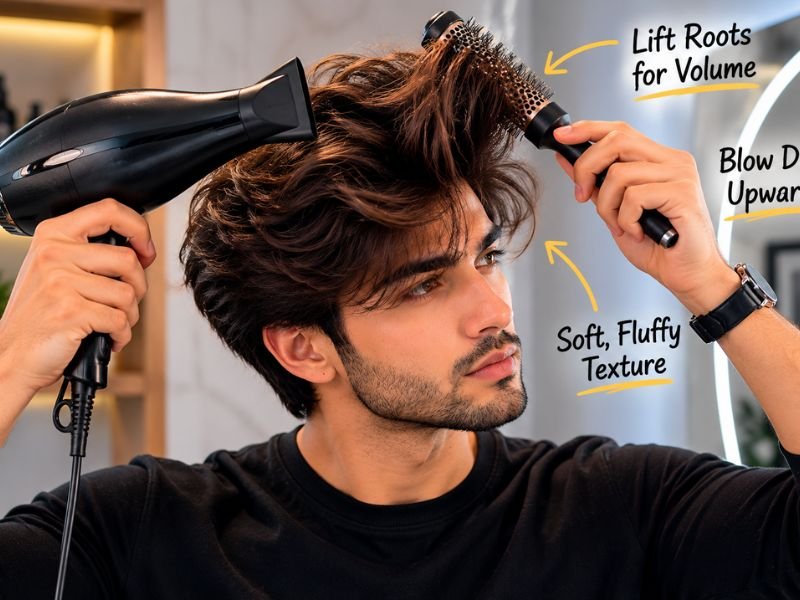
The magic happens during the blow-drying phase. To create maximum lift, flip your head upside down and direct the airflow from your blow dryer downward toward your scalp, using your fingers to massage and pull the roots upward. Alternatively, use a high-quality vented round brush to lift sections of your hair up and back while applying medium heat. Always finish with a shot of cool air to lock the lifted cuticle into place. Correct blow-drying technique is the secret to long-lasting fluffy hair.
Short Example: Wrapping a section of your fringe around a round brush,This technique works particularly well with a bro flow hairstyle, where extra volume enhances the natural movement of the hair. pulling it upward toward the ceiling while drying it on high heat, and then hitting it with the “cool shot” button for 5 seconds creates an instant, dramatic front wave.
Step 4: The Post-Styling Definition Fluffy Hair
Once your hair is completely dry and structurally lifted, you need a post-styler to define the texture without destroying the airiness. Avoid heavy waxes, clays, or oil-based pomades. Instead, opt for a dry styling powder (volumizing powder) or an ultra-lightweight matte paste. Apply a tiny amount to your fingertips and gently ruffle through the tips of your hair.
Short Example: Puffing a small amount of styling powder directly into your dry roots and massaging it in with your fingertips instantly creates a re-workable, matte texture that stays elevated all day.
Comparing Styling Approaches for Voluminous Textures:
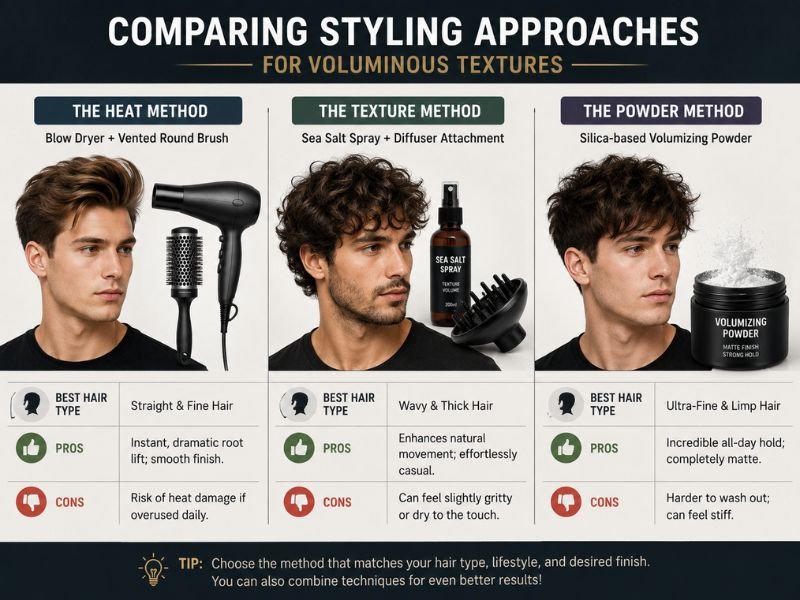
To select the right method for your routine, it helps to analyze how different styling tools and products alter your hair’s structure, presentation, and daily maintenance needs.
| Styling Approach | Primary Tool/Product | Best Hair Type | Pros | Cons |
| The Heat Method | Blow Dryer + Vented Round Brush | Straight & Fine Hair | Instant, dramatic root lift; smooth finish. | Risk of heat damage if overused daily. |
| The Texture Method | Sea Salt Spray + Diffuser Attachment | Wavy & Thick Hair | Enhances natural movement; effortlessly casual. | Can feel slightly gritty or dry to the touch. |
| The Powder Method | Silica-based Volumizing Powder | Ultra-Fine & Limp Hair | Incredible all-day hold; completely matte. | Harder to wash out; can feel stiff. |
Key Maintenance Tips for Long-Lasting Volume:
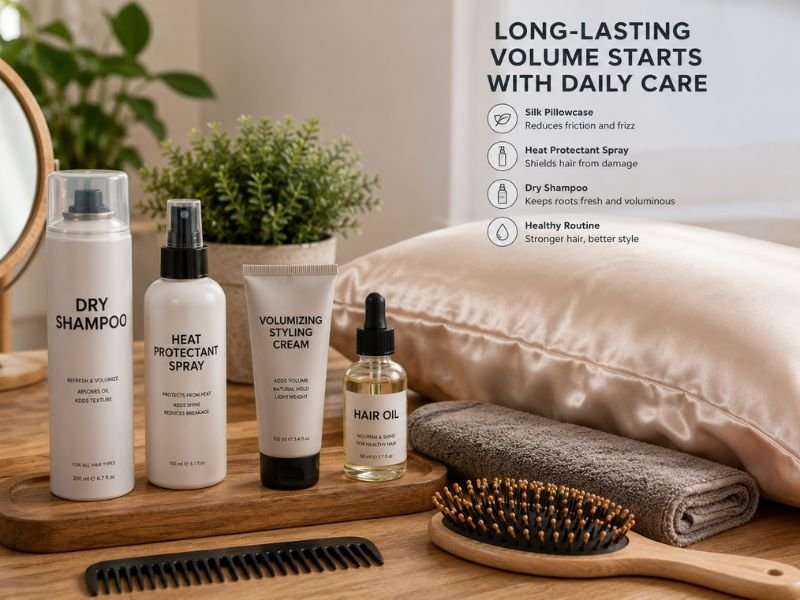
Creating the style is one thing; keeping your hair healthy enough to sustain that volume over weeks and months is another. Long-term care prevents your hair from collapsing or becoming damaged by your daily routine. Healthy hair is essential for maintaining fluffy hair every day.
Avoid Over-Washing Your Hair
Washing your hair every single day strips away the natural sebum produced by your scalp. While excess sebum causes flat hair, a microscopic amount of natural oil actually gives hair natural separation and holding power. Limit shampooing to 2 or 3 times a week, utilizing a high-quality dry shampoo on your off-days to absorb root oils.
Short Example: Stripping your hair daily with harsh sulfates can trigger your scalp to overproduce oil in panic, leaving you with extremely greasy roots by the next morning.
Protect Your Strands from Daily Heat
Because achieving maximum volume relies heavily on a blow dryer, investing in a high-quality heat protectant spray is non-negotiable. Heat protectants form a microscopic defensive shield over the hair cuticle, preventing the internal moisture of the hair shaft from boiling and fracturing under intense heat.
Short Example: Skipping a heat protectant while using a high-heat setting daily will eventually fry your ends, creating split ends that look frizzy rather than soft and fluffy.
Optimize Your Sleep Setup Fluffy Hair
Traditional cotton pillowcases feature rough fibers that create friction against your hair cuticles as you toss and turn at night. This friction destroys your style and causes frizz. Switching to a silk or satin pillowcase allows your hair strands to glide smoothly over the surface, preserving your texture for the next morning.
Short Example: Waking up with a massive, tangled, frizzy knot on the back of your head is often the direct result of sleeping on a rough, moisture-absorbing cotton pillowcase.
Conclusion:
Achieving a clean, professional, and stylishly fluffy look If you want to combine this texture with a modern haircut, a low taper fade is one of the best options for creating a clean and stylish finish.is entirely possible for anyone willing to master the right sequence of washing, pre-styling, and strategic blow-drying. By prioritizing lightweight, volumizing products over heavy clays, protecting your cuticles from heat damage, and understanding how to lift your hair from the root, you can effortlessly maintain a dynamic, high-volume aesthetic. Implement the techniques outlined in this tutorial to enjoy healthy, touchably soft volume that lasts from morning until night.
FAQs
1. Can I get fluffy hair if my hair is naturally pin-straight?
Yes. By applying a texturizing pre-styler like sea salt spray to damp hair and blow-drying it upside down with a round brush, you can force straight hair to hold an airy, voluminous shape.
2. Does sea salt spray dry out your hair over time?
Sea salt spray absorbs natural oils to create grit and volume, which can dry out your strands if overused. To prevent this, use a moisturizing conditioner on your hair ends during your wash days.
3. How often should I use a blow dryer for this style?
You can blow-dry your hair after every wash, provided you always apply a dedicated heat protectant spray beforehand and use a medium heat setting rather than maximum heat.
4. Why does my volume deflate just an hour after styling?
Your hair likely deflates because you either used heavy styling products (like heavy pomades or oils) that weigh the strands down, or you skipped using a texturizing pre-styler on damp hair.
5. What is the difference between texturizing powder and dry shampoo?
Dry shampoo uses starch to absorb excess oils and clean the scalp, whereas texturizing powder uses silica particles to create friction between hair strands, specifically boosting volume and grip.
6. Will a silk pillowcase really help maintain my hair texture?
Yes. Silk reduces the friction against your hair cuticles while you sleep, preventing the styling from turning into messy frizz and making it much easier to restyle your hair the next day.
Pingback: Bro Flow Hairs: The Complete Guide to Achieving a Stylish and Effortless Look(2026) -