
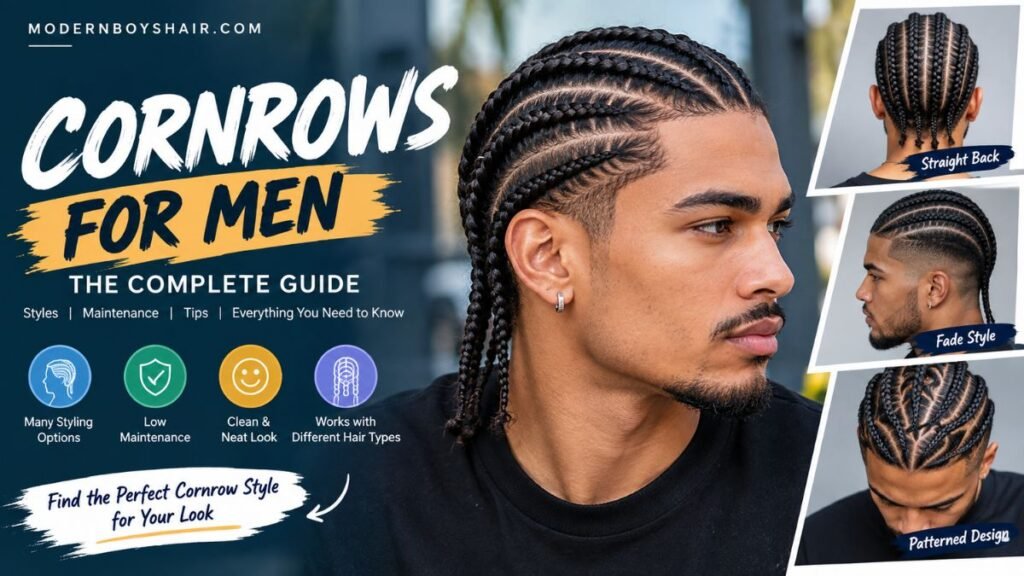
Cornrows have been worn by men for a very long time, and they are still one of the most practical braided hairstyles you can choose. They keep hair neat, cut down on daily styling, and can be shaped into almost any design, from a plain set of straight lines to a detailed pattern.
If you are thinking about trying cornrows for men, this guide will help you decide. You will learn what cornrows are, which styles are popular, how much hair you need, how to care for your braids, and how to get a result that looks clean and feels comfortable.
What Are Cornrows for Men?
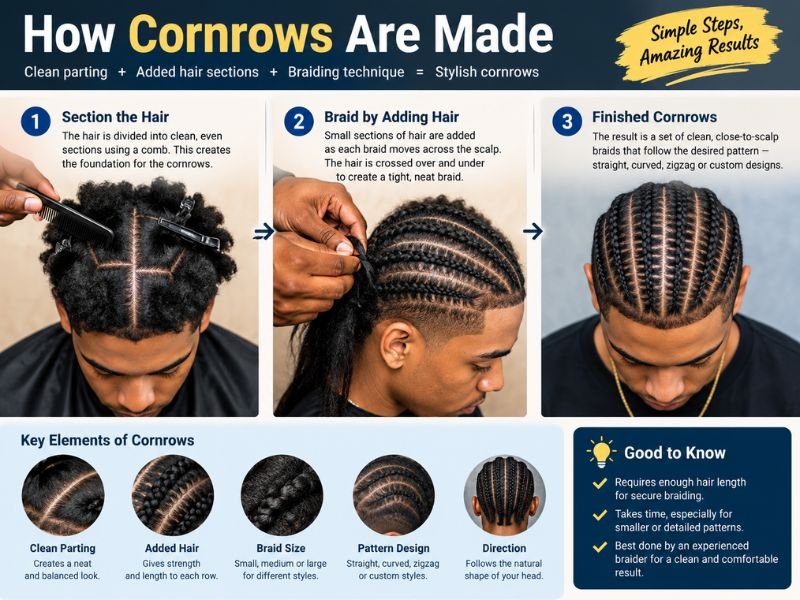
Cornrows are scalp braids made by adding small sections of hair as each braid travels across the head. Unlike braids that hang freely from the roots, cornrows sit close to the scalp. The technique can follow straight lines, curves, zigzags, or a more detailed braid design.
The final appearance depends on clean parting, neat sections, braid size, hair texture, and the direction of each row. Large rows create a bold, simple finish, while small cornrows can support more detailed braided patterns. A professional braider can adapt men’s cornrow hairstyles to natural hair of different densities and lengths without making every style look the same.
Why Cornrows for Men Styles Stay Popular:
Cornrows combine practical hair control with a wide range of visual choices. Once braided, the hair needs less daily combing and reshaping. That can make the style useful for busy routines, sport, travel, or anyone who prefers a tidy braided hairstyle.
Cornrow styles for men may look minimal or feature curves and geometric partings. They can cover the full head, frame longer braids, or sit above a fade haircut. Changing the number, width, and direction of the rows changes the result.
Cornrows are often described as a protective hairstyle because they can reduce everyday handling. That benefit still depends on sensible braid tension, good scalp care, and timely removal. Braids that feel painful or pull strongly at the hairline are not a better version of the style.
Best Cornrow Hairstyles for Men:
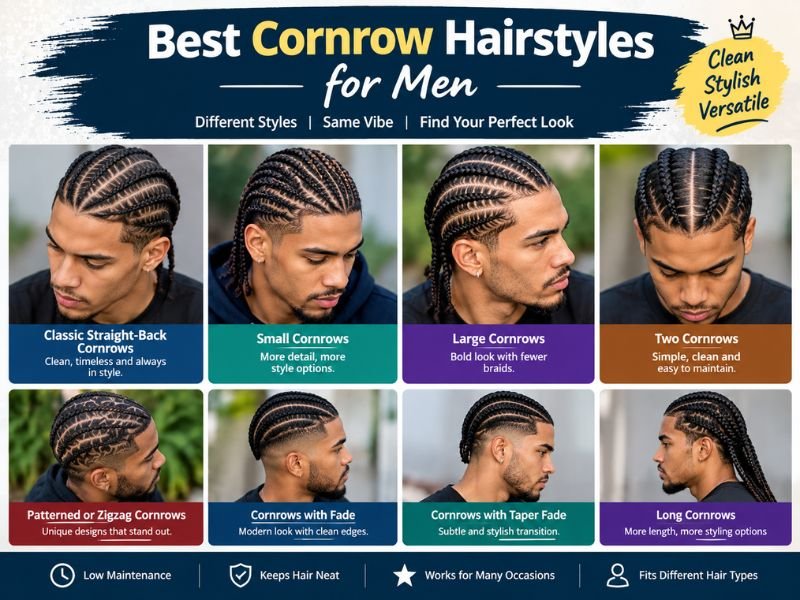
The best cornrow styles for men are the ones that match the available hair length, desired upkeep, and personal setting. These popular options offer different levels of detail.
Classic Straight-Back Cornrows for Men
Straight back cornrows for men begin near the front hairline and travel toward the neck in even rows. The clear direction gives the style a balanced, timeless appearance. Medium-length hair often gives a braider comfortable grip, although suitability also depends on texture and technique. Because the pattern is simple, loose roots and new growth may be easy to notice.
Small Cornrows for Men
Small cornrows use narrow sections for fine detail, curves, and layered lines. Braiding and removal can take longer, and there are more parting lines to keep clean. Small does not need to mean tight.
Large Cornrows for Men
Large cornrows use wider sections and fewer braids, producing a strong look with an easy-to-see pattern. Simpler sectioning can reduce styling time, but the rows may loosen sooner on some textures.
Short Cornrows for Men
Short cornrows for men are possible when the hair gives enough grip for secure braiding. Straight rows or a few larger sections are often more practical than very detailed designs on short hair. A braider should check the hair length and avoid forcing tiny edge hairs into tight braids.
Long Cornrows for Men
Long cornrows for men can continue into hanging braids, a tied-back finish, or gathered ends. Extra length gives more styling choices, but the weight and movement of the braids matter. Longer ends need gentle handling, especially during washing and sleep, so they do not rub, tangle, or pull unnecessarily.
Cornrows for Men With a Fade
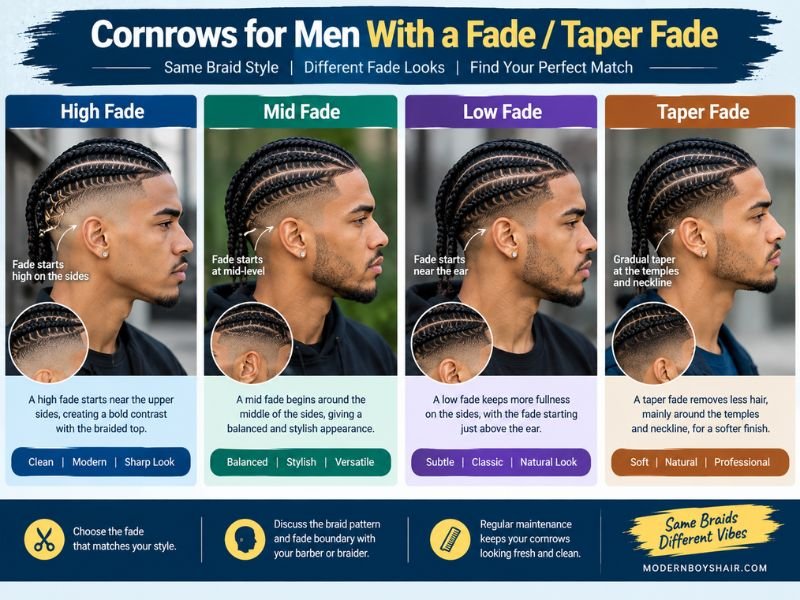
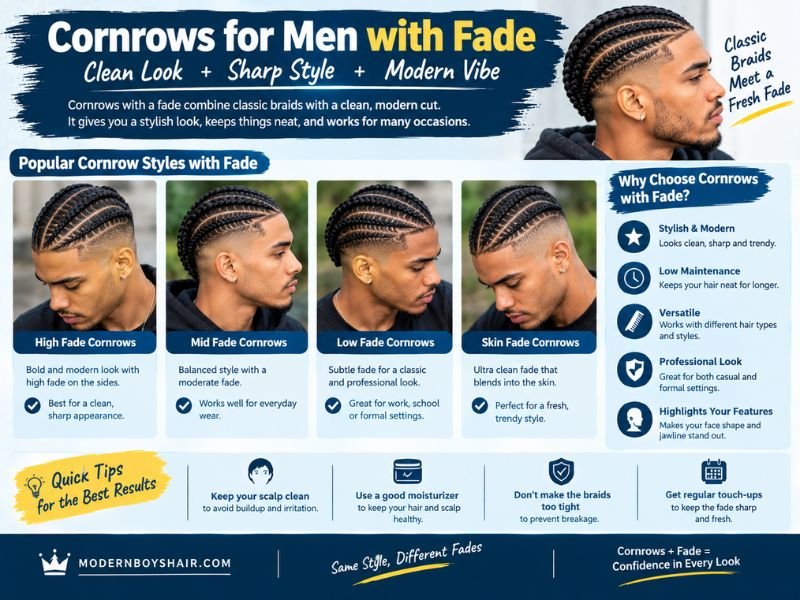
Cornrows with fade styling keep braided hair on top while the sides and back are shorter. The contrast gives modern cornrows for men a clean outline. The fade may need refreshing before the rows come out.
Cornrows for Men With a Taper Fade
Cornrows with taper fade styling remove less hair from the sides than a full fade. The cut is usually concentrated near the temples and neckline, leaving more fullness around the head. It is a useful option for men who want a defined edge without a strong shaved contrast.
Two Cornrows for Men
Two cornrows for men divide the hair into two main rows, often with a straight center part. The design is simple, visible, and easier to understand before the appointment. Each braid holds a large section, so enough length and suitable texture are important for a secure finish.
Patterned or Zigzag Cornrows for Men
Patterned cornrow braids for men use angled, curved, or zigzag partings. Clean parting is especially important. Bring a reference and ask whether the pattern suits your length, density, and head shape.
Simple Cornrows for Men
Simple cornrows for men usually use a small number of evenly spaced rows with little extra detail. They suit men and boys who want a neat, low-key result for school, work, or daily wear. The straightforward layout also makes scalp cleaning and inspection easier.
Cornrows With Fade for Men
A low fade keeps more fullness above the lower edge. A mid fade raises the transition and creates stronger contrast. A high fade starts near the upper sides, making the braided area look narrower.
A taper fade is subtler, focusing on the temples and neckline. Consider how much scalp you want visible and how often you can refresh the cut. Ask the barber and braider to agree where the braided section ends; cutting into it can limit the pattern.
How to Choose the Right Cornrow Style:
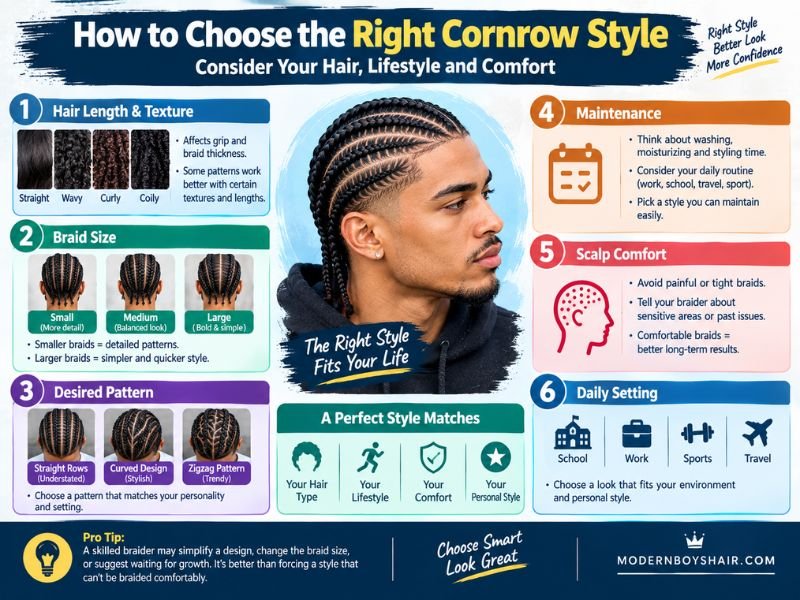
Start with practical details rather than choosing only from a photograph:
Hair length and texture: These affect grip, braid thickness, and which patterns are realistic.
Braid size: Smaller braids offer detail: larger braids create a stronger, simpler shape.
Desired pattern: Straight rows are understated, while curves and zigzags attract more attention.
Maintenance: Think about washing, exercise, sleep, and how often you can tidy a fade.Scalp comfort: Tell the braider about sensitivity, sore areas, or previous problems with tight braids.
Daily setting: Choose a look that feels suitable for your school, workplace, sport, and personal style.
A skilled braider may simplify a design, change the braid size, or recommend waiting for growth. That is better than forcing a style that cannot be braided comfortably.
How Long Does Hair Need to Be for Cornrows?
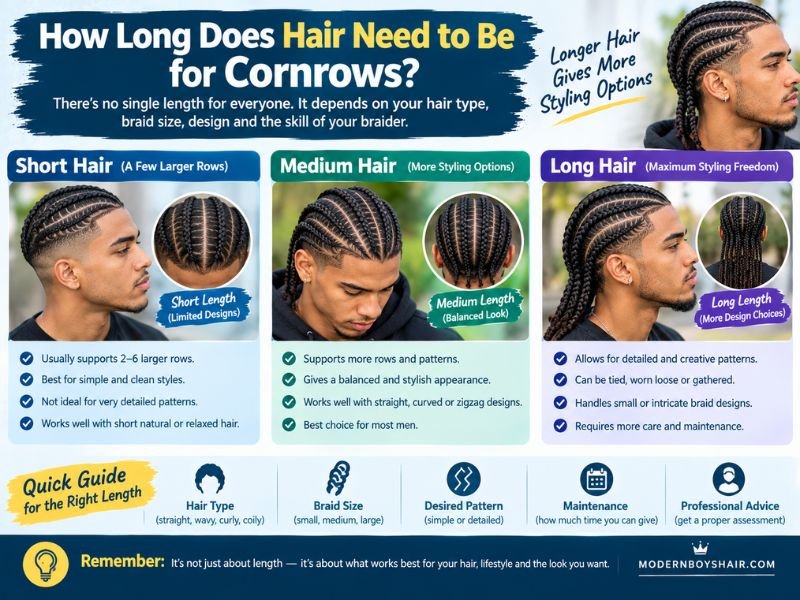
There is no single guaranteed length for every person. Hair must be long enough for the braider to hold each section and feed it into the row without excessive pulling. Curly or coily hair may offer different grip than straight or loosely textured hair at the same visible length.
Technique, braid size, density, and the experience of the braider also affect what is possible. Short hair may support a few larger rows but not an intricate pattern. Ask for an in-person assessment when you are unsure; photographs can hide shrinkage, uneven areas, and weak spots around the hairline.
How to Prepare Your Hair Before Getting Cornrows:
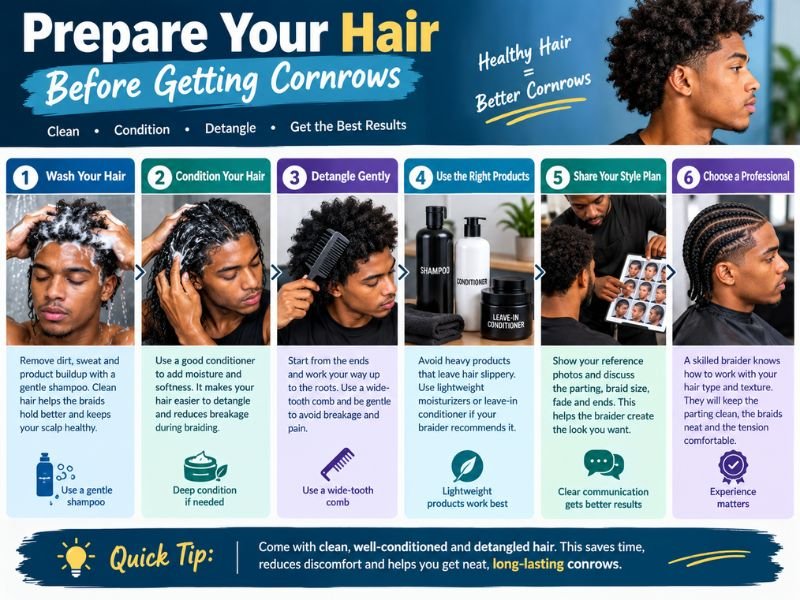
Arrive with clean hair unless your braider gives different instructions. Wash away product buildup, condition as appropriate for your hair, and gently detangle from the ends toward the roots. Avoid aggressive brushing or heavy products that leave the hair slippery and difficult to section.
Keep the hair in good condition before the appointment. Share your reference early and discuss the parting, braid size, fade, and ends. Choose a professional braider who listens when you describe tenderness and does not treat pain as necessary.
How to Maintain Cornrows:
A simple hair care routine can help the style stay comfortable and presentable. Handle the rows gently, particularly around the edges, and avoid repeatedly pulling them into tight ponytails or covering them with heavy accessories.
Keep the scalp clean. During washing, use a gentle approach and focus on the scalp instead of rough scrubbing.
Rinse and dry carefully. After washing braided hair, remove product well and allow the scalp and braids to dry fully.
Add moisture when needed. Use a light product suited to your scalp and natural hair; heavy buildup can make cleaning harder.
Protect the style at night. Sleeping with braids under a smooth scarf or bonnet can reduce friction and fuzz.
Watch the hairline. Avoid constant tension at the temples and do not pull loose edge hairs back into strained sections.
Respond to discomfort. Persistent pain, bumps, marked redness, or worsening irritation are reasons to loosen or remove the style and seek suitable professional advice.
Removing cornrows should also be patient. Unravel each braid from the end, use enough slip to limit snagging, and detangle shed hair gently before washing. Do not rush through knots or cut near your own hair.
How Long Do Men’s Cornrows Last?
Braid size, hair texture, growth, exercise, washing, weather, and nighttime protection affect how quickly cornrows loosen. Fine patterned rows may age differently from large braids.
Appearance is not the only guide. Remove the style when buildup becomes difficult to manage, the roots are very loose, the hair mats, or the scalp feels uncomfortable. Keeping braids longer is not worthwhile if scalp cleanliness and comfort are declining.
Are Cornrows Good for Your Hair?
Cornrows can reduce daily combing and keep hair arranged, which is why many people use them as a protective hairstyle. However, the technique does not automatically protect every head of hair. Excessive braid tension, added weight, poor cleaning, or leaving the style beyond its comfortable life can cause problems.
Healthy-looking cornrows should not require ongoing pain. Ask for reasonable tension, protect delicate areas, keep the scalp clean, and take the style down if warning signs appear. If you have an existing scalp or hair-loss concern, speak with an appropriate healthcare professional before choosing tight or long-term styles.
Cornrows vs Other Men’s Braided Hairstyles:
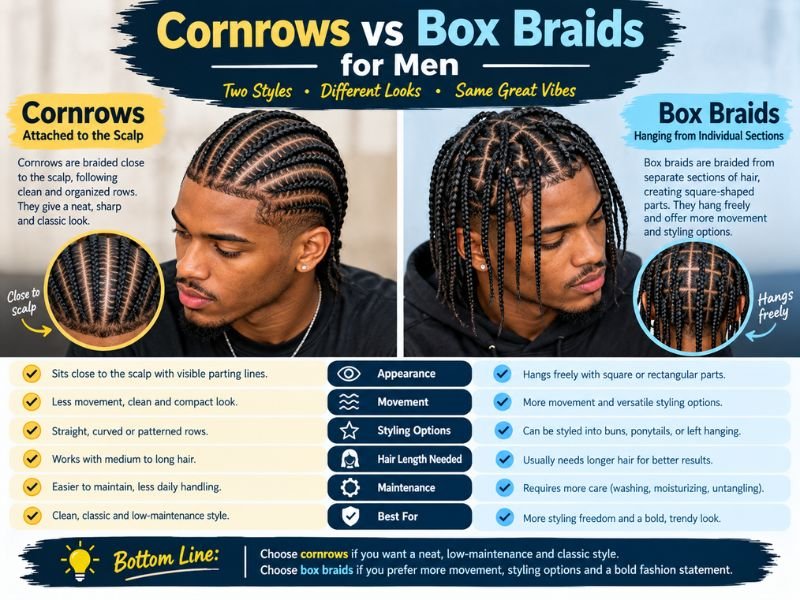
Cornrows stay attached to the scalp as they cross the head. Box braids and other men’s braided hairstyles usually hang from separate root sections, changing their movement and design options.
Scalp braids make the parting pattern highly visible and can follow detailed shapes. Free-hanging braids offer more movement and can be restyled after installation. Both need careful washing and moisture, while required hair length depends on the chosen size, method, and texture. Neither option should be installed with painful tension.
Tips for Getting Better-Looking Cornrows:
Choose a braider whose work shows clean sections and consistent rows.
Agree on the exact pattern and fade boundary before cutting or braiding begins.
Pick a design that works with your present hair length rather than forcing a reference.
Speak up immediately if the braids feel painfully tight.
Keep products light, follow a simple maintenance routine, and protect the style during sleep.
Plan removal before the rows become heavily tangled, dirty, or uncomfortable.
Frequently Asked Questions:
What are cornrows for men?
Cornrows for men are braids formed close to the scalp by adding hair along each row. Straight, curved, and patterned layouts are all possible.
How long does hair need to be for cornrows?
Hair needs enough length for secure grip, but there is no universal measurement. Texture, braid size, design, and braider skill all matter.
How long do men’s cornrows last?
The lifespan varies with hair texture, row size, new growth, activity, washing, and braid maintenance. Comfort and cleanliness should guide removal.
Can men get cornrows with a fade?
Yes. Cornrows can sit above a low, mid, or high fade, while a taper fade creates a softer transition at the edges.
Are cornrows suitable for short hair?
They may be if the hair offers enough grip. A professional braider can assess whether short cornrows or a simpler, larger pattern will hold.
How should men maintain cornrows?
Keep the scalp clean, moisturize appropriately, reduce friction at night, avoid pulling the hairline, and remove braids when loose or uncomfortable.
Conclusion:
Cornrows Men choose can be simple, detailed, short, long, or combined with a fade. The best result starts with a braid design suited to your hair length and texture, then depends on comfortable technique, clean parting, and consistent maintenance. Choose a skilled braider, avoid excessive tension, and let scalp comfort guide how long you keep this neat and practical braided hairstyle.