
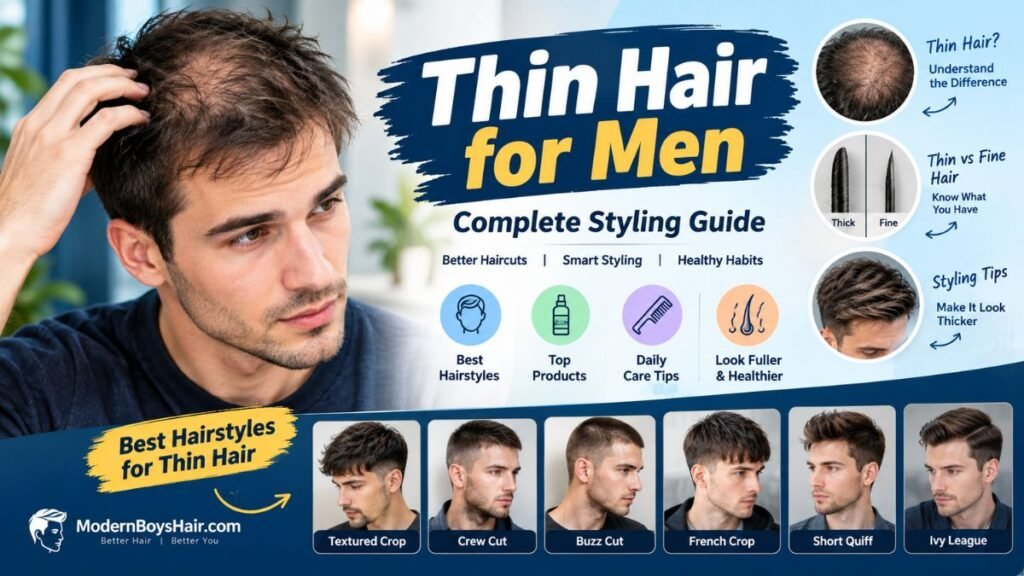
If you’ve noticed your hair doesn’t have the volume it used to, you’re not alone. Thin hair is one of the most common concerns men bring up when they sit down in the barber’s chair, and it affects guys at every age, not just older men. Whether it’s been a gradual change over the years or something you’ve only recently started paying attention to, thin hair can make styling feel more frustrating and limit the haircuts that used to work well for you.
The good news is that thin hair doesn’t mean your options are limited. With the right haircut, the right products, and a few small changes to your daily routine, you can create the appearance of fuller, thicker-looking hair. This guide walks through what thin hair actually means, how to tell it apart from fine or thinning hair, the best hairstyles for thin hair, and practical everyday habits that help your hair look its best.
What Is Thin Hair?
Thin hair usually refers to how much hair you have overall, rather than the thickness of each individual strand. In simple terms, it’s about density. If you have thin hair, there’s more visible space between each strand, which can make the scalp more noticeable and the overall look less full.
Thin hair can happen for a lot of reasons, including genetics, age, and natural changes in hair growth cycles. It’s not automatically a sign of a medical condition, and plenty of men have naturally thinner hair their whole lives without ever experiencing hair loss. Understanding this distinction is the first step toward finding hairstyles and routines that actually work with your hair, rather than against it.
Thin Hair vs. Fine Hair: What Is the Difference?
People often use “thin hair” and “fine hair” interchangeably, but they describe two different things.
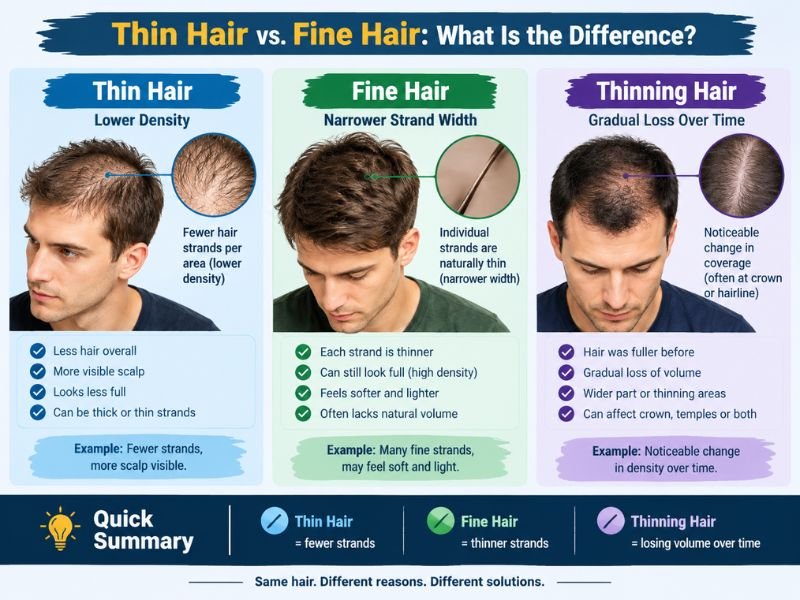
Thin hair: is about density how many hair strands you have on your scalp. Someone with thin hair might have strands that are perfectly thick individually, but there just aren’t as many of them.
Fine hair: is about the width of each individual strand. Fine hair strands are naturally narrow and delicate, even if you have a lot of them. A man can have fine hair with high density, meaning his hair still looks full despite each strand being thin.
Thinning hair: refers to a change over time hair that used to be denser and is gradually losing volume, often starting at the crown or hairline.
For example, a man with fine hair might have a thick-looking head of hair that just feels soft and lacks weight. A man with thin hair might have coarser strands but visible gaps between them. And a man with thinning hair might notice his hairline moving or his part widening compared to a few years ago. Knowing which category applies to you helps you choose the right cut and care routine.
Common Signs of Thin Hair in Men:
Thin hair shows up in different ways depending on your hair type and hairstyle. Common signs include:
- The scalp becomes more visible, especially under bright light
- Hair looks flat by midday, even after styling
- Overall volume feels reduced compared to before
- Hair becomes harder to style or hold in place
- The part in your hair looks wider than it used to
- Certain areas, like the crown or temples, look less full than the rest
It’s worth noting that these signs don’t automatically mean male pattern baldness or any specific condition. Many men simply have naturally thinner hair, and these signs are just part of how that hair type behaves day to day.
Best Hairstyles for Thin Hair:
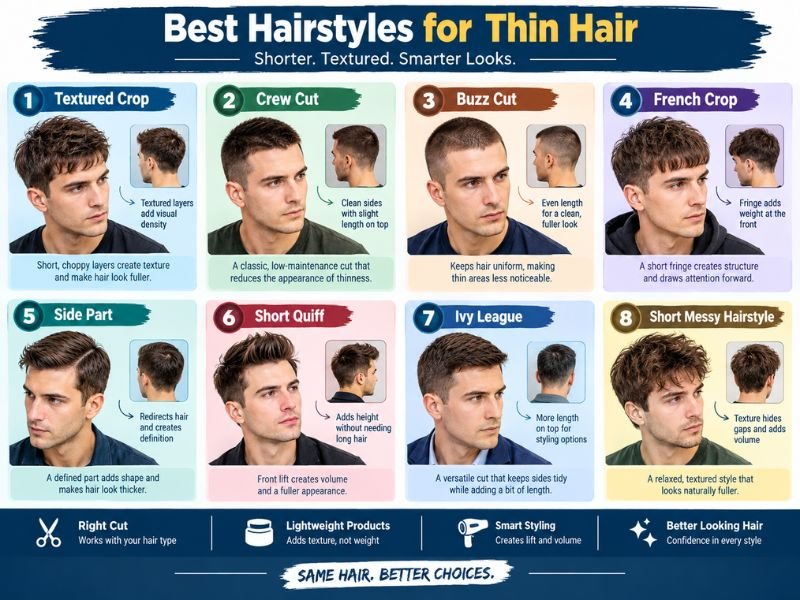
The right haircut can make a bigger visual difference than almost anything else. In general, hairstyles for thin hair work best when they use shorter lengths, textured layers, and cuts that don’t rely on excessive volume to look good.
Textured Crop
A textured crop keeps the top short with choppy, textured layers that add visual density. Because the length stays manageable, thin hair doesn’t fall flat as easily, and the texture creates the illusion of more strands.
Crew Cut
A classic crew cut is short on the sides and slightly longer on top, giving a clean, low-maintenance look. Shorter lengths naturally reduce the appearance of thinness since there’s less hair to reveal gaps in density.
Buzz Cut
For men who want the lowest-maintenance option, a buzz cut evens out the whole head at one length. This removes the contrast between thicker and thinner areas, making overall thinness far less noticeable.
French Crop
The French crop combines a short fringe with tighter sides, creating a structured shape that doesn’t depend on volume. The fringe adds visual weight at the front, which is often where thinning is most visible.
Side Part
A side part works well because it redirects hair away from thinning areas and creates a defined line that draws the eye. Keeping the length moderate, rather than long, helps maintain shape throughout the day.
Short Quiff
A short quiff uses a bit of height at the front, styled upward and back. This adds lift without needing a lot of length, which is ideal for thin hair that struggles to hold volume when longer.
Ivy League
An Ivy League cut is a slightly longer take on the crew cut, offering a touch more length on top for styling flexibility while keeping the sides short and tidy.
Short Messy Hairstyle
A short messy style uses light texture and a slightly undone finish. Because it doesn’t rely on a sleek, flat look, small imperfections in density are far less noticeable.
How to Make Thin Hair Look Thicker:
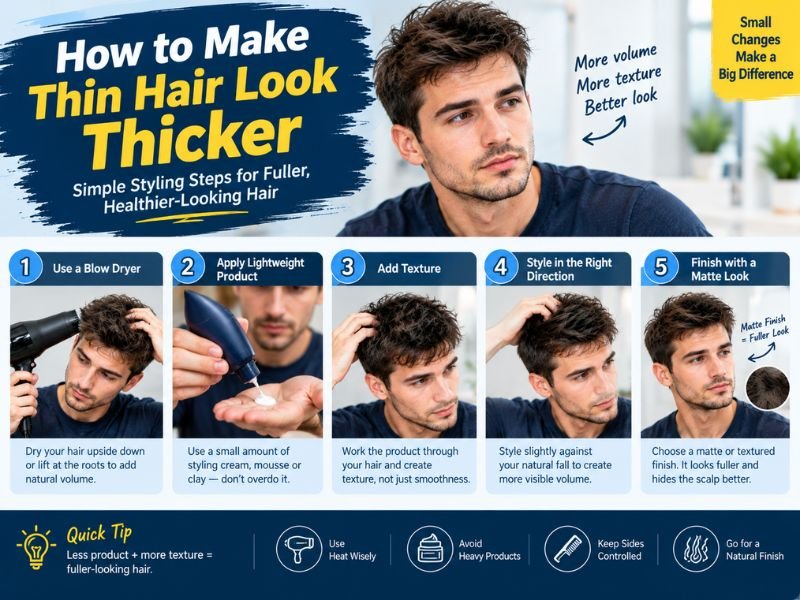
Beyond choosing the right cut, how you style your hair day to day plays a big role in how thick it appears.
Choose the right haircut. Shorter, textured cuts generally photograph and hold up better than longer styles for thin hair, since long hair emphasizes gaps and flatness.
Use texture, not just length. Textured layers create movement and catch light differently across the head, which adds a fuller visual effect.
Avoid piling on product. Too much product weighs hair down. A little goes a long way, especially with lightweight formulas.
Blow-dry with purpose. Drying hair upside down or lifting at the roots with a round brush adds lift that lasts longer than air-drying flat.
Style in the right direction. Styling hair slightly against its natural fall, rather than flat in one direction, creates more visible volume.
Skip overly flat styles. Slicked-back or heavily flattened looks tend to expose thinness rather than disguise it.
Keep the sides controlled. Shorter, tighter sides make the top appear fuller by contrast.
Go for a natural finish. A matte or textured finish generally looks fuller than a glossy, wet-look finish, which can highlight the scalp.
Best Hair Products for Thin Hair:
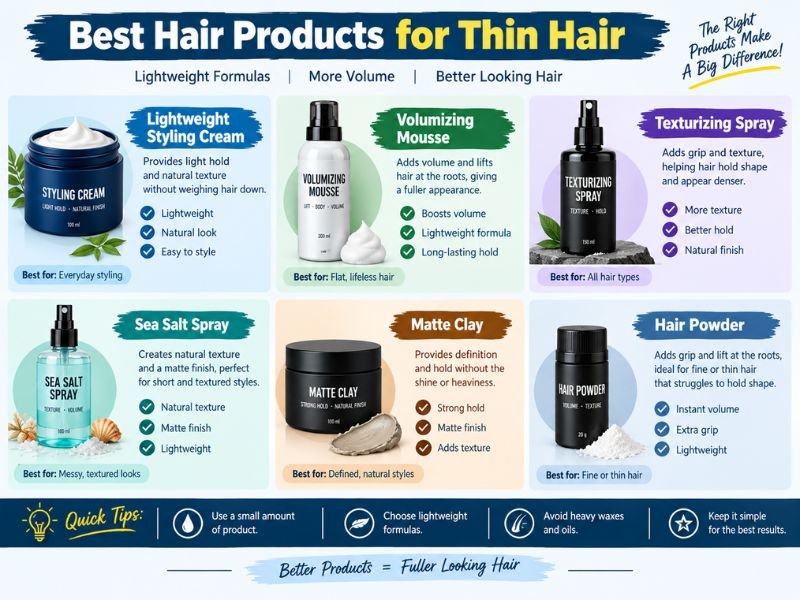
The right products support your haircut instead of working against it. Lightweight formulas are generally the better choice for thin hair, since heavier products can flatten strands and make hair look thinner rather than fuller.
Lightweight styling cream or paste offers light hold and texture without excess weight.
Volumizing mousse is applied to damp hair before blow-drying to lift the roots and add body.
Texturizing spray adds grip and a slightly tousled texture, which helps hair hold shape and appear denser.
Sea salt spray creates natural-looking texture and a matte finish, useful for shorter, textured styles.
Matte or lightweight clay provides definition and hold without the shine or heaviness of thicker waxes.
Hair powder or volumizing powder is applied at the roots to add grip and lift, particularly useful for fine or thin hair that struggles to hold shape.
The key with all of these is using a small amount. Layering too much product, or reaching for heavier waxes and pomades, often does more harm than good by flattening hair against the scalp.
Hair Care Tips for Men With Thin Hair:
Daily habits matter just as much as styling choices. A few practical adjustments can support healthier-looking hair over time.
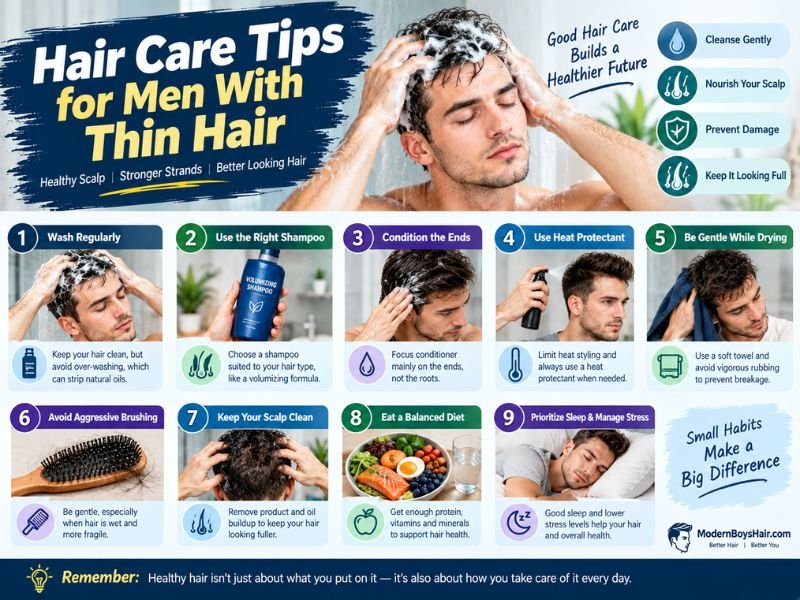
- Wash your hair regularly, but avoid over-washing, which can strip natural oils and leave hair looking limp
- Use a shampoo suited to your hair type, and consider one labeled as volumizing if flatness is a concern
- Condition mainly the ends rather than the roots, since heavy conditioner at the scalp can weigh hair down
- Limit excessive heat styling, and use a heat protectant when you do use heat tools
- Be gentle when towel-drying; rubbing vigorously can cause unnecessary breakage
- Avoid aggressive brushing, especially when hair is wet and more fragile
- Keep your scalp clean, since product and oil buildup can make hair look flatter
- Maintain a balanced diet with enough protein, vitamins, and minerals to support general hair health
- Prioritize sleep and manage stress where you can, since overall lifestyle habits play a role in how your hair looks and feels
None of these habits will dramatically change hair density on their own, but together they help your hair look and feel its best.
Styling Mistakes That Can Make Thin Hair Look Thinner:
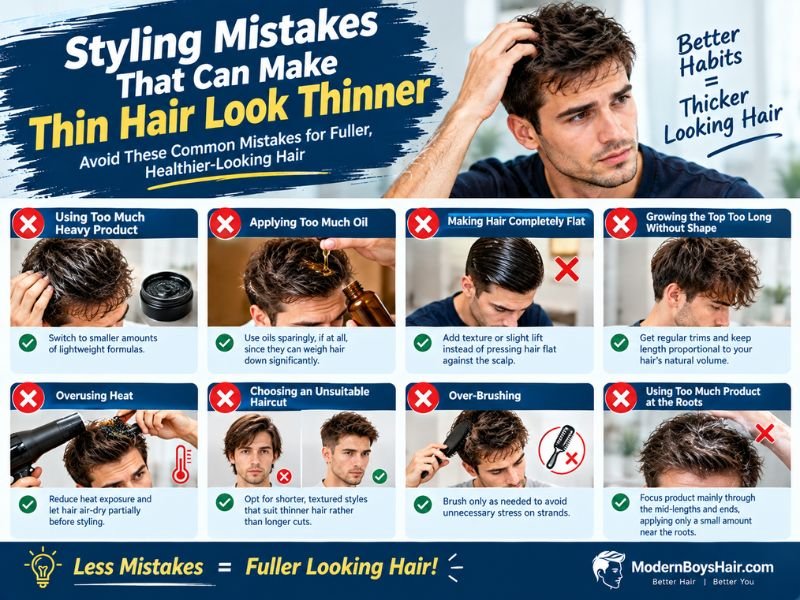
Even with a good haircut, certain habits can undo your efforts.
Using too much heavy product Switch to smaller amounts of lightweight formulas instead.
Applying too much oil Use oils sparingly, if at all, since they can weigh hair down significantly.
Making hair completely flat Add texture or slight lift instead of pressing hair flat against the scalp.
Growing the top too long without shape Get regular trims and keep length proportional to your hair’s natural volume.
Overusing heat Reduce heat exposure and let hair air-dry partially before styling.
Choosing an unsuitable haircut Opt for shorter, textured styles that suit thinner hair rather than longer cuts that expose gaps.
Over-brushing Brush only as needed to avoid unnecessary stress on strands.
Using too much product at the roots Focus product mainly through the mid-lengths and ends, applying only a small amount near the roots.
Can Thin Hair Become Thicker?
This is one of the most common questions men ask, and the honest answer is nuanced. There’s a difference between making hair look thicker and actually changing its density or the thickness of individual strands.
Styling techniques, haircuts, and lightweight products can significantly improve the appearance of fullness. However, they don’t change how many hair follicles you have or how wide each strand naturally grows. Genuine changes to hair density are influenced by genetics, age, and underlying health factors, which vary from person to person.
If your hair has always been thin, that’s likely just your natural hair type. But if you’re noticing a clear, ongoing change hair that was once fuller and is now visibly thinning the underlying cause matters, and it may be worth getting a professional opinion rather than relying on styling alone.
When Should Men See a Dermatologist?
Most thin hair is simply a natural hair type and nothing to worry about. However, it’s worth speaking with a dermatologist or qualified healthcare professional if you notice:
- Sudden or unusually rapid hair loss
- Noticeable bald patches rather than gradual thinning
- Significant shedding, such as large amounts of hair in the shower or on your pillow
- Scalp irritation, redness, or inflammation
- A rapid change in hair density over a short period
This article is intended as general information and styling guidance, not a diagnosis. A dermatologist can properly assess what’s happening and recommend next steps if needed.
Frequently Asked Questions About Thin Hair:
Is thin hair the same as fine hair?
No. Thin hair refers to lower hair density, meaning fewer strands overall. Fine hair refers to the width of each strand. You can have fine hair with high density, or thicker strands with lower density.
What is the best haircut for thin hair?
Shorter, textured cuts like a crop, crew cut, or French crop tend to work best, since they reduce the visual gap between strands and don’t rely on heavy volume to look good.
How can men make thin hair look thicker?
A combination of the right haircut, lightweight volumizing products, and proper blow-drying technique can noticeably improve the appearance of fullness.
Is short hair better for thin hair?
Generally, yes. Shorter lengths make thinness less noticeable because there’s less hair to expose gaps in density, and shorter styles are easier to add texture and lift to.
What products are good for thin hair?
Lightweight options like volumizing mousse, texturizing spray, sea salt spray, and hair powder tend to work better than heavy waxes or oils, which can flatten hair.
Can thin hair become thicker naturally?
Styling can make hair look thicker, but it won’t change natural hair density. Genuine changes in density depend on genetics and individual health factors, and persistent thinning is worth discussing with a professional.
Final Thoughts:
Thin hair is more common than most men realize, and it doesn’t have to limit your options. The right haircut, paired with lightweight products and a few smart styling habits, can make a real difference in how full your hair looks day to day. While styling can’t change your natural hair density, understanding your hair type and working with it rather than against it is the most effective way to get the best results from thin hair. If you ever notice sudden or significant changes, don’t hesitate to check in with a dermatologist for peace of mind.