
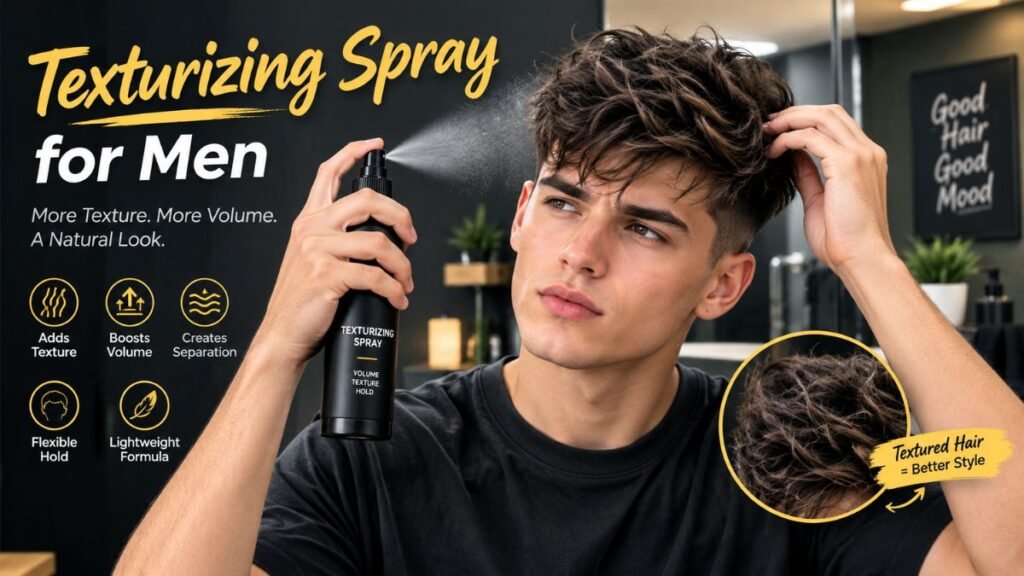
Some hairstyles need shape without looking stiff or heavily styled. Texturizing spray adds grip, volume, and separation, helping the hair move while making individual sections easier to define.
Many men choose texturizing spray instead of a heavier wax, gel, or pomade. It can create a relaxed finish without coating the hair with a large amount of product. The result depends on the formula, your hair type, and how you apply it.
What Is Texturizing Spray?
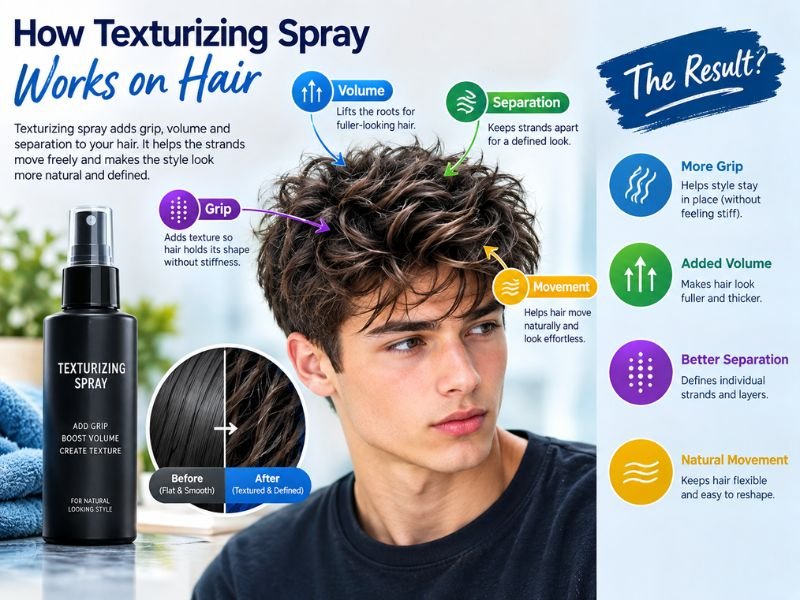
Texturizing spray is a lightweight styling product made to give hair more grip and definition. It can make smooth strands feel slightly rougher, allowing them to sit apart rather than falling together in one flat shape.
This extra grip can make the hair look fuller and more active. It also helps fingers control the style. Short sections become easier to separate, while longer hair can gain loose movement.
The product is popular for casual men’s hairstyles because it usually leaves some flexibility. Texture and hold are not the same thing. Texture describes how separated, layered, or defined the hair looks. Hold describes how firmly the style stays in place.
What Does Texturizing Spray Do to Hair?
A texturizer can reduce the smooth, flat appearance of freshly washed hair. It creates separation between strands, lifts parts of the style, and makes layers easier to see.
It can also add movement. Instead of forming one solid shape, the hair can fall in looser sections. Depending on the product, the finish may look matte, natural, or slightly shiny.
Does Texturizing Spray Give Hold?
Most formulas provide light or medium control rather than a hard hold. They help guide the hair but usually allow it to move during the day.
Some products offer stronger control, so checking the label matters. If a style needs to remain firmly fixed, a texturizer may need to be followed by another product. A small amount of hair gel, for example, can provide more structure when flexible texture is not enough.
What Is Texturizing Spray Used For?
The main purpose is to make hair easier to shape without creating a highly polished result. Men often use it to:
- Add definition to short or layered hair.
- Build volume around the roots.
- Give straight hair a less flat appearance.
- Emphasize natural waves.
- Create a messy or deliberately undone style.
- Add movement to medium-length hair.
- Prepare the hair before using wax, clay, or another finishing product.
- Loosen a finished style that looks too neat.
It can be applied as the only styling product or used as one part of a routine. The best approach depends on the amount of control and finish the hairstyle needs.
Texturizing Spray vs Sea Salt Spray:
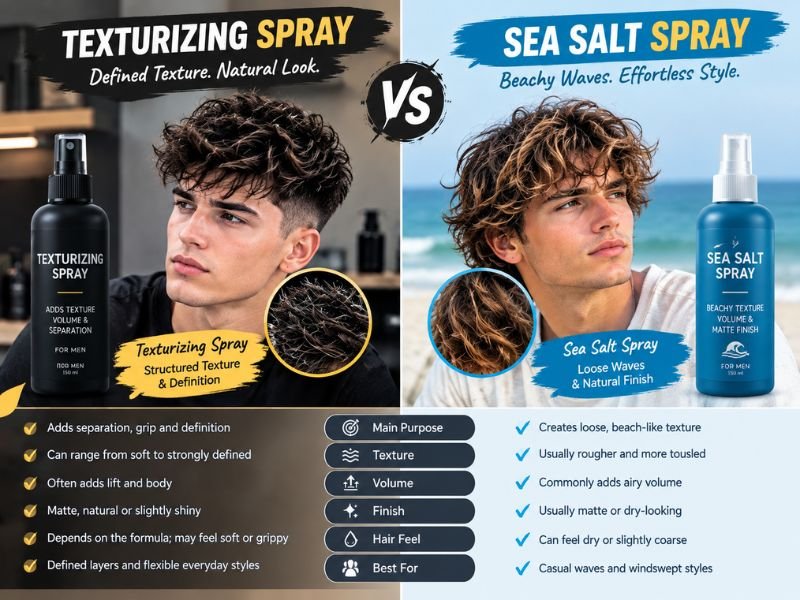
| Feature | Texturizing Spray | Sea Salt Spray |
| Main purpose | Adds separation, grip, and definition | Creates loose, beach-like texture |
| Texture | Can range from soft to strongly defined | Usually rougher and more tousled |
| Volume | Often adds lift and body | Commonly adds airy volume |
| Finish | Matte, natural, or slightly shiny | Usually matte or dry-looking |
| Hair feel | Depends on the formula; may feel soft or grippy | Can feel dry or slightly coarse |
| Best for | Defined layers and flexible everyday styles | Casual waves and windswept styles |
| Everyday styling | Suitable when the formula matches the hair | Best used carefully if it feels drying |
Texturizing spray is a broad product category. Different formulas create different amounts of grip, lift, and control. Sea salt spray is a more specific type of styling spray that commonly uses salt to produce a rough, beach-inspired effect.
The two products can sometimes create similar results, especially on short or wavy hair. However, they are not automatically interchangeable. Read the ingredients and directions instead of relying only on the product name. Our guide to sea salt spray explains its use in more detail.
Who Should Use Texturizing Spray?
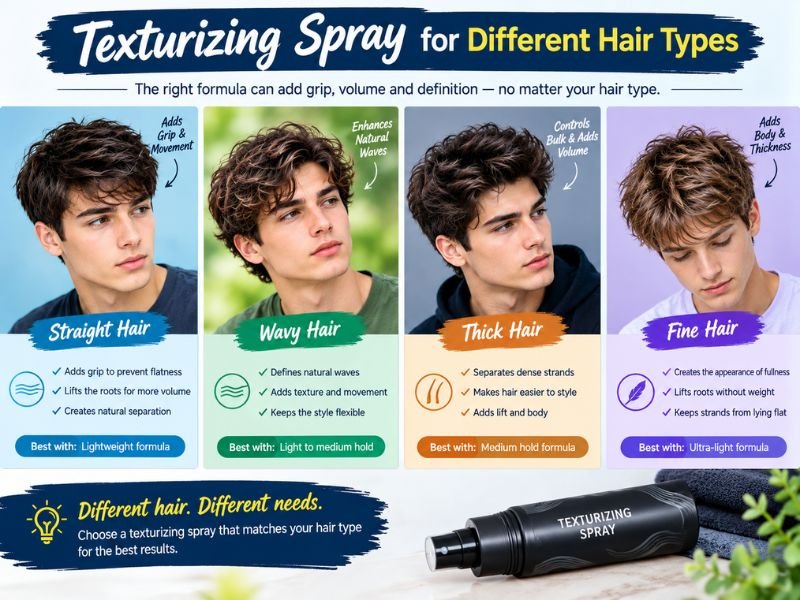
Men and boys with straight, wavy, fine, or thick hair may benefit from a texturizer. The key is choosing a formula that suits the hair’s weight and natural behavior.
Very dry hair may need a softer formula that does not leave a rough feeling. Hair that becomes oily quickly may work better with a light product that adds grip without looking greasy.
Texturizing Spray for Straight Hair
Straight hair can sit close to the head and lose its shape soon after styling. A light spray can add grip, lift, and movement, making the style look less flat.
It is especially useful for crops, side-swept styles, and short layered cuts. Applying it near the roots can support volume, while using it through the lengths creates separation.
Texturizing Spray for Wavy Hair
Wavy hair already has natural movement. The right spray can make that pattern clearer without turning it into a rigid shape.
Apply a small amount and gently scrunch the hair with your fingers. Avoid brushing too much afterward, as this may pull the waves apart and reduce their definition.
Texturizing Spray for Thick Hair
Thick hair can form a heavy block when the strands sit closely together. Texturizing spray may help divide it into visible sections and make the shape easier to control.
A formula with medium control may suit thick hair better than an extremely light mist. Even so, start carefully. Too much can make dense hair feel coated.
Texturizing Spray for Fine Hair
Fine hair often needs body without extra weight. A lightweight texturizing spray can create the appearance of fuller hair by lifting the roots and keeping strands from lying completely flat.
Use a small amount, especially on short hair. Heavy application may pull the style down and make fine strands stick together.
How to Use Texturizing Spray:
The exact method should follow the directions on the bottle. This simple process works for many common formulas.
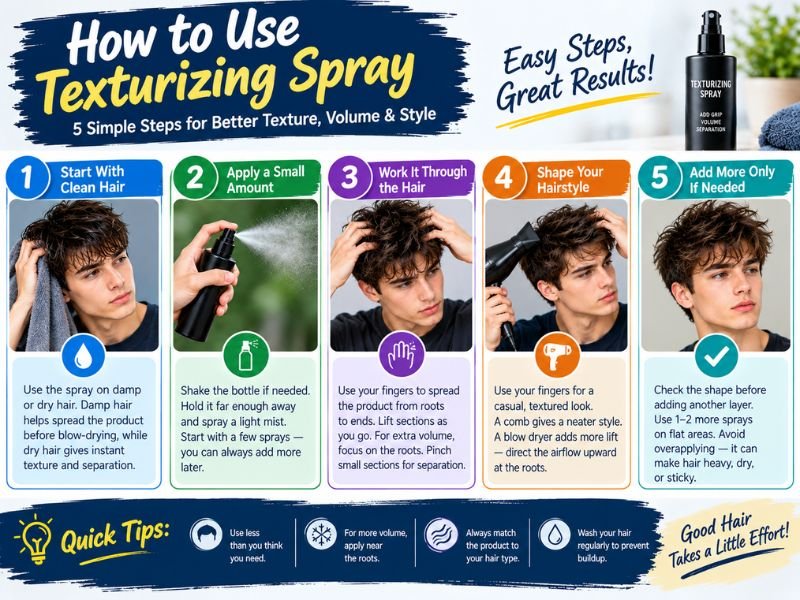
Step 1: Start With Clean Hair
Texturizing spray can often be used on damp or dry hair. Damp application usually helps distribute the product before blow-drying. It can create a softer, more controlled shape.
Dry application gives more immediate separation and definition. It is useful for adjusting a finished style or adding lift during the day. Hair does not need to be freshly washed, but heavy oil or old product can affect the result.
Step 2: Apply a Small Amount
Shake the bottle if the directions tell you to. Hold it far enough away to create a light mist rather than soaking one area.
Begin with a few sprays. The amount will vary with hair length, thickness, and the strength of the formula. Adding more is easier than removing excess product.
Step 3: Work It Through the Hair
Use your fingers to spread the product from the roots toward the ends. Lift sections as you work so the spray does not remain only on the surface.
For extra root volume, focus on the lower part of the hair without heavily spraying the scalp. For separation, pinch small sections gently between your fingers.
Step 4: Shape Your Hairstyle
Use your fingers for a loose, casual result. A comb creates cleaner direction and neater separation.
A blow dryer can add more lift. Direct the airflow upward at the roots while guiding the hair with your fingers or a brush. Lower heat may be a sensible choice when you style frequently.
Step 5: Add More Only If Needed
Check the shape before applying another layer. Add one or two sprays to areas that still look flat rather than covering the whole head again.
Overapplication can make hair heavy, dry, sticky, or stiff. The exact feeling depends on the ingredients and level of hold.
How to Choose the Right Texturizing Spray:
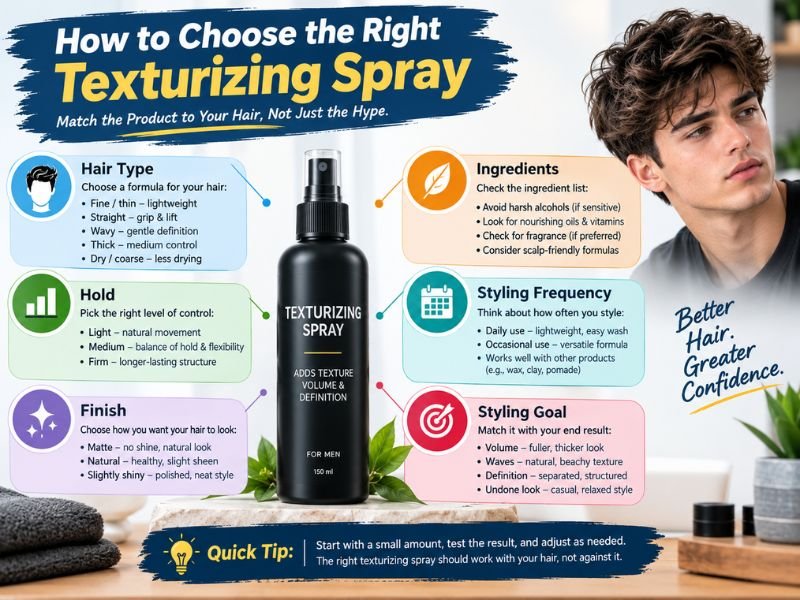
A useful product should match your hair rather than simply having the strongest hold. Consider how your hair behaves and what you want the finished style to look like.
Choose Based on Your Hair Type
Fine or thin hair generally benefits from a light mist that adds body without weight. Straight hair may need grip and root lift, while wavy hair often needs gentle definition.
Thick hair may respond better to medium control and stronger separation. Dry or coarse hair may feel better with a less drying formula. Product descriptions can offer guidance, but you may need to test a small amount to judge the result.
Check the Level of Hold
Light hold keeps the hair flexible and works well for loose styles. Medium hold provides more control while preserving some movement. Stronger hold is useful when height or shape needs to last longer.
Do not assume stronger is always better. A firm formula can make a soft, natural hairstyle look too fixed.
Consider the Finish
A matte finish reduces visible shine and suits dry-looking crops or messy styles. A natural finish keeps a small amount of healthy-looking sheen without appearing glossy. Slight shine can work well for neater hairstyles.
Choose the finish according to your goal. A matte product may suit a textured crop, while a natural finish may look better on longer, flowing hair.
Look at the Ingredients
Check the ingredient list if your hair or scalp is sensitive. Alcohol, salt, fragrance, oils, and conditioning ingredients can affect how a spray feels.
Ingredients do not affect everyone in the same way. Stop using a product if it causes discomfort, and seek professional advice if you have an ongoing scalp or hair concern.
Think About How Often You Style Your Hair
Frequent users may prefer a lightweight formula that spreads evenly and washes out without difficulty. This can reduce the chance of product building up over several days.
Also consider how the spray works with other products. If you finish withhair wax, use both sparingly so the combined layers do not make the hair feel heavy.
Texturizing Spray for Popular Men’s Hairstyles:
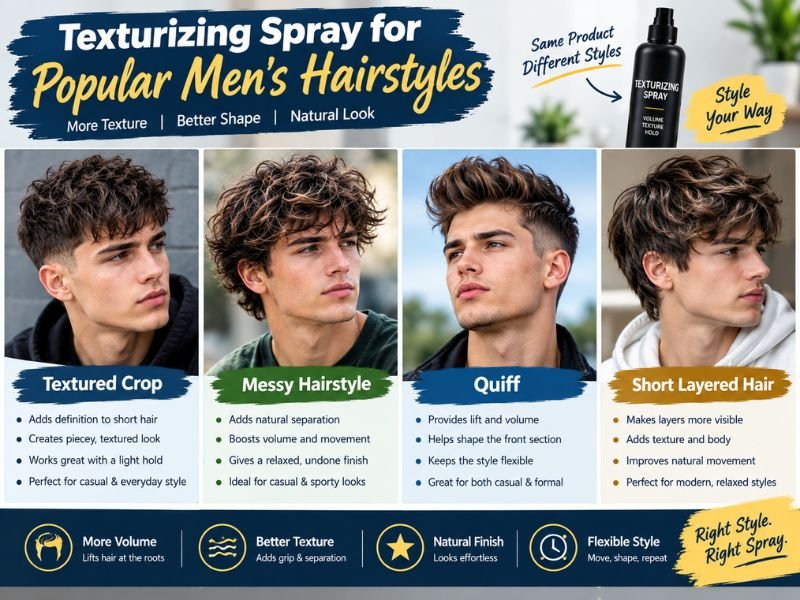
Textured Crop
A texturizer helps divide the short top into small, visible sections. Work it forward with your fingers, then pinch a few pieces for definition. Keep the shape irregular for a relaxed finish.
Messy Hairstyle
Spray lightly through the hair and move sections in different directions. The aim is controlled disorder, not random tangles. Leave some natural movement instead of fixing every strand.
Quiff
Apply the spray before blow-drying to support lift at the front. Direct the hair upward and slightly back. Finish with another product only if the quiff needs more hold.
Short Layered Hair
Texture can make short layers easier to notice. Lift the hair and apply the mist from different angles, then separate selected sections with your fingers.
Common Mistakes When Using Texturizing Spray:
Using too much product: Excess spray can flatten the style or leave an unpleasant coating. Begin with less than you think you need.
Spraying too close: This concentrates the product in one wet patch. Hold the bottle farther away so the mist covers a wider area.
Applying it unevenly: Spraying only the front can make the rest look disconnected. Lift the hair and distribute the product across the areas being styled.
Choosing the wrong formula: A heavy product may overwhelm fine hair, while a very light mist may not control thick hair. Match the product to the hair’s density and condition.
Expecting firm hold: A lightweight texturizer may not keep a tall or structured style in place. Use a suitable finishing product if stronger control is needed.
Layering products carelessly: Several products can create buildup or conflicting finishes. Use small amounts and understand the purpose of each one.
Is Texturizing Spray Good for Daily Use?
Daily use depends on the formula, the amount applied, and how your hair responds. A light application may suit regular styling, while a heavy or drying formula may become uncomfortable with frequent use.
Follow the product directions and wash your hair often enough to prevent buildup. Regular conditioning may also help if the hair begins to feel rough. Anyone with a specific scalp condition, persistent irritation, or unusual hair damage should ask a qualified professional for personal advice.
Texturizing Spray Buying Guide:
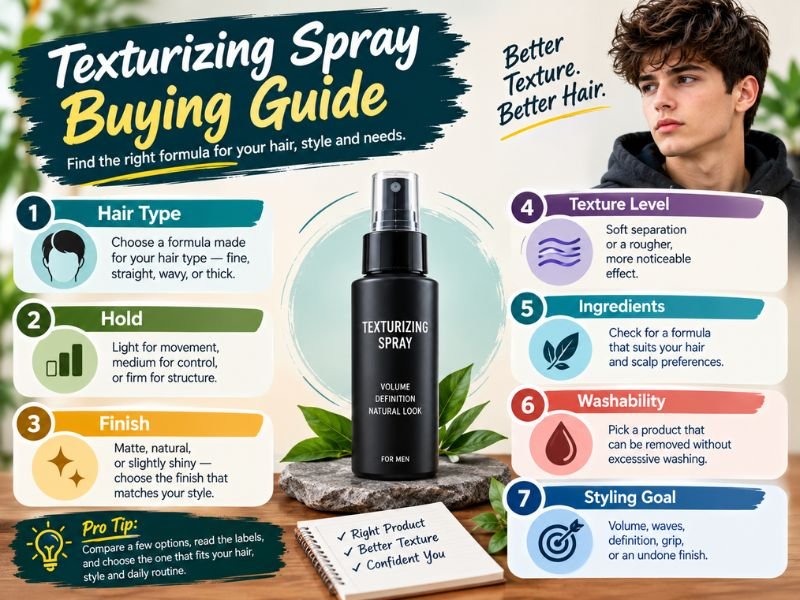
| What to Check | What to Look For |
| Hair type | A formula intended for fine, straight, wavy, or thick hair |
| Hold | Light for movement, medium for control, or firm for structure |
| Finish | Matte, natural, or slightly shiny |
| Texture level | Soft separation or a rougher, more noticeable effect |
| Ingredients | A formula that suits your hair and scalp preferences |
| Washability | Product that can be removed without excessive washing |
| Styling goal | Volume, waves, definition, grip, or an undone finish |
Use the checklist to compare products with similar claims. First remove options that do not suit your hair type. Then compare hold and finish. Finally, check the ingredients, directions, and washability before deciding which formula fits your routine.
FAQS:
What does texturizing spray do?
It adds grip and separation, which can make hair look fuller, more defined, and less flat. It may also provide light or medium styling control.
Is texturizing spray good for thin hair?
A lightweight formula can help thin or fine hair appear to have more body. Use it sparingly because too much product can weigh down the strands.
Can I use texturizing spray on dry hair?
Yes, many formulas work on dry hair. This method is useful for adding quick volume, separating sections, or refreshing the shape. Always check the bottle directions.
Is texturizing spray the same as sea salt spray?
Not always. Sea salt spray is usually designed for rough, beach-like texture. Texturizing sprays cover a wider range of finishes, ingredients, and hold levels.
Can men use texturizing spray every day?
Many men can use it regularly if the formula suits their hair and is applied in moderation. Washing out buildup and following the instructions remain important.
Does texturizing spray damage hair?
Normal styling use does not automatically mean damage. However, some formulas may leave certain hair types feeling dry or coated. Reduce use if your hair feels unpleasant and seek professional advice for continuing concerns.
Final Thoughts:
Texturizing spray can add volume, separation, movement, and a natural-looking shape without the weight of some traditional styling products. It may suit straight, wavy, fine, or thick hair when the formula is chosen carefully.
Look at hair type, hold, finish, ingredients, and styling goals before buying. Once you have the right product, begin with a small amount. A light application is often enough to create visible texture while keeping the hair flexible.