
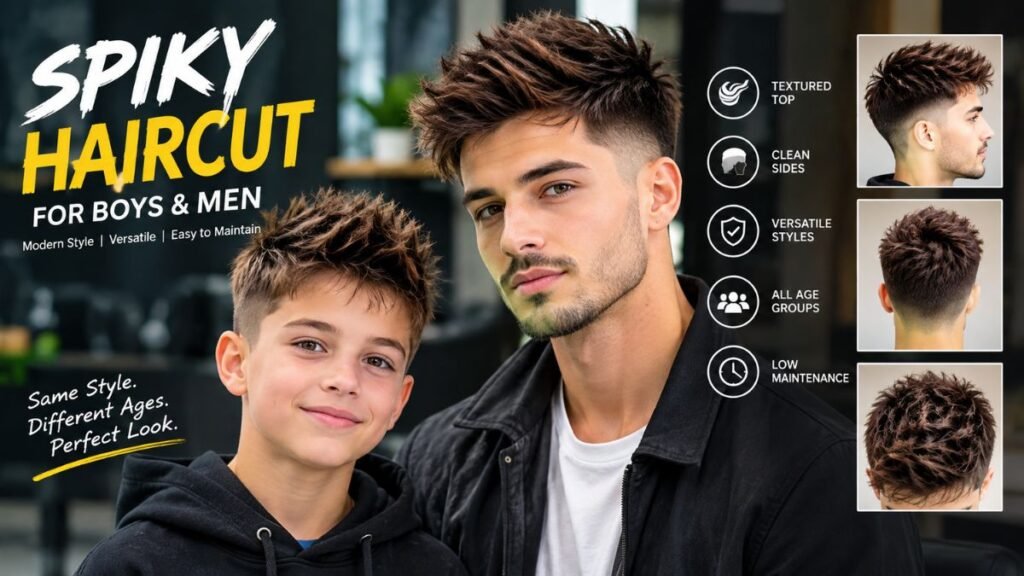
A spiky haircut is a classic men’s and boys’ style where the hair on top is cut and directed upward or slightly forward into defined sections. While the concept has been around for decades, today’s look is nothing like the rigid, glossy spikes of the late nineties and early two-thousands. Modern barbers focus on soft texture, scissor work, and matte finishes that let the hair move naturally rather than freezing it in place under a layer of rock-hard gel.
The reason this haircut continues to fill barber chairs is simple: it works with almost any personal aesthetic and suits every age group. Whether you are getting an active schoolboy ready for morning class with a low-maintenance crop or styling a sharp, tapered fade for an office setting, spikes can be adapted to match your face shape, routine, and natural hair type.
What Is a Spiky Haircut?
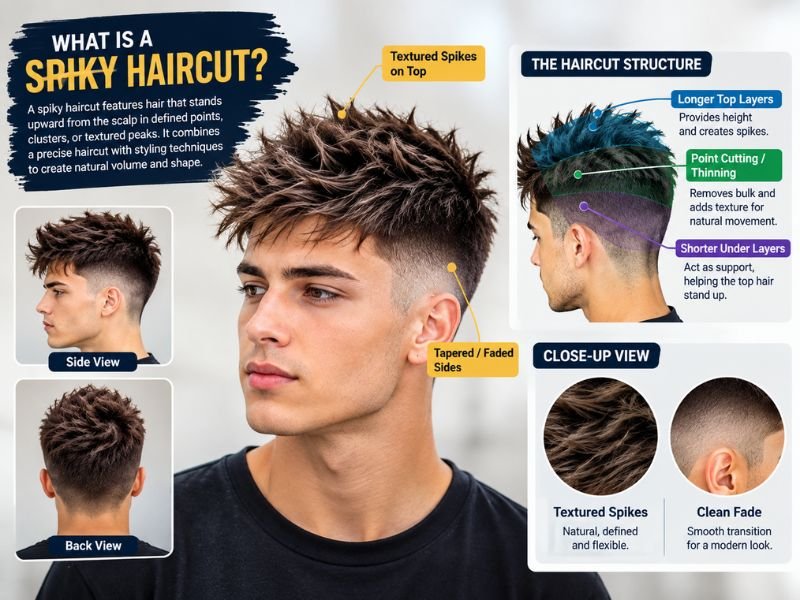
A spiky haircut is characterized by hair that stands upward from the scalp in defined points, clusters, or textured peaks. The haircut relies on two main components: an intentional haircut that removes bulk while building support at the roots, and styling techniques that separate individual strands into distinct sections.
To make spikes work naturally, barbers typically use point cutting or thinning shears through the top layers. Cutting into the hair at varying lengths creates natural negative space. Shorter hairs underneath act like scaffolding, propping up longer strands on top. When you add a small amount of styling product, the hair naturally groups together into spikes rather than lying flat against the head or forming a solid block.
Why Is Spiky Haircut Still Popular?
Hair trends come and go, but upward-styled hair has remained a staple for boys and men for several good reasons:
- Incredible versatility: You can wear the hair neat and uniform during the day, then rework it with your fingers into an undone, casual style for the weekend without needing to rewash it.
- Youthful energy: Upward movement draws the eye upward, giving young boys a tidy, sporty appearance and giving older men a sharper, more lifted facial profile.
- Works with different cuts on the sides: Spikes pair effortlessly with skin fades, low tapers, classic scissor cuts, and modern undercuts.
- Customizable height: You can choose subtle quarter-inch micro-spikes or two-inch textured quiffs depending on your comfort level and workplace or school dress codes.
Best Spiky Haircuts for Boys and Men:
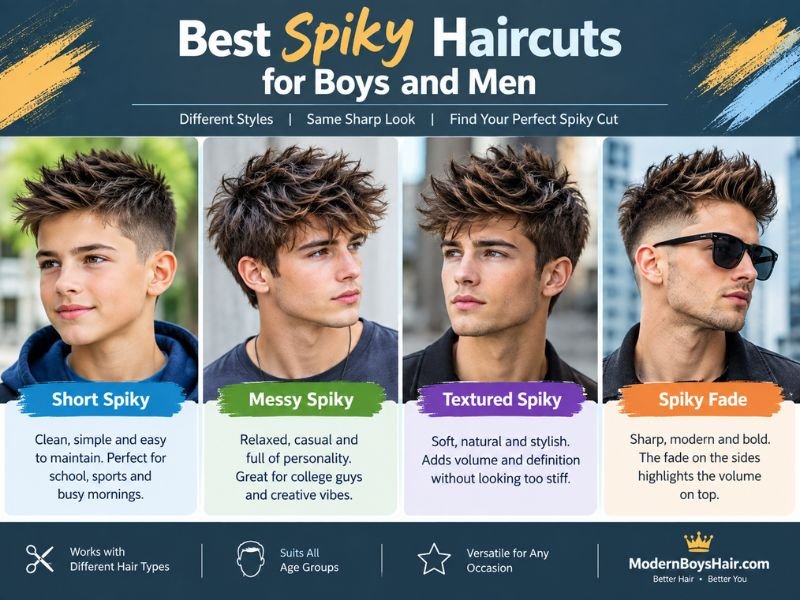
Because spiky hair is a styling approach rather than a single rigid cut, it can take on many different forms. Here are the most practical and popular variations worn today.
Short Spiky Haircut
The short spiky haircut features hair cut between one and one-and-a-half inches on top, usually paired with faded or neatly tapered sides. It delivers a clean, athletic appearance that requires very little effort in the morning. Because the strands are short, they naturally resist gravity, making them hold their position throughout long school days or sports practices.
- Practical Example: Ideal for primary and middle school boys who play sports, swim, or dislike spending more than thirty seconds fixing their hair before leaving the house.
Messy Spiky Haircut
Messy spiky hair trades rigid structure for intentional disarray. Instead of all spikes pointing straight up in identical directions, pieces are pushed forward, sideways, and upward at random angles. The result looks casual, lived-in, and relaxed. This style relies heavily on point-cut layers and dry styling products like matte clay or texture powder.
- Practical Example: Perfect for college students or guys working in creative environments who want a modern, effortless look that still shows thought and intention.
Textured Spiky Haircut
Textured spiky cuts focus on soft definition rather than sharp points. Barbers achieve this by removing excess weight and creating distinct clumps of hair that piece together naturally. The spikes look thicker, softer, and touchable, eliminating the spike-like “quills” associated with older styles.
- Practical Example: Great for men with medium-to-thick straight hair who want their hair to look dense, clean, and styled without feeling stiff to the touch.
Spiky Haircut With a Fade
Pairing textured spikes with a fade creates immediate contrast. Whether you choose a low fade that stays near the ears, a mid fade that blends at the temple, or a high skin fade, the short sides accentuate the volume and height on top. This clean perimeter makes the messy texture up top feel sharp and well-groomed.
- Practical Example: A go-to option for young men attending semi-formal events, weddings, or interviews where clean edges are required but personal style is still celebrated.
Spiky Haircut With a Taper
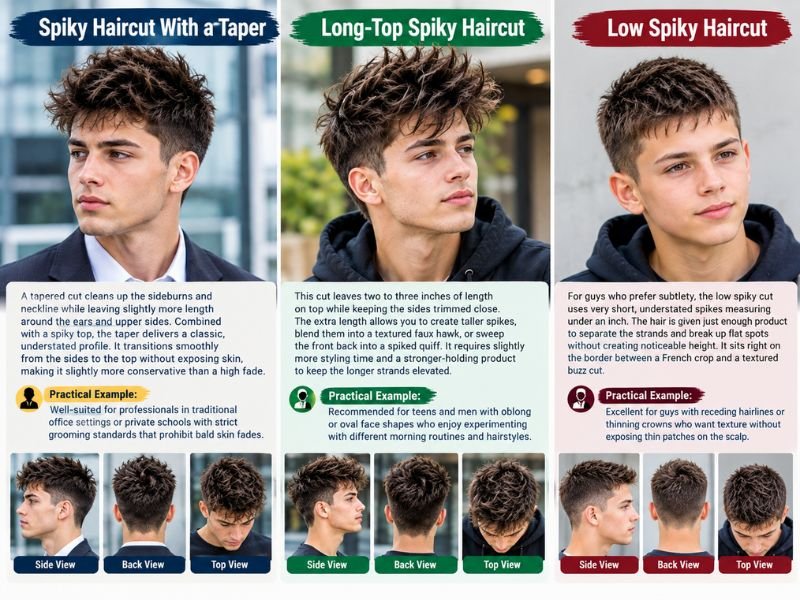
A tapered cut cleans up the sideburns and neckline while leaving slightly more length around the ears and upper sides. Combined with a spiky top, the taper delivers a classic, understated profile. It transitions smoothly from the sides to the top without exposing skin, making it slightly more conservative than a high fade.
- Practical Example: Well-suited for professionals in traditional office settings or private schools with strict grooming standards that prohibit bald skin fades.
Long-Top Spiky Haircut
This cut leaves two to three inches of length on top while keeping the sides trimmed close. The extra length allows you to create taller spikes, blend them into a textured faux hawk, or sweep the front back into a spiked quiff. It requires slightly more styling time and a stronger-holding product to keep the longer strands elevated.
- Practical Example: Recommended for teens and men with oblong or oval face shapes who enjoy experimenting with different morning routines and hairstyles.
Low Spiky Haircut
For guys who prefer subtlety, the low spiky cut uses very short, understated spikes measuring under an inch. The hair is given just enough product to separate the strands and break up flat spots without creating noticeable height. It sits right on the border between a French crop and a textured buzz cut.
- Practical Example: Excellent for guys with receding hairlines or thinning crowns who want texture without exposing thin patches on the scalp.
Spiky Haircut Variations Comparison:
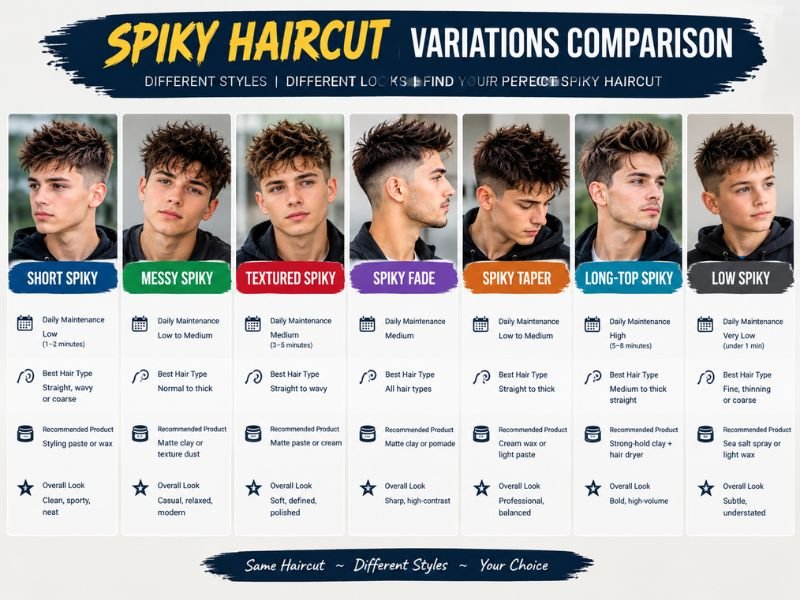
| Style Variation | Daily Maintenance | Best Suited Hair Type | Recommended Product | Overall Look |
| Short Spiky | Low (1–2 minutes) | Straight, wavy, or coarse | Styling paste or wax | Clean, sporty, neat |
| Messy Spiky | Low to Medium | Normal to thick | Matte clay or texture dust | Casual, relaxed, modern |
| Textured Spiky | Medium (3–5 minutes) | Straight to wavy | Matte paste or cream | Soft, defined, polished |
| Spiky Fade | Medium | All hair types | Matte clay or pomade | Sharp, high-contrast |
| Spiky Taper | Low to Medium | Straight to thick | Cream wax or light paste | Professional, balanced |
| Long-Top Spiky | High (5–8 minutes) | Medium to thick straight | Strong-hold clay + hair dryer | Bold, high-volume |
| Low Spiky | Very Low (under 1 min) | Fine, thinning, or coarse | Sea salt spray or light wax | Subtle, understated |
How to Choose the Right Spiky Haircut:
Selecting the right version of this haircut comes down to understanding your everyday lifestyle, hair characteristics, and how much time you are realistically willing to spend in front of the mirror.
Considering Core Factors
- Hair Length: Shorter lengths (under 1.5 inches) hold themselves up naturally; longer hair requires pre-styling blowouts and stronger products.
- Hair Thickness: Dense hair needs weight removal to avoid looking bulky; fine hair needs products that build grit and fullness.
- Face Shape: Rounder faces benefit from tall spikes that elongate the profile; longer faces look best with shorter, wider spikes to avoid exaggerating vertical height.
- Personal Style: Match the sharpness of your fade and height of your spikes to your workplace, school code, and wardrobe.
- Morning Commitment: If you hit snooze three times every morning, choose a short spiky crop over a long-top style.
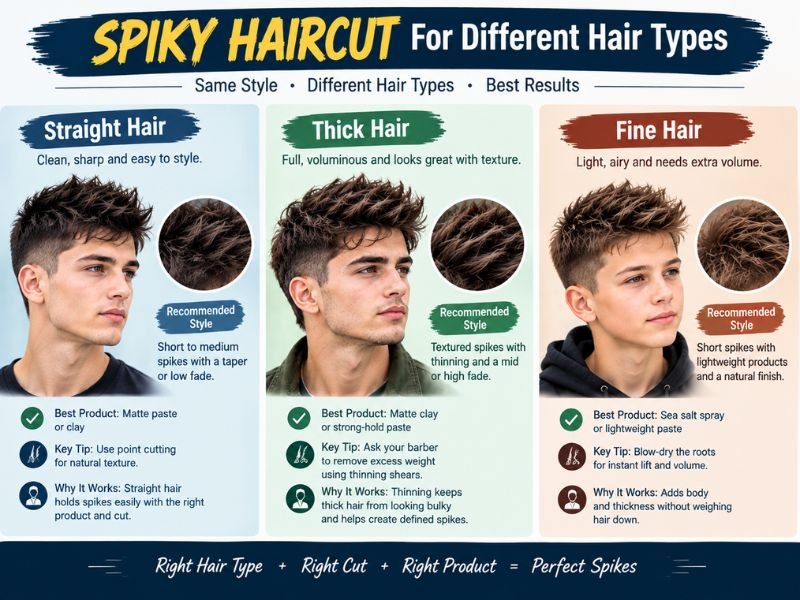
Spiky Haircut for Straight Hair
Straight hair is the easiest canvas for spikes because it naturally points upward when cut short. However, very smooth straight hair can fall flat easily. Ask your barber for aggressive point cutting to add jagged micro-layers. Use matte clays or texture pastes with a dry finish, as greasy products will make straight hair look stringy and limp.
Spiky Haircut for Thick Hair
Thick hair holds volume easily, but it can quickly look bushy or helmet-like if not thinned out properly. Have your barber thin the top using texturizing shears. When styling, work a dime-sized amount of high-hold matte clay down into the roots. Focus on grouping the dense hair into wider, structured clusters rather than tiny individual spikes.
Spiky Haircut for Fine Hair
Fine hair needs volume without being weighed down. Heavy pomades and wet gels will clump fine strands together, exposing the scalp underneath. Instead, ask for a shorter cut on top and use lightweight styling pastes or a spritz of sea salt spray. Blow-drying the hair while lifting the roots creates instant fullness before any product touches your hair.
How to Style Spiky Haircut Step by Step:
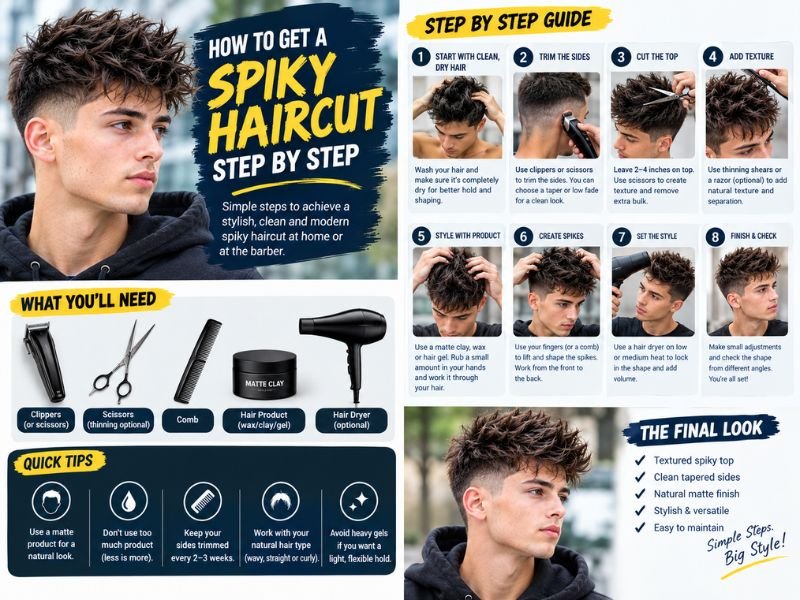
Getting a natural-looking spiky style takes less than five minutes once you master the basic routine. Follow this straightforward process:
- Start with Clean, Towel-Damp Hair: Wash out old product. Towel-dry until the hair is just damp—not soaking wet. Styling dripping hair dilutes your product and makes spikes clump unevenly.
- Apply a Pre-Styler (Optional for Fine/Long Hair): If your hair is fine or longer than two inches, spray three to four mists of sea salt spray evenly across the top to add grip and lift.
- Rough-Dry with Your Hands: Use a hair dryer on medium heat while pushing the hair upward and slightly forward with your fingers. Directing the airflow from the base upward sets the roots in an upright position.
- Scoop a Small Amount of Product: Take a small, pea-sized dab of matte clay or styling paste. You can always add more later, but putting too much in at once is difficult to fix without washing it out.
- Warm the Product Completely: Rub the product vigorously between your palms and fingers until it turns clear and warm. Unmelted product leaves white specks in your hair.
- Distribute From Back to Front: Start applying at the back and crown of your head, working through the roots to the tips. Move forward toward the forehead. This prevents dumping all the product onto your front hairline.
- Pinch and Form Spikes: Use your fingertips to pinch small bundles of hair upward and slightly toward the center. Twist slightly at the tips of select sections to create natural, varying heights.
- Check the Sides and Crown: Flatten down the hairs along the parietal ridge (where the sides meet the top) so your head retains a balanced, square silhouette.
Best Products for Spiky Haircut:
Selecting the right styling product depends on whether you want a modern, dry matte finish or a classic structured hold.
- Matte Clay: The gold standard for modern spikes. Made with natural clays (like bentonite or kaolin), it provides medium-to-strong hold with zero shine. It gives hair a textured, lived-in feel and can be reworked throughout the day.
- Styling Paste: A versatile, easy-to-use option that works well on all hair lengths. Pastes offer pliable medium hold with a low-shine or satin finish, making them ideal for everyday school or office styling.
- Hair Wax: Good for thicker or coarse hair that needs weight and structure. Wax keeps hair firmly in place with a slight natural sheen, though it requires warm water and good shampoo to wash out completely.
- Styling Gel: Modern, alcohol-free gels work when you need extreme hold that will not budge during wind or active movement. However, use it sparingly to avoid the stiff, brittle “crunch” that flakes off during the day.
- Sea Salt Spray: A lightweight liquid spray that adds mineral grit, texture, and volume. It works wonders as a pre-styler before blow-drying, especially for boys with fine or limp hair.
Common Mistakes When Styling Spiky Haircut:
Small styling errors can turn a modern haircut into an outdated or messy look. Here are common pitfalls and how to fix them:
- Overusing Product: Applying large scoops of paste weighs the hair down and makes it look greasy. Solution: Start with a fingertip amount, emulsify it completely in your hands, and add a second small layer only if your hair falls flat.
- Uniform, Porcupine Spikes: Pointing every single hair straight up in perfect symmetry looks artificial. Solution: Vary the direction slightly. Push some clusters forward, tilt some toward the center, and leave some flatter for organic texture.
- Rock-Hard Stiffness: Using too much high-shine wet gel freezes hair and can cause white flakes by lunchtime. Solution: Switch to a water-based matte clay or paste that allows the hair to stay flexible and soft to the touch.
- Neglecting the Sides and Back: Focusing exclusively on the front leaves the crown and sides unmanaged and sticking out sideways. Solution: Look in a secondary mirror to ensure the sides blend smoothly and the crown follows the natural cowlick.
- Excessive Blow Dryer Heat: Blasting delicate hair on maximum heat causes frizz and dryness. Solution: Use medium heat to shape the hair and finish with a five-second blast of cool air to lock the volume in place.
How to Maintain a Spiky Haircut:
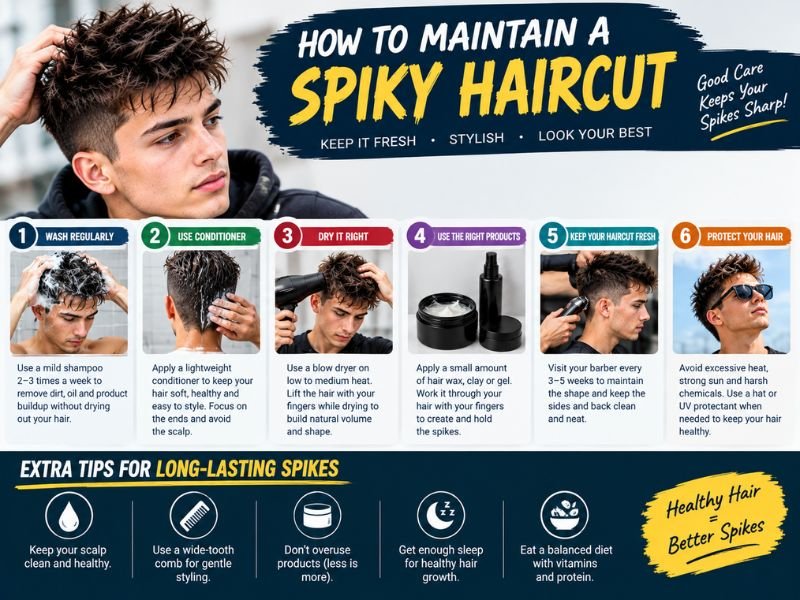
Because this haircut relies on precise proportion between the top and the sides, regular upkeep keeps it looking sharp.
- Trimming Frequency: Plan to visit the barber every three to four weeks. If you have a tight skin fade or taper, the perimeter may need a quick cleanup every two weeks, while the top can usually go four to six weeks before losing its texture.
- Washing Routine: Wash hair two to three times a week with a gentle, sulfate-free shampoo. Daily shampooing strips natural oils and leaves hair dry and uncooperative. On non-wash days, rinse thoroughly with warm water to reset styling products.
- Preventing Buildup: If you use clay or wax daily, use a clarifying shampoo once every two weeks to remove stubborn residue from your scalp and hair shafts.
- Keeping Cowlicks Under Control: If the swirl at the back of your head sticks up uncontrollably, ask your barber to leave that specific spot slightly shorter or cut it in the direction of its natural growth.
Is a Spiky Haircut Easy to Maintain?
Yes, but it depends on the variation you choose.
Shorter spiky cuts such as a classic short crop or low spiky taper—are among the easiest haircuts to manage. They require less than two minutes of styling in the morning and can air-dry naturally while holding their shape.
Longer or high-contrast styles require a bit more dedication. Once hair exceeds two inches on top, you will need to blow-dry your hair, apply quality matte products, and visit the barber more frequently to prevent the top from becoming heavy and collapsing. Overall, it remains one of the most practical and low-stress styles for busy boys and men.
FAQS:
Is a spiky haircut good for boys?
Yes. It is practical, keeps hair out of the eyes during school and sports, and stays neat throughout the day with almost no effort.
How do I make spikes look natural?
Apply a pea-sized amount of matte clay to damp hair and piece out sections with your fingers. Avoid combs and high-shine gels, which make hair look stiff and unnatural.
Is wax or gel better for Spiky Haircut?
Matte wax or clay is better because it provides a flexible, touchable hold without shine. Traditional gel often dries hard, shiny, and prone to flaking.
Can fine hair be styled into spikes?
Yes. Short spikes actually give fine hair the appearance of extra volume and density. Stick to lightweight products like sea salt spray or matte styling paste so hair does not get weighed down.
Can thick hair hold a spiky haircut?
Yes, thick hair holds height easily. Ask your barber to remove weight using texturizing shears so the hair groups into clean spikes rather than looking bulky.
How often should a spiky haircut be trimmed?
Get the sides cleaned up every 2 to 3 weeks to keep the fade or taper crisp, and trim the top every 4 to 5 weeks to maintain its shape and texture.
Final Thoughts:
The modern spiky haircut continues to thrive because it bridges the gap between casual ease and sharp grooming. Far from the rigid styles of past decades, today’s look is defined by soft texture, matte styling products, and custom tailored fades that complement each individual’s natural hair growth.
By assessing your daily routine, hair thickness, and face shape, you can easily find a variation that fits your life. Keep a reliable matte clay or styling paste in your bathroom, schedule regular trims to keep the sides crisp, and enjoy a hairstyle that looks effortlessly put together every day of the week.