
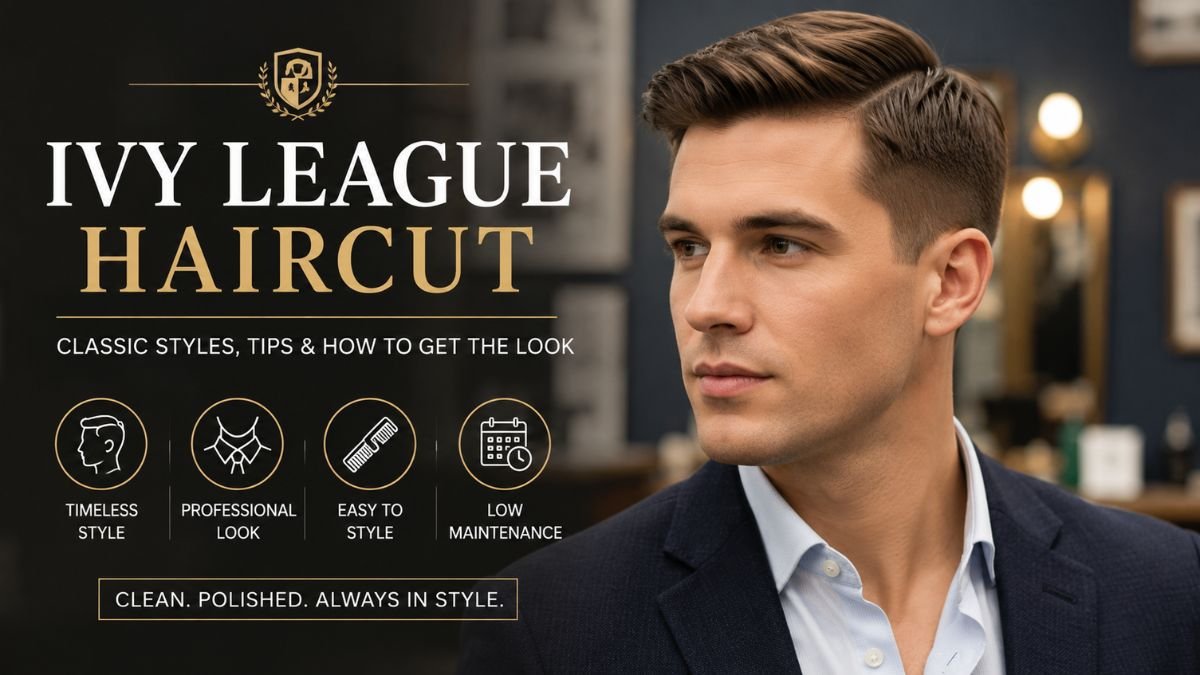
The Ivy League haircut is a classic men’s hairstyle that combines a clean, polished appearance with enough length on top for simple styling. It is a refined version of the crew cut, but the extra length gives you more flexibility to create a side part, sweep the hair back, or add a little texture.
This Ivy League Haircut works well for men who want a haircut that looks appropriate at work, college, formal events, and everyday settings. In this guide, you’ll learn what makes the Ivy League Haircut different, which variations are worth considering, how to choose the right version for your hair and face shape, and how to maintain the style without making your routine complicated.
Our Practical Tip:
Use a small amount of lightweight styling cream or matte wax to shape the top without making the hair look stiff. Keep the sides neat and let the top retain some natural texture for a clean, classic Ivy League appearance.
What Is an Ivy League Haircut?
An Ivy League Haircut is a short men’s hairstyle with neatly tapered sides and a slightly longer top. The hair on top is usually long enough to comb to one side or sweep backward, while the sides and back gradually become shorter for a clean finish. This Ivy League hairstyle gives men a polished and versatile look without requiring complicated styling.
Unlike a very short crew cut, an Ivy League Haircut gives you enough length to change the direction and texture of the top. That makes this style a versatile choice for men who want a traditional appearance without having their hair look overly basic.
The Ivy League Haircut can be adapted to different lengths. Some versions have a subtle taper, while others use a low fade or slightly sharper sides. The important feature is the balance between the neat sides and the longer, manageable top.
Example: If you normally wear your hair short but want more styling options, keeping a little extra length on top can let you create both a professional side part and a relaxed everyday look.
Why Is This Haircut Still Popular?
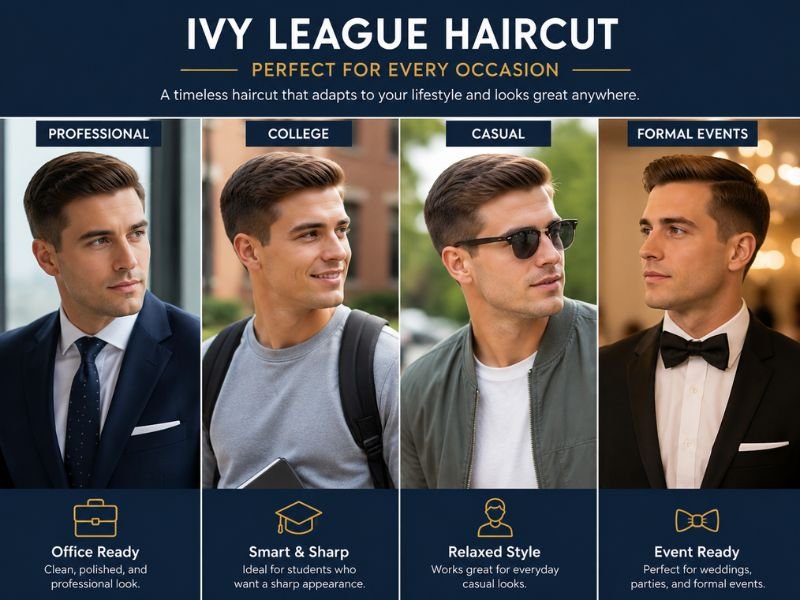
One reason this style has remained popular is its versatility. It does not depend on a particular fashion trend, so it can look modern even though its roots are traditional.
A well-cut Ivy League Haircut can also be adjusted to suit different lifestyles. Someone who works in an office may prefer a clean side part, while a younger man may choose a textured finish with less formal styling.
Another advantage is that the haircut does not require a complicated routine. With the right length and shape, a small amount of styling product can be enough to keep the top under control.
Clean and Professional Appearance
The neat sides and controlled top create a polished appearance, making the Ivy League Haircut suitable for workplaces, interviews, weddings, and other situations where a tidy hairstyle is important.
Example: A man attending a job interview can wear the top neatly combed to one side for a professional appearance without needing an extremely short haircut.
Easy to Adapt
The top can be styled in several directions. You can use a side part, a natural sweep, a brushed-back finish, or a lightly textured look.
Example: On a formal day, you can style an Ivy League Haircut by combing the hair neatly with a small amount of pomade. On a casual day, you can use less product and allow the top to look more natural.
Suitable for Different Ages
This is one of those men’s haircuts that can work for teenagers, young adults, and older men. The main difference is usually the length, taper, and styling preference.
Example: A younger man might choose a slightly textured top, while an older professional may prefer a shorter, neatly combed version.
Classic Ivy League Haircut Variations:
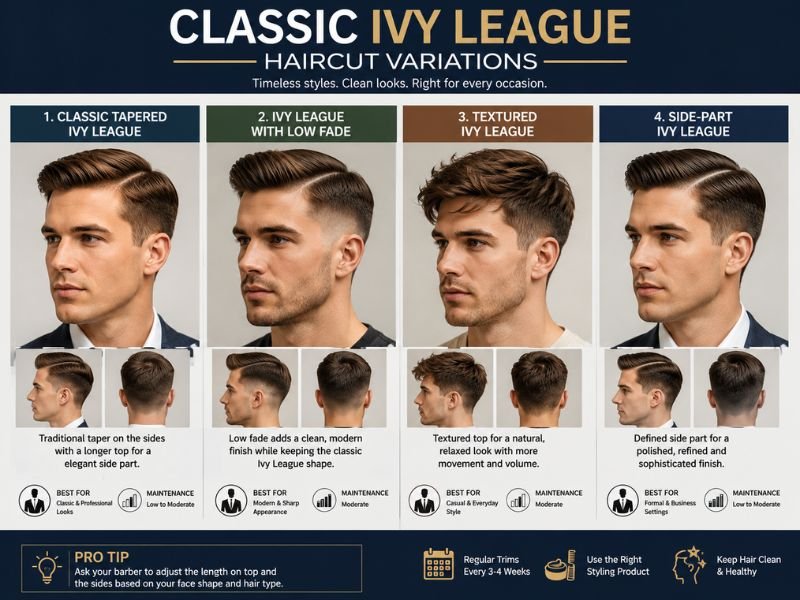
There is no single way to wear this hairstyle. Small changes to the sides, top, and finish can create noticeably different results.
Classic Tapered Ivy League Haircut
The traditional Ivy League Haircut uses tapered sides and back instead of an aggressive fade. The hair gradually becomes shorter toward the neckline and around the ears, creating a clean and balanced finish.
This creates a balanced appearance and keeps the haircut looking natural.
Example: If you prefer traditional men’s hairstyles, ask your barber for a gradual taper with enough length on top to create a side part.
Ivy League Haircut With a Low Fade
A low fade creates a cleaner transition around the lower sides and back. The fade should remain relatively subtle so that the longer top still looks connected to the overall haircut.
This option is useful if you want a classic shape with a slightly more contemporary finish.
Example: If you like traditional styles but want sharper-looking sides, a low fade can modernize the haircut without changing its overall character.
Textured Ivy League Haircut
A textured top gives the Ivy League Haircut a more relaxed and modern appearance. Instead of combing every strand into place, the hair is styled with light separation and movement, creating a more effortless finish.
This works particularly well when the hair has natural thickness or slight wave.
Example: A man with thick hair can use a small amount of matte clay to separate the top and reduce a flat, overly polished appearance.
Side-Parted Ivy League Haircut
The side part is one of the easiest ways to make the haircut look refined. The top is divided naturally and combed toward one side.
The part can be subtle rather than sharply defined, depending on your preference.
Example: For a formal event, a clean side part with a small amount of medium-hold product can give the hairstyle a polished finish.
Short Ivy League Haircut
A shorter version of the Ivy League Haircut keeps the overall shape very low-maintenance. The top remains long enough for some direction, but the difference between the top and sides is less dramatic.
Example: If you exercise frequently or do not want to spend much time styling your hair, a shorter version can be easier to manage.
Ivy League Haircut vs. Crew Cut:
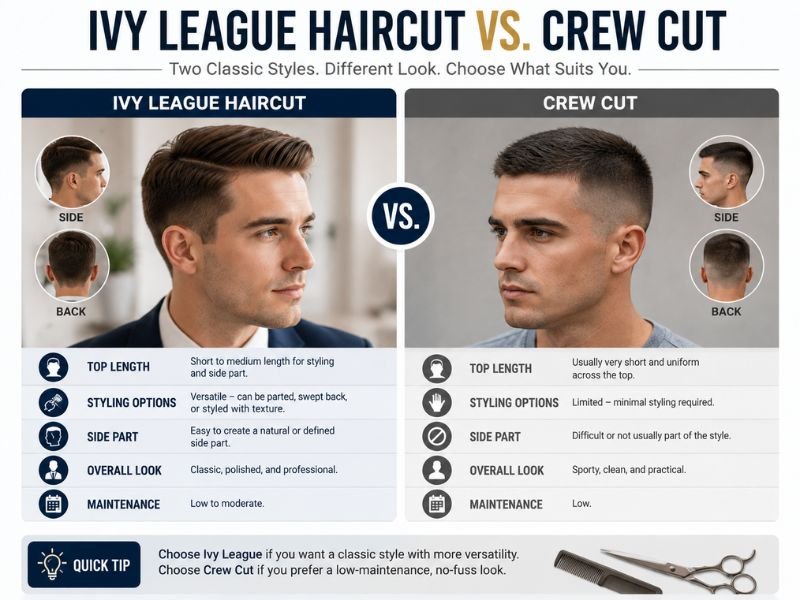
The two styles are closely related, but the amount of length on top creates an important difference.
| Feature | Ivy League | Crew Cut |
| Top Length | Short to medium | Usually shorter |
| Styling Options | More flexible | More limited |
| Side Part | Easy to create | Usually difficult |
| Overall Look | Classic and polished | Sporty and practical |
| Maintenance | Low to moderate | Low |
| Best Feature | Versatility | Simplicity |
The Ivy League generally gives you more control over the final appearance because the top has enough length to be styled in different ways.
Example: If you want to switch between a side part and a natural brushed style, the longer top of an Ivy League is usually more suitable than a very short crew cut.
How to Choose the Right Version:
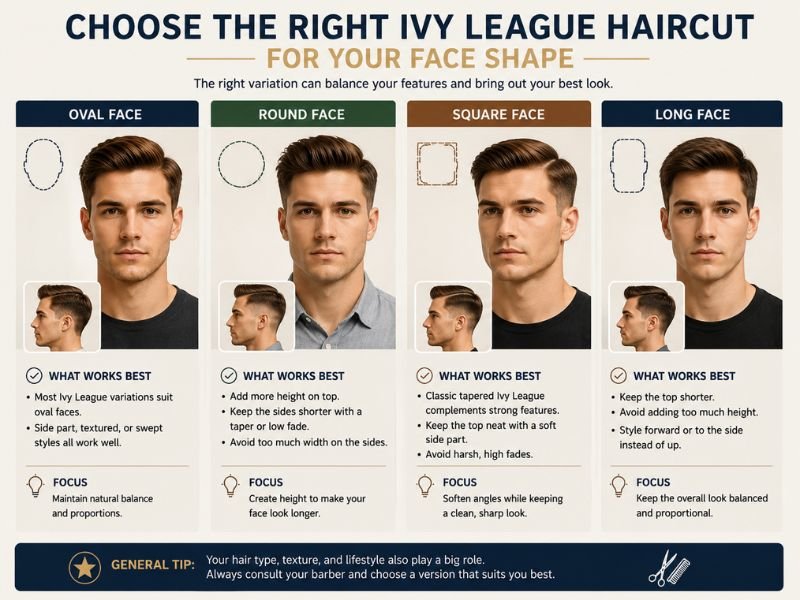
Choosing the right Ivy League Haircut variation depends on more than simply showing a picture to your barber. Your hair type, face shape, lifestyle, and preferred maintenance level can all influence the final result.
Consider Your Hair Type
Straight hair often makes the classic shape easy to maintain. Wavy hair can add natural movement, while thick hair may need additional texture or weight removal.
Fine hair can also work with this cut, but keeping too much length may make the top look flat. Your barber can adjust the length and layering to create a fuller appearance.
Example: If your hair is thick and straight, ask for controlled length on top with some texture rather than leaving the entire top heavy.
Consider Your Face Shape
The haircut can be adjusted to complement different face shapes.
- Oval faces: Most variations can work well.
- Round faces: A little extra height on top can help create a more balanced appearance.
- Square faces: A traditional tapered version can emphasize the naturally strong structure.
- Long faces: Avoid excessive height if you want to keep the face looking more proportionate.
These are general guidelines rather than strict rules. Your natural hairline and facial proportions also matter.
Example: If you have a rounder face, a slightly longer and textured top can add vertical structure without making the sides unnecessarily wide.
How to Ask Your Barber for an Ivy League:
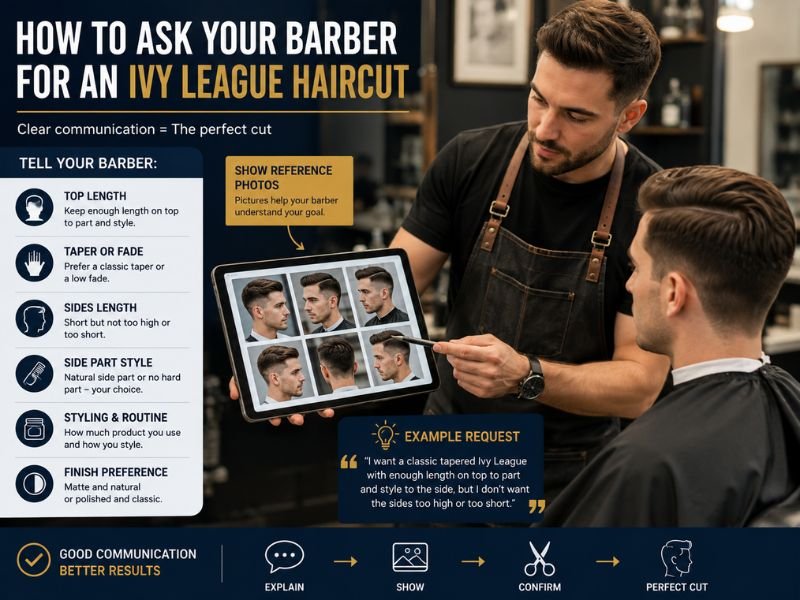
Clear communication can make a big difference. Instead of simply saying the name of the haircut, explain the length and finish you want.
Tell your barber:
- How much length you want on top
- Whether you want a taper or fade
- How short you want the sides
- Whether you want a natural or defined side part
- How much styling you normally do
- Whether you want a matte or polished finish
Showing a reference photo can also help because different barbers may interpret the same haircut name differently.
Example: You could say, “I want a classic tapered cut with enough length on top to part and style to the side, but I don’t want the sides too high or too short.”
How to Style It at Home:
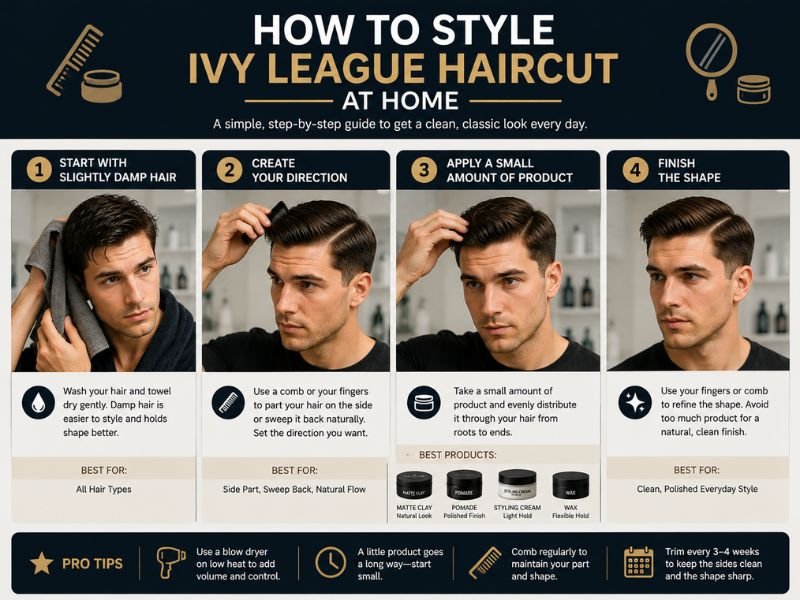
Styling this haircut does not need to be complicated. The main goal is to control the top while keeping its natural shape.
Step 1: Start With Slightly Damp Hair
After washing, gently towel-dry your hair. Avoid aggressively rubbing the hair because that can create unnecessary frizz.
Step 2: Create Your Direction
Use your fingers or a comb to move the top toward the side or backward, depending on the look you want.
Step 3: Add a Small Amount of Product
Choose a product according to your desired finish.
- Matte clay: Natural, textured appearance
- Pomade: More polished and controlled finish
- Styling cream: Light control with natural movement
- Light wax: Flexible hold and definition
Start with a small amount. You can always add more if needed.
Step 4: Finish the Shape
Use your fingers or comb to make final adjustments. Avoid applying too much product because it can make short hair look heavy or greasy.
Example: For a natural everyday style, use a small amount of matte clay, work it through the top, and gently sweep the hair to one side with your fingers.
Maintenance Tips:
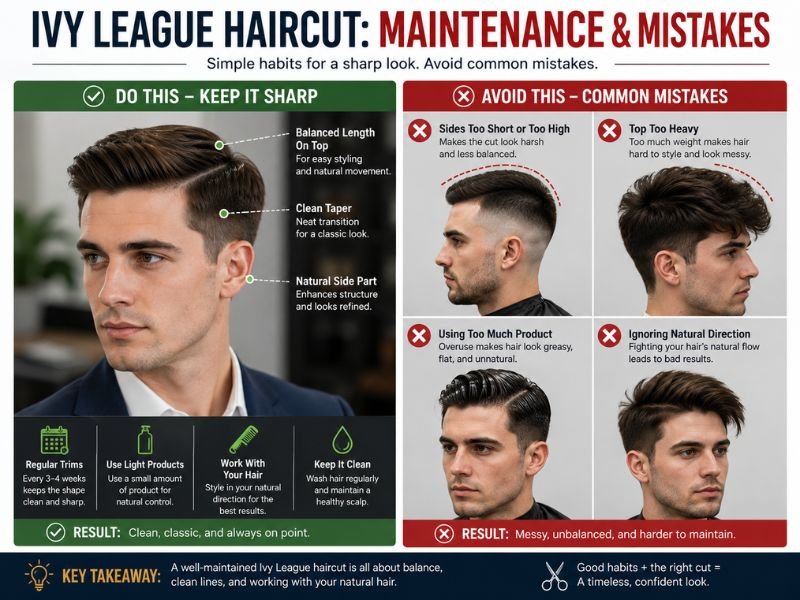
A clean shape is important because the haircut depends on the contrast between the neat sides and longer top.
Most men can maintain the overall shape by trimming the sides and neckline regularly. The exact timing depends on how quickly your hair grows and how sharp you want the haircut to remain.
Keep the top slightly longer if you want more styling flexibility. If you prefer a low-maintenance routine, ask your barber to keep the top manageable and avoid excessive length.
Regular washing should also be based on your hair type and scalp needs rather than following a fixed schedule.
Example: If your sides start looking bulky while the top still looks good, you may only need a cleanup around the sides and neckline instead of changing the entire haircut.
Common Mistakes to Avoid:
Making the Sides Too Short
A very aggressive fade can change the character of the haircut. If you want a traditional appearance, a gradual taper may be more appropriate.
Example: If you want a classic result, ask for a low taper rather than immediately choosing a high skin fade.
Leaving the Top Too Heavy
Too much weight on top can make the hair difficult to control. This is especially noticeable with thick hair.
Example: If your hair naturally stands up or becomes bulky, ask your barber for controlled texture rather than simply removing a large amount of length.
Using Too Much Product
More product does not always create better styling. Heavy application can flatten the hair and make it appear oily.
Example: Start with a pea-sized amount of product and add a little more only if your hair needs additional control.
Ignoring Your Natural Hair Direction
Hair naturally grows in different directions. Fighting that pattern can make styling more difficult.
Example: If your hair naturally sweeps right, working with that direction can create a cleaner result with less product.
Is the Ivy League Haircut Low Maintenance?
It is generally a low-to-moderate maintenance style. The haircut itself is relatively simple, but the longer top gives you more styling responsibility than a very short buzz cut.
The amount of daily work depends on the length and texture of your hair. Straight, manageable hair may require only a quick comb-through, while thick or wavy hair might need a styling product.
The good thing is that you can choose the version based on your routine.
Example: If you only have five minutes in the morning, choose a shorter tapered version with a natural finish rather than a longer top that requires blow-drying and detailed styling.
Who Should Consider This Haircut?
This hairstyle is a strong option for anyone who wants a balance between traditional and modern styling. It can work particularly well for men who need a haircut that transitions easily between professional and casual settings.
It is also useful if you want styling flexibility without maintaining a long hairstyle.
However, the best result depends on how the haircut is adapted to your hair. A skilled barber can modify the length, taper, texture, and styling direction to suit your features.
Example: If you want one haircut that works with both office clothing and casual outfits, a medium-length top with a clean taper can provide that flexibility.
FAQS:
1. What is an Ivy League haircut?
It is a classic men’s hairstyle with tapered sides and a longer top that can usually be combed or styled to one side.
2. Is an Ivy League haircut the same as a crew cut?
They are similar, but the Ivy League normally leaves more length on top, giving you additional styling options.
3. Can this haircut work with thick hair?
Yes. Thick hair can work very well with this style when the top is properly shaped and textured to control excess bulk.
4. Is it suitable for straight hair?
Yes. Straight hair often makes this style easy to part, comb, and maintain.
5. How often should I get it trimmed?
The timing depends on your hair growth and preferred shape. Many men schedule a cleanup when the sides and neckline begin losing their neat appearance.
6. Can I style it without a lot of hair products?
Yes. A well-shaped haircut can often be styled with a small amount of lightweight product or even just a comb, depending on your hair type.
Conclusion
The Ivy League haircut remains a practical choice because it combines a classic shape with modern styling flexibility. Its tapered sides and longer top allow you to create a clean side part, natural sweep, textured finish, or polished formal look.
The best version depends on your hair type, face shape, lifestyle, and preferred maintenance level. Instead of copying one exact style, work with your barber to adjust the length and taper to your features. With the right cut and a small amount of styling product, you can keep this classic men’s haircut looking clean, versatile, and easy to manage.